Choose a filter-based purifier for the bedroom or main room where you spend the most time, rather than sizing it from a whole-flat coverage claim. Compare clean-air delivery and room coverage at the stated cleaning rate, then consider overnight noise and replacement filters; add activated carbon if odours matter too. A purifier addresses airborne particles in the room where it runs, not allergens settled on surfaces, and it does not replace ventilation.
Who is this for?
People concerned about airborne allergens in the bedroom
If pets share your sleeping space, focus on particle filtration, airflow suited to that bedroom and a fan setting you can tolerate overnight. The UK Health Security Agency identifies pet dander among indoor airborne allergens.
Pet owners dealing with odours in a shared room
If the same room has airborne particles and pet or cooking smells, check the two needs separately: a particle filter for dander and, where specified for the model, activated carbon for odours.
People planning to run a purifier regularly
Check the exact replacement filter and the manufacturer’s maintenance guidance before choosing a unit. A filter-life indicator or app may help you keep track, but it does not replace filter changes.
What matters when choosing?
Start with the size of the room you want to clean and the rate at which a purifier is claimed to clean it. Then decide whether overnight noise, odours or filter upkeep is your main additional concern.
| Concern |
What to check |
Who this matters to |
| Air cleaning in the occupied room |
Measure that room and compare clean-air delivery rate (CADR) or stated coverage at its specified cleaning interval. Check that the filter specification addresses airborne particles such as pet dander. |
If I mainly want to reduce airborne dander where I spend my time, a whole-flat area claim will not tell me how the unit performs in that room. Around 40% of consumers would put room-matched particle cleaning first. |
| Overnight noise |
Compare noise figures for the fan setting you expect to use, not just the quietest mode; check whether the display can be dimmed. |
A purifier near my bed needs to be quiet enough that I will keep it running, while still providing airflow suited to the room. Overnight operation would be the primary concern for around 30% of consumers. |
| Odours alongside dander |
If smells matter, check whether the exact model has activated carbon as well as a particle filter. |
When pet or cooking odours share my living space, filtering airborne dander alone does not address everything I want from the unit. Around 20% of consumers would prioritise this combined need. |
| Filter upkeep |
Identify the matching replacement filter, its availability and the manufacturer’s stated change interval. |
If I expect to run the purifier routinely, I want to know how I will maintain it before committing to a model. For around 10% of consumers, filter upkeep would be the main deciding concern. |
Buying pitfalls
-
Using the largest coverage figure as a whole-flat promise
Coverage figures can describe different cleaning intervals. Blueair, for example, gives different room areas for the Blue 511i Max at different intervals, while Levoit quotes Core 300 coverage at different air-change rates.
Compare the figure tied to the cleaning rate you want, then size the unit for your bedroom or main room rather than assuming it will clean rooms behind closed doors.
-
Expecting air cleaning to remove settled allergens
A purifier works on airborne material in its operating room. Pet-related allergens can also remain on bedding, upholstery and other surfaces.
Use room air cleaning alongside regular cleaning and practical management of allergen sources. Seek clinical advice if allergy or asthma symptoms are significant.
-
Overlooking the replacement filter
Continued operation does not mean a filter is within its recommended service period. Levoit advises replacing Core 300 and Core 300S filters every 6–8 months, depending on use conditions.
Find the filter for the exact model and follow its maintenance guidance.
Replacement filters also mean recurring purchases and time spent maintaining the unit.
-
Equating a technology label with documented filtration
A label such as ionising does not establish how effectively a device removes airborne pet dander. The UK Government’s SAGE Environmental and Modelling Group has also cautioned that evidence for some air-cleaning technologies is limited and that some may generate secondary chemical products.
Prioritise stated airflow and particle-filter specifications, and assess any additional technology on its own documented performance and safety information.
Brands to consider for small-room purifiers
Levoit
The Core 300 and Core 300S are compact options with published room-cleaning specifications.
- Levoit states a 187 m³/h CADR for the Core 300 and coverage up to 40 m² at two air changes per hour.
- The Core 300S’s broader 100 m² claim is based on one air change per hour; use the rate appropriate to your room when comparing coverage.
Blueair
The Blue 511i Max is a compact, app-connected option with room-cleaning claims at specified intervals.
- Blueair states that the Blue 511i Max cleans an 18 m² room in 12.5 minutes and has a minimum sound level of 19 dB.
- Its larger coverage figures use longer cleaning intervals; the minimum noise figure does not describe every fan setting.
Philips
The AC0850/31 combines stated particle filtration, active carbon and app or sensor features.
- Philips states a 190 m³/h CADR for the AC0850/31 and specifies HEPA and active-carbon filtration.
- Check how the model’s room-area claim relates to your intended cleaning rate rather than treating an area figure alone as a measure of bedroom performance.
Dyson
The HushJet Compact is a compact option with stated particle and activated-carbon filtration.
- Dyson states that its HushJet Compact captures 99.97% of particles as small as 0.3 microns and is engineered to maintain filter performance for five years.
- Those are Dyson’s model-specific claims, not a basis for assuming the same result in every room. Check the exact model’s room fit and maintenance instructions.
Joybuy purifiers for small rooms
These models are relevant to cleaning the air in a defined bedroom or main living area. Compare each one with your room and intended fan setting; an area claim by itself does not establish the cleaning rate you will get.
 No image available
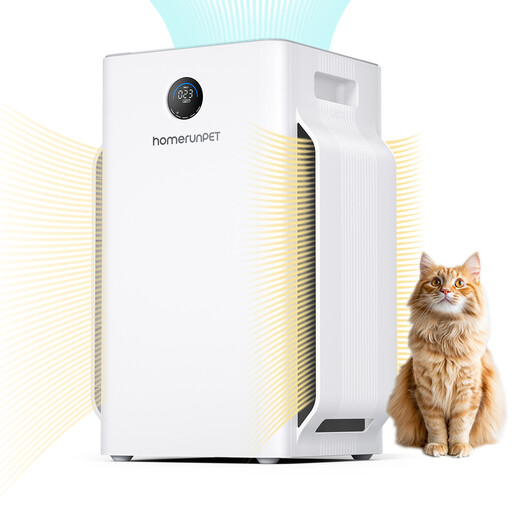
homerunPET D1 air purifier
Consider this model if pet-related airborne particles are your main concern and its airflow suits your chosen room. Its name specifies a six-sided, U-shaped airflow channel; check the cleaning-rate basis for its room-coverage claim and whether the odour filter you want is included.
View on Joybuy
 No image available
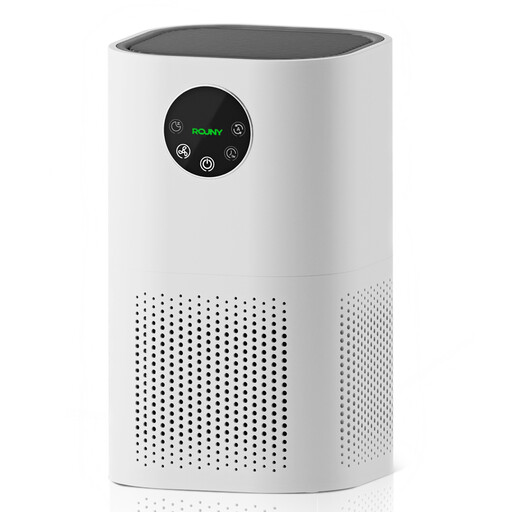
ROUNY AP-T1 air purifier
For a bedroom or pet-used room, compare its stated airflow with the area you actually want to clean. The product name specifies an H13 filter, 150 m³/h CADR, 20–50 m² coverage and a sleep mode rated at no more than 25 dB; check the cleaning-rate basis of the coverage range and the matching replacement filter.
View on Joybuy
 No image available
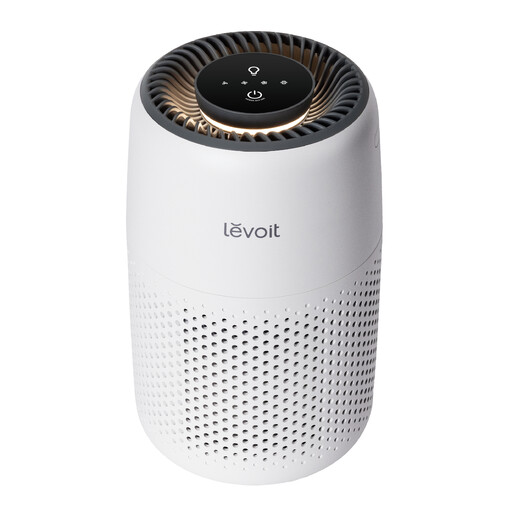
Levoit Mini LAP-C171-QAE air purifier, Cream White
This compact model is worth considering for a small personal room, provided its airflow matches that space. The product name specifies three-stage HEPA filtration and a night light; check the room-cleaning rate and replacement filter for this exact model before choosing it for overnight use.
View on Joybuy
 No image available
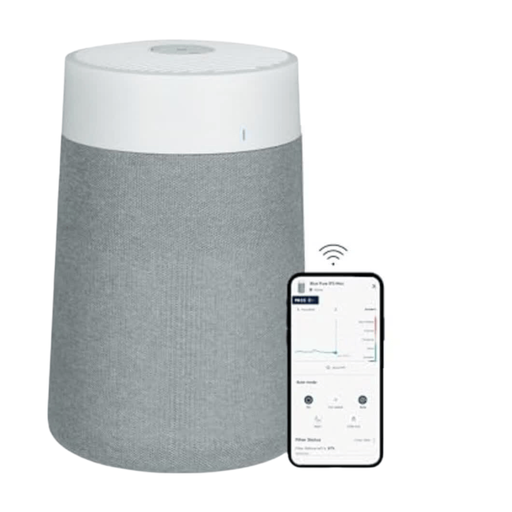
Blueair Blue Pure 511i Max air purifier, Grey
Consider this model for a defined room if its cleaning interval suits the way you plan to run it. Its product name states coverage up to 43 m²; Blueair separately states that the Blue 511i Max cleans 18 m² in 12.5 minutes and 43 m² in 30 minutes. Confirm the model-specific CADR before using it to compare capacity, and check its filter specification for your dander concern.
View on Joybuy
 No image available
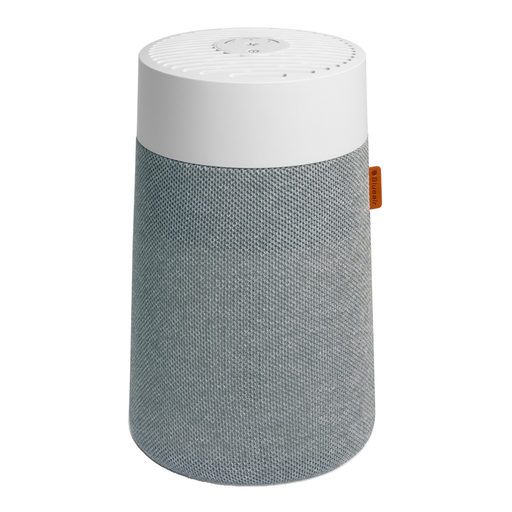
Blueair Blue Pure Mini Max 111524 air purifier, Grey
For a smaller bedroom or living area, check whether this model’s particle filtration and airflow meet your dander-filtering need. Its product name states coverage up to 20 m²; confirm the cleaning-rate basis of that figure and the correct main-filter maintenance guidance.
View on Joybuy
Frequently asked questions
Will an air purifier remove pet dander from my whole flat?
No: a suitable purifier can reduce airborne particles in the room where it operates, but it will not remove allergens already settled on bedding, upholstery and other surfaces. The UK Health Security Agency identifies pet dander as an indoor airborne allergen, so room air cleaning and regular surface cleaning address different parts of the problem.
Should I size a purifier for the whole flat or one room?
Start with the bedroom or main room where you want air cleaning most. Compare the purifier’s stated airflow and coverage at the relevant cleaning rate with that room; do not assume one compact unit will clean every closed room.
Can an air purifier replace ventilation?
No. The UK Government’s SAGE Environmental and Modelling Group says air cleaning is not a substitute for ventilation. Continue to use the ventilation available in your home rather than treating a purifier as a reason to reduce it.
How often should I replace the filter?
Follow the guidance for your exact model and filter. Levoit states a 6–8 month interval for Core 300 and Core 300S filters, although use conditions can affect replacement timing; check that the matching filter is available before buying any purifier.
What should I check about CE or UKCA marking?
Check the documentation and marking applicable to the product and your delivery location. Department for Business and Trade guidance dated 31 March 2026 says CE marking continues to be recognised alongside UKCA marking for relevant regulated products placed on the Great Britain market; Northern Ireland has different arrangements.


