Bedroom users affected by hay fever
People choosing a purifier for one bedroom who need to consider night-time noise and display light alongside pollen filtration.


Choose a portable air purifier with a particle filter that explicitly addresses pollen, then match its stated airflow and room-coverage basis to the room you want to use it in. For a bedroom, check noise and light settings as well as airflow; for a larger shared room, give room capacity more weight. A portable purifier serves one room or area and can supplement, rather than replace, other ways of limiting pollen indoors.
People choosing a purifier for one bedroom who need to consider night-time noise and display light alongside pollen filtration.
People using a larger shared space who need to check whether the stated airflow and room-coverage basis suit that area.
People who want to identify the correct replacement filter, its maintenance schedule and the purifier’s electricity use before choosing a model.
Start with pollen filtration and the room you want to clean; then decide how much night-time comfort, maintenance and additional controls matter to you.
| Concern | What to check | Who this matters to |
|---|---|---|
| Room capacity | Check the exact model’s pollen or particle-filtration claim, clean air delivery rate (CADR) in m³/h, and the air-change basis of any room-area claim. | If the main living room is larger than the bedroom, I need to know the purifier is sized for the space where I will use it. Around 36% of consumers would put room fit first. |
| Bedroom comfort | Check sleep-mode noise, display dimming or light-off controls, and the airflow available at the quieter setting. | When I run a purifier overnight, noise or a bright display could make me turn it off. For around 29% of consumers, comfortable bedroom use would be the primary concern. |
| Filters and upkeep | Identify the genuine replacement-filter part and its stated replacement guidance; compare power figures for the modes you expect to use. | I want to keep using the correct filter without being caught out by its upkeep. Replacement and running requirements would come first for around 21% of consumers. |
| Additional controls | Check for a particle sensor or auto mode; consider a separate carbon stage if odours are also a concern. | If I also want automatic adjustments or help with odours, I would look beyond the pollen filter—but not instead of checking room fit. Around 14% of consumers would make these additional features their main priority. |
A filter description does not establish how much air the unit can clean in your room. The US Environmental Protection Agency describes portable air cleaners as serving a single room or area, while manufacturers express capacity using different airflow and room-area claims.
Check the exact model’s CADR and the air-change basis behind its stated coverage before treating it as suitable for a larger room.
Filtering air in one room does not stop pollen entering through open windows or being brought indoors from outside.
Use the purifier alongside exposure-reduction steps. The NHS advises keeping windows and doors shut as much as possible when pollen counts are high; seek pharmacy or medical advice about symptoms when needed.
Pollen filtration depends on using and maintaining the correct filter. Replacement guidance varies by model and use.
Identify the genuine filter part and check its replacement guidance before buying; do not assume filters are washable or interchangeable.
Replacement filters and electricity use remain part of owning and running the purifier.
North West Allergy Network notes that symptoms occurring all year are more likely to involve other triggers, such as dust mites, mould spores or animal hair.
If symptoms persist outside the pollen season, seek appropriate clinical advice rather than choosing solely on pollen-related product claims.
Philips lists named models with different stated airflow capacities, from a smaller purifier to an XL-room model.
Levoit has compact models whose published specifications can help with bedroom and room-size checks.
The LG PuriCare 360 is a larger model to consider where automatic operation matters.
Meaco lists air purifiers alongside some combined dehumidifier-and-filter products.
These portable purifiers include bedroom-oriented models and options with higher stated airflow for larger rooms. Compare each listing’s room-coverage basis, operating noise and replacement filter against your intended use.
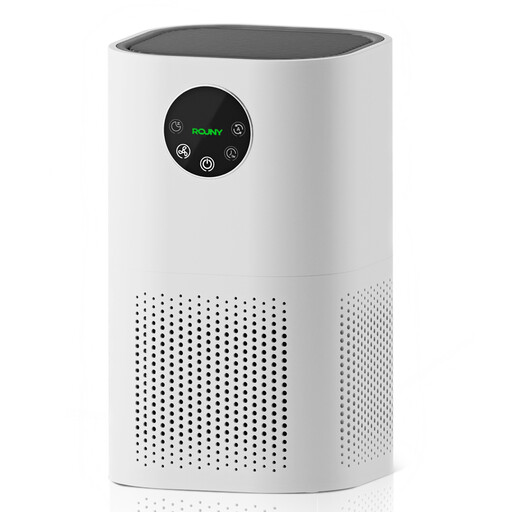 Image unavailable
For a bedroom, this listing pairs a stated sleep mode of no more than 25 dB with an H13 filter and a 150 m³/h CADR. It claims 20–50 m² coverage; check the air-change basis for your room and identify the correct replacement filter before buying.
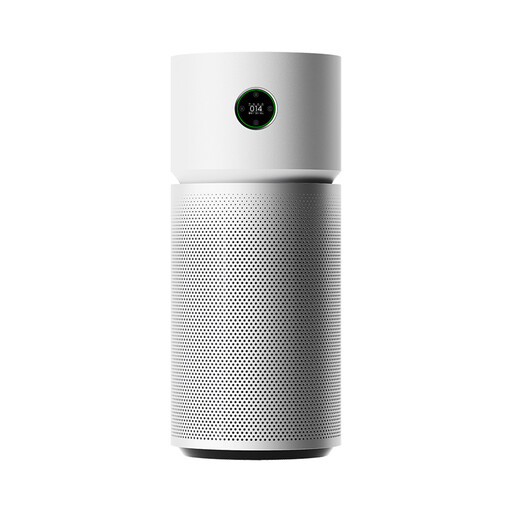 Image unavailable
For a larger room, consider its listed 600 m³/h CADR alongside the stated coverage of up to 125 m²; check how that coverage is defined for your intended use. The title also specifies PM2.5/PM10 sensing and app and voice control. Check the placement space and replacement-filter requirements.
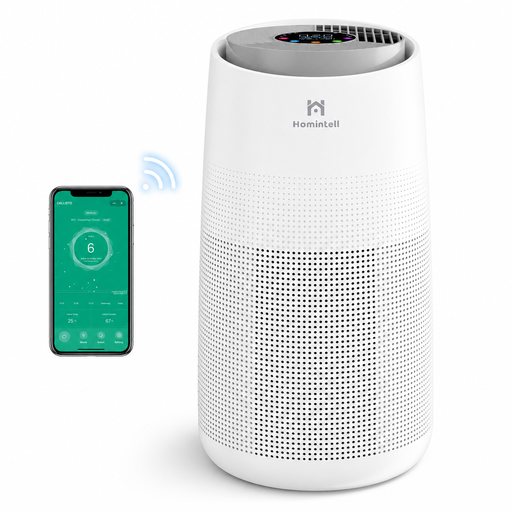 Image unavailable
For a room where the stated 300 m³/h CADR is relevant, the listing specifies an H13 HEPA and activated-carbon filter, Wi-Fi control and a 36 m² room claim. Check the air-change basis and genuine replacement filter; follow the product’s safety guidance if using its UV or ioniser functions.
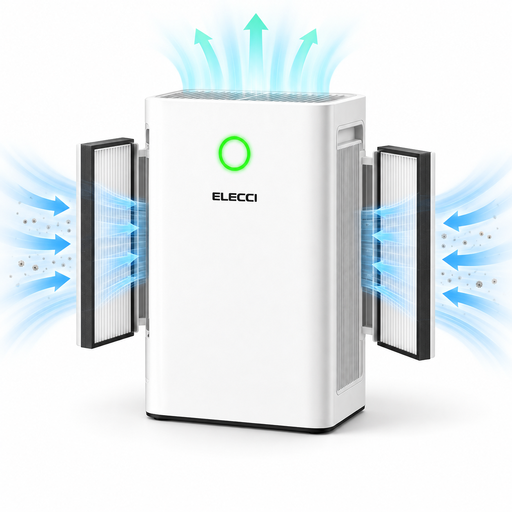 Image unavailable
For a larger room, compare the listed 550 m³/h CADR with the claimed coverage of up to 48 m², and confirm the air-change basis. The listing names pollen among the particles addressed. Check noise at the fan setting you expect to use and identify the replacement filter.
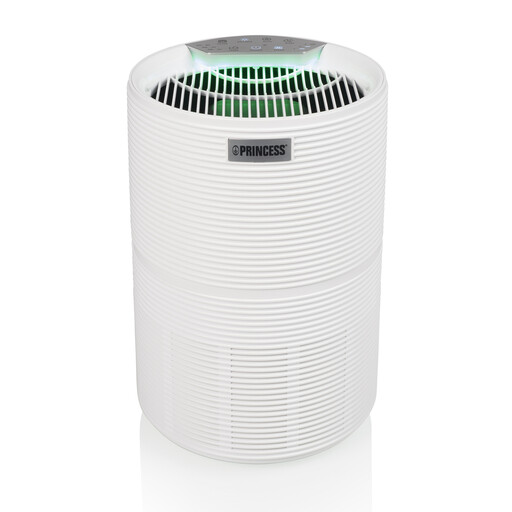 Image unavailable
For a contained room where app control matters, the listing specifies an H13 HEPA filter, 160 m³/h CADR and an air-quality sensor. Check the air-change basis behind its 55 m² coverage claim, plus night-time noise and replacement-filter requirements if you plan to use it in a bedroom.
Not by default: the US Environmental Protection Agency describes portable air cleaners as filtering one room or area. Choose capacity for the room where you intend to use the purifier rather than treating a bedroom unit as whole-home filtration.
If you are trying to limit pollen entering the room, NHS guidance advises keeping windows and doors shut as much as possible when pollen counts are high. North West Allergy Network also advises sleeping with the bedroom window closed; balance this with your ventilation and comfort needs.
Follow the replacement guidance for the exact purifier and filter you buy. Levoit gives a suggested 6–8 month interval for its Core 300S, but use and pollutant load can affect maintenance; identify the correct replacement part before purchase.
No. The NHS says hay fever cannot currently be cured. Filtering air in one room can be part of limiting indoor pollen exposure, but it does not replace advice about managing symptoms or treatment.