Students using one bedroom
If airborne pollen is the concern while you sleep and study, concentrate on particle filtration and output for that room rather than a whole-home coverage claim.


For airborne pollen in a student room, choose a particle-filter purifier with a stated pollen-filtration claim and output suited to the room where you sleep and study. Check the output basis, overnight noise and replacement-filter arrangements together: a purifier works on airborne particles in its room, not pollen already settled on fabrics, and does not replace cleaning or medical care.
If airborne pollen is the concern while you sleep and study, concentrate on particle filtration and output for that room rather than a whole-home coverage claim.
Check noise at the setting you would use overnight, as well as whether display lights can be turned off. A quiet-mode figure alone does not describe output at other fan speeds.
Replacement filters, electricity use and accommodation rules all affect whether a purifier is practical to keep running in a rented room.
Start with filtration and output for your actual room, then check whether the operating setting and upkeep fit daily life there. Clean air delivery rate (CADR) describes the speed of airborne-particle reduction; a room-coverage claim may use a different air-change basis.
| Concern | What to check | Who this matters to |
|---|---|---|
| Pollen filtration and room fit | Check the exact model’s particle-filter and pollen claims, plus its CADR in m³/h or a room claim with a stated air-change basis. | If I am using the purifier in one bedroom, I want its stated output to make sense for that space rather than relying on an allergy label. Around 42% of consumers put room-fit pollen filtration first. |
| Noise and light | Compare noise at the intended fan setting and check whether bedroom display lights can be dimmed or switched off. | When I need the unit on while sleeping or studying, disruptive sound or light could make me turn it off. For around 33% of consumers, avoiding that disruption is the primary concern. |
| Upkeep and accommodation | Identify the exact replacement filter and its recommended interval; check power information and your accommodation’s appliance rules. | I need to be able to replace the filter and use the appliance in my room under the applicable hall or tenancy rules. Keeping ownership practical comes first for around 25% of consumers. |
Filtration terminology does not tell you how quickly a purifier can process airborne particles in your room.
Compare the exact model’s CADR or stated room-performance basis with your bedroom, and check which fan setting the claim describes.
A portable purifier works on air in the room where it runs. Which? notes that pollen can also settle on carpets and rugs.
Place the unit in the room that matters most, keep its airflow unobstructed and clean settled pollen. Asthma + Lung UK advises checking pollen and air-pollution levels before opening windows when they are triggers.
A purifier remains practical only if you can obtain the correct filter and maintain it at the interval specified for that model.
Identify the exact replacement-filter code and recommended interval before choosing a unit; check its power information for the setting you expect to use.
Filter changes and electricity remain ongoing parts of using the appliance.
Halls and other managed student accommodation can set rules for personal electrical appliances. Hampshire and Isle of Wight Fire and Rescue Service advises students to check their accommodation’s fire-safety rules.
Read your provider’s rules, seek approval if required and follow the appliance instructions. Do not use damaged equipment or overload sockets.
The Core 300 is a compact bedroom-oriented purifier; the Core 300S is a connected model in the same line.
The Airmega 100 is a compact-room option for comparing stated output, noise and filter life.
The 800i AC0850/31 combines particle and active-carbon filtration with sensor and app functions.
These bedroom-oriented purifiers offer different stated filtration, output and operating features for the single-room pollen decision. Compare each model’s room fit and overnight operation before choosing.
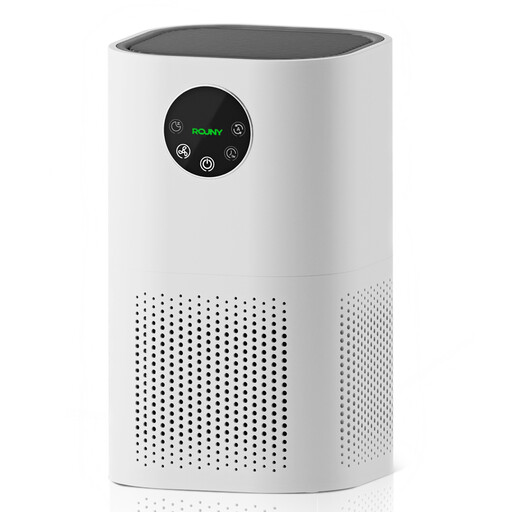 No image available
Consider this for a bedroom where a stated pollen claim and sleep-mode figure both matter.
The title states a 150 m³/h CADR, H13 filtration, four fan speeds and sleep-mode noise of ≤25 dB.
Check the air-change basis behind its stated room coverage, the exact replacement filter and your accommodation’s appliance rules.
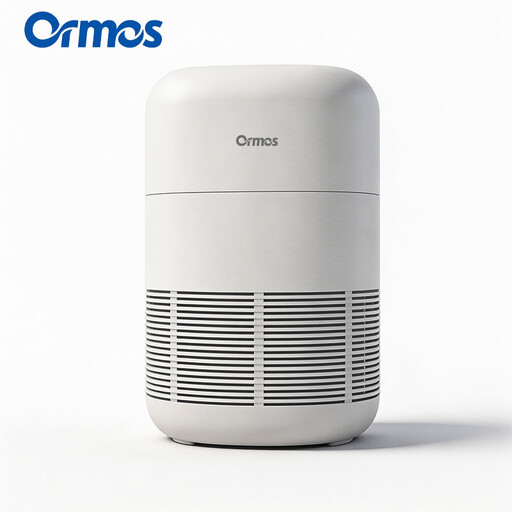 No image available
Consider this for a bedroom if its stated pollen-filtration claim and operating modes suit your routine.
The title states a 150 m³/h CADR, H12 HEPA and activated-carbon filters, and sensor-led auto operation.
Check the room-performance basis, noise at your intended setting, replacement-filter arrangements and accommodation rules.
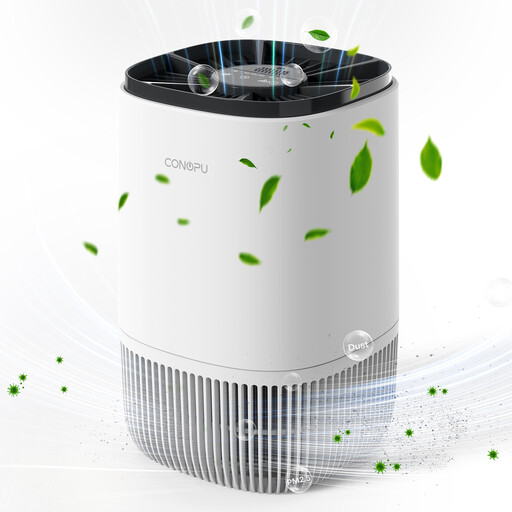 No image available
Consider this portable bedroom model if its stated pollen claim and timer fit how you plan to use the room.
The title specifies three modes and a 24-hour timer.
Before deciding, check its output against your room, noise at the intended setting, replacement filters and accommodation rules.
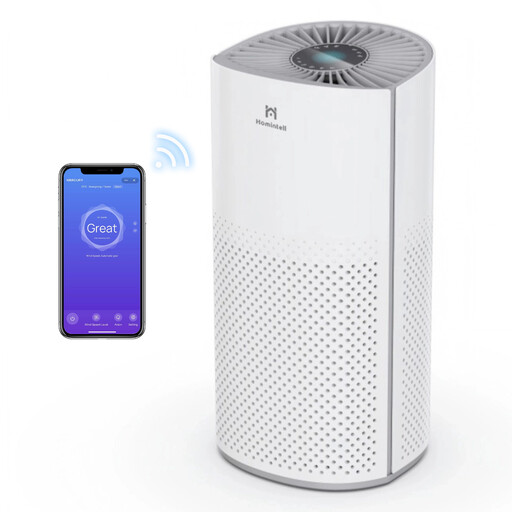 No image available
Consider this model if app control matters alongside checking its suitability for airborne pollen.
The title states a 200 m³/h CADR, H13 HEPA and activated-carbon filters, and Wi-Fi control.
Confirm its pollen-filtration claim, applicable room coverage and sleep-setting noise: the listed room-area and noise figures differ. Check the exact replacement filter and accommodation rules too.
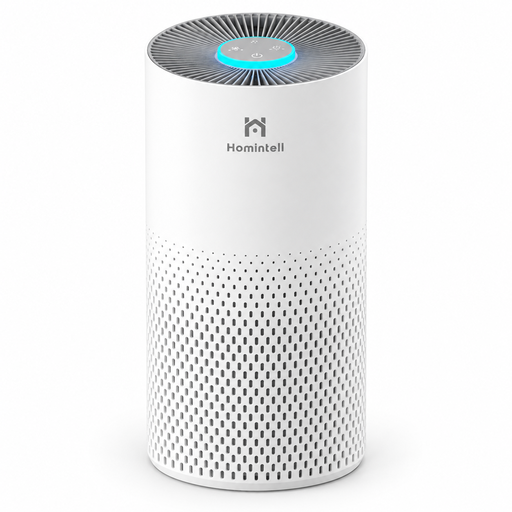 No image available
Consider this bedroom model if touch controls and a timer are useful, while checking whether its filtration suits airborne pollen.
The title states a 150 m³/h CADR, HEPA and carbon filters, three speeds and an eight-hour timer.
Confirm the applicable room-area claim and sleep-setting noise, then check the exact replacement filter and accommodation rules.
No. A room purifier is not a substitute for prescribed treatment or advice from a clinician. Its role here is limited to reducing airborne particles in the room where it operates.
Not necessarily. Asthma + Lung UK advises checking pollen and air-pollution levels before opening windows when they are triggers for you. A purifier does not remove pollen already settled on floors and soft furnishings, so cleaning remains relevant.
The interval depends on the exact model and its instructions. Levoit recommends every 6–8 months for Core 300/300S filters, while Coway states up to 12 months for the Airmega 100 filters; check the correct replacement filter for any model you are considering.
Check your accommodation provider’s rules before buying, because permission can depend on the hall. Hampshire and Isle of Wight Fire and Rescue Service advises students to check local fire-safety rules; Pembroke College says an air purifier may require consultation with its College Nurse in its accommodation.