What matters when choosing a purifier?
Start with pollen filtration and room sizing, then consider the fan setting you can live with, filter upkeep and any emissions created by the hobby itself.
| Concern |
What to check |
Who this matters to |
| Particle-cleaning capacity |
Compare published CADR in m³/h with the measured room size. Read the conditions behind any room-coverage figure, particularly if the space opens into another room. |
I want airborne pollen cleared throughout the room, rather than choosing a unit by a large coverage figure alone. Around 36% of consumers put cleaning capacity and room sizing first. |
| Noise during use |
Check which fan setting a noise figure describes, and whether that setting meets your cleaning needs. |
During a long, quiet session, I need a fan setting I can leave running without disrupting what I am doing. For around 29% of consumers, usable noise levels are the primary concern. |
| Filter upkeep and odours |
Confirm the exact compatible replacement filter and the maker’s maintenance guidance. If odours matter, check whether the unit also has an activated-carbon stage. |
I want to keep using the intended particle filter and may also care about ordinary room odours. Filter upkeep and secondary odour handling come first for around 21% of consumers. |
| Hobby-process emissions |
Identify whether sanding or spraying calls for extraction or ventilation at source; do not treat a room purifier as that control. |
If my hobby releases dust, mist or vapour at the work surface, I need to address that process before relying on room-air cleaning. Around 14% of consumers prioritise this distinction. |
Joybuy air purifiers for hobby rooms
These models offer different stated cleaning rates and filter arrangements for enclosed hobby rooms. Match the published specifications to your room and check the sound level at a setting you would actually use; hobbies that generate dust or vapour need separate process controls.
 No image available
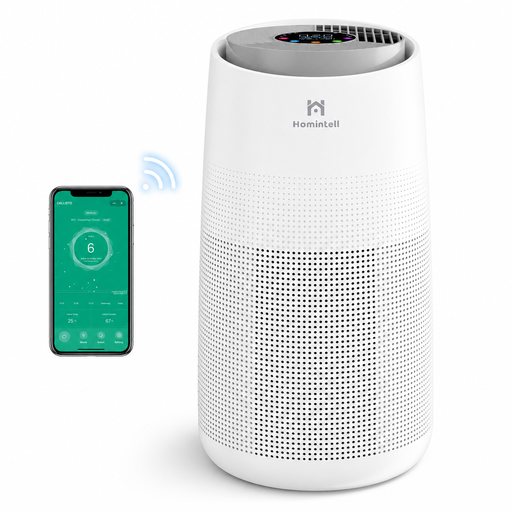
Homintell Smart Air Purifier, 300 m³/h CADR
Consider this model if a published cleaning rate is a priority for your enclosed hobby room.
The product name specifies an H13 HEPA and activated-carbon filter, Wi-Fi control, UV and ioniser functions, and an 8-hour timer.
Check the basis of its room-coverage claim, noise at your intended fan setting, replacement-filter compatibility and whether the additional air-cleaning functions can be switched off.
View on Joybuy
 No image available
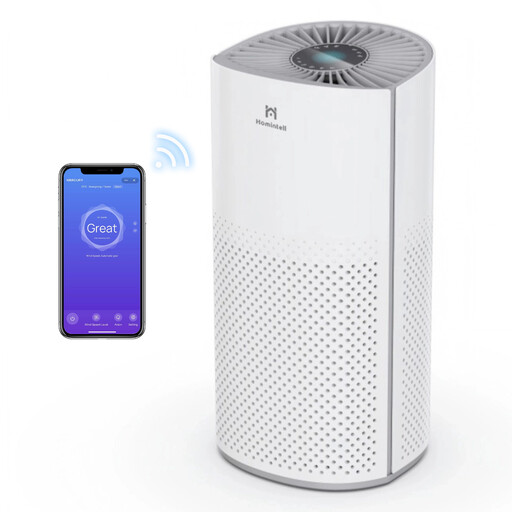
Homintell Smart Air Purifier, 200 m³/h CADR
Consider its stated cleaning rate alongside your room size if you want a particle purifier for an enclosed hobby space.
The product name specifies an H13 HEPA and activated-carbon filter, Wi-Fi control, UV and ioniser functions.
Check the room-coverage conditions, the noise at the speed you need, replacement-filter compatibility and whether the additional air-cleaning functions can be switched off.
View on Joybuy
 No image available
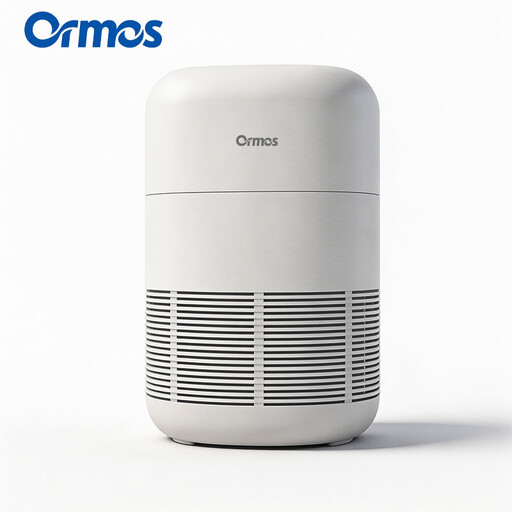
Ormos Air Purifier, 150 m³/h CADR, H12 HEPA
Consider this lower stated cleaning rate for a smaller room only after checking the capacity you need.
The product name specifies an H12 HEPA and activated-carbon filter, TVOC and PM2.5 sensors, and sleep and automatic modes.
Check replacement-filter compatibility and the noise at the fan setting suitable for your room; a sleep-mode description alone cannot establish that sound level.
View on Joybuy
 No image available
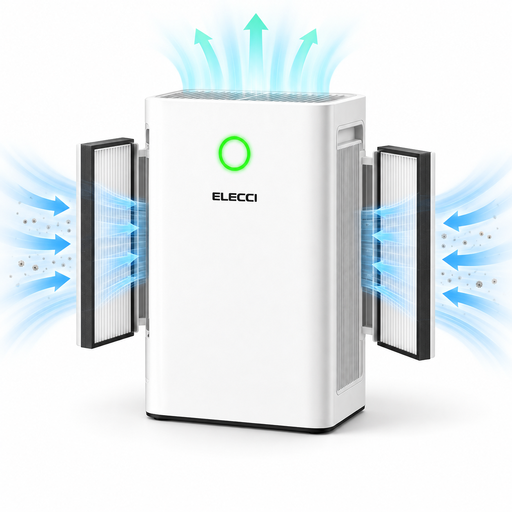
ELECCI Dual-HEPA Air Purifier, 550 m³/h CADR
If you are considering a higher stated cleaning rate, check whether this model’s room-coverage conditions match your hobby room before choosing it.
The product name specifies dual HEPA filters, 550 m³/h CADR, an air-quality indicator and an 8-hour timer; it also names pollen among the particles addressed.
Check noise at the intended fan setting and the availability of compatible replacement filters.
View on Joybuy
 No image available
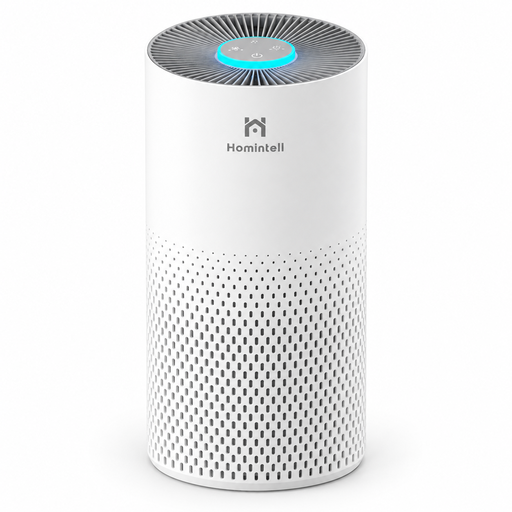
Homintell Air Purifier, 150 m³/h CADR
Consider this stated cleaning rate for a smaller hobby room after checking the room size and the filter’s suitability for airborne pollen.
The product name specifies HEPA and carbon filters, three speeds, touch controls and an 8-hour timer.
Check the room-coverage conditions, noise at the setting you plan to use and compatible replacement-filter availability.
View on Joybuy
Questions about pollen and hobby-room purifiers
What should I compare first when buying a purifier for pollen?
Compare a published CADR and the conditions behind the stated room coverage, then confirm that the particle filter is intended for pollen. Levoit’s pollen-selection guidance uses CADR as a room-sizing consideration, but a coverage figure is only useful when its conditions fit your room.
Should I run a pollen purifier throughout a hobby session?
Running it consistently with the manufacturer’s instructions can help reduce airborne allergens, according to Allergy UK. Choose a fan setting you can leave on during the session, and maintain the intended filter.
Can a purifier replace extraction when I sand or spray?
No: a room purifier for pollen should not replace controls for dust or vapour released by the activity. The Health and Safety Executive advises capturing wood dust before it spreads and identifies mechanical or local exhaust ventilation for relevant solvent-spraying work.
How often will I need to replace the filter?
Follow the instructions for the exact purifier and replacement filter you buy. As a model-specific example, Levoit advises replacing the Core 300S filter every 6–8 months; usage and airborne loading can affect when a filter needs attention.
Are ozone or ionising functions a simple alternative to a particle filter?
Do not assume they are interchangeable with particle filtration for pollen. The UK Air Quality Expert Group cautions that some ozone- and ionisation-based technologies can produce harmful secondary pollutants; check a model’s filtration, CADR and additional functions before choosing it.


