
24/7 Customer Support

Free returns

Same-day & Next-day Delivery

Quality Guaranteed

Unlock Your Welcome Offers: FREE Delivery | Up to 80% OFF | Free 30-day JoyPlus trial
Download the APP
An air purifier can be useful in a bedroom, living room, home office or pet-friendly flat, but choosing one is not simply a matter of picking the highest filter grade on the box. Marketing often focuses on dramatic particle-removal percentages while leaving out room size, airflow, noise and replacement-filter costs.
The most common buying pitfalls are:
CADR, or Clean Air Delivery Rate, indicates how quickly a purifier supplies filtered air. It is normally shown in cubic metres per hour, written as m³/h.
For a small bedroom or office, a CADR around 85–150 m³/h may be suitable, depending on the room’s size and ceiling height. Medium rooms may benefit from approximately 150–300 m³/h, while larger open-plan areas may need more airflow or multiple units.
A practical approach is to select a model with enough capacity to circulate the room several times per hour, rather than relying only on the manufacturer’s maximum coverage statement. Keep doors and windows closed while the purifier is operating if you want to measure its effect in one room.
A HEPA air purifier is designed to capture fine airborne particles, including dust and pollen. H11, H12 and H13 refer to different filter classifications, but the grade alone does not tell you how quickly the unit cleans the room.
A three-stage system commonly combines:
If you are looking for an air purifier for allergies, check the pre-filter design, HEPA specification and replacement schedule. For an air purifier for pet odours, activated carbon capacity is relevant, but a small carbon layer may have limited odour-adsorption capacity. No purifier replaces regular cleaning, ventilation or source control.
Noise is particularly important for a bedroom air purifier or home office. Check the stated noise figure and whether it applies only to sleep mode or to the lowest fan setting. A purifier advertised at 24–30 dB may become considerably louder at maximum speed.
An air purifier with air quality sensor can automatically adjust its fan according to detected PM2.5 or other air-quality readings. However, sensors are not a complete analysis of indoor air and may respond differently to cooking fumes, sprays or dust. Smart controls, timers and app connectivity are useful conveniences, but they should not replace checking the core airflow and filter details.
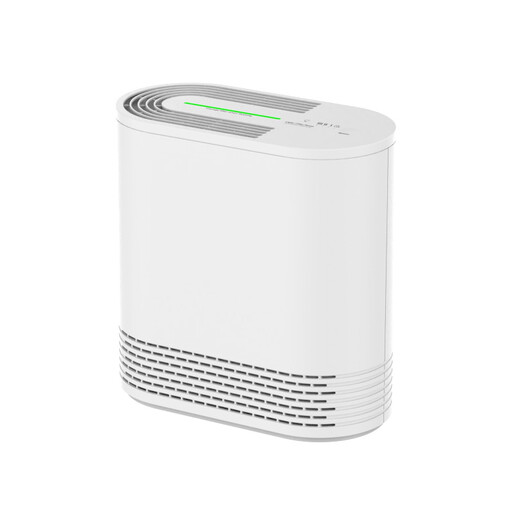
Why This Fits Their Persona: Its 85 m³/h CADR is suited to smaller UK bedrooms, offices and rented rooms, while the compact design avoids taking up much floor space.
The stated CADR and small-room positioning make it easier to compare with room requirements instead of relying on a broad coverage claim. The washable pre-filter also helps capture larger debris before the main filter.
H13 HEPA and activated carbon filtration; three fan speeds, sleep mode and a filter replacement reminder.
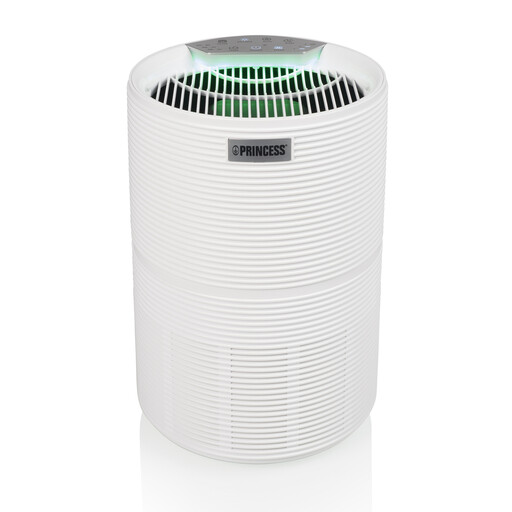
Why This Fits Their Persona: App control, voice compatibility and a built-in air-quality indicator suit households that want convenient monitoring across a living room or shared home space.
The 160 m³/h CADR is clearly stated alongside the 3-in-1 filter system, making airflow and filtration easier to assess separately.
H13 HEPA, activated carbon and pre-filter; app, voice control, temperature and humidity display, plus a two-year manufacturer’s warranty.
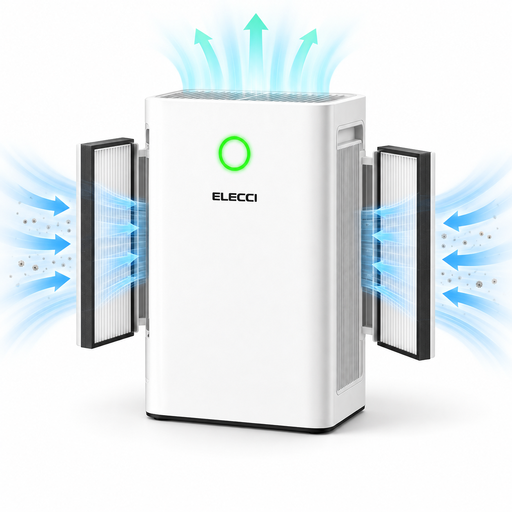
Why This Fits Their Persona: The 550 m³/h CADR is aimed at larger rooms up to the stated 48 m², making it relevant to open living areas, busy family rooms or larger offices.
The high airflow specification helps distinguish this model from compact bedroom units. Its washable pre-filter is intended to catch larger debris, but the main filter still requires appropriate replacement.
Dual-HEPA filtration, air-quality indicator, eight-hour timer and a stated 24 dB sleep mode.
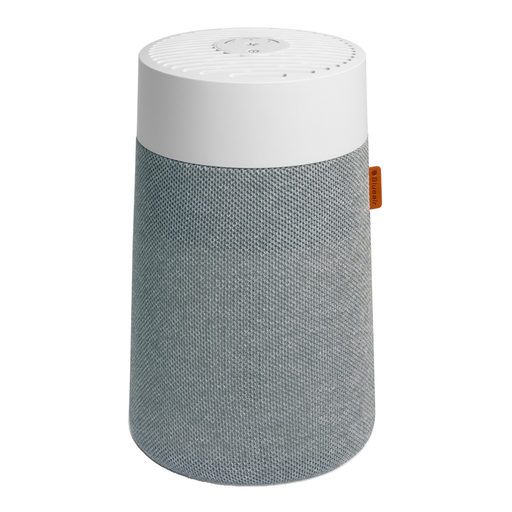
Why This Fits Their Persona: Its compact format is designed for bedrooms, desks and compact living areas up to the stated 20 m², with a listed noise level from approximately 20 dB.
The clearly stated 20 m² room figure helps prevent using a personal-space purifier in an oversized room. Its two-button operation also avoids unnecessary smart features.
HEPASilent filtration, washable interchangeable pre-filter and approximately 10 W power consumption.
Before buying, check whether the replacement filter is available through the same retailer or manufacturer. Composite filters are generally replaced rather than washed, while a washable pre-filter can be cleaned according to the instructions.
Electricity use depends on wattage, fan speed and daily operation. To estimate running cost:
Power in kW × hours used × electricity price per kWh = operating cost
For example, a 25 W purifier running for eight hours uses 0.2 kWh. Your actual cost depends on your household tariff. Using sleep or auto mode may reduce consumption compared with continuous high-speed operation, but lower airflow can also mean slower room cleaning.
Place the unit on a stable surface with clear space around the air inlet and outlet. Do not use an air purifier in a damp bathroom, cover its vents or move it while plugged in. Follow the supplied instructions for filter replacement and disposal.
It can be practical when the model is correctly sized for the room and its noise level suits sleeping. Look for a published CADR, a sleep mode and a filter replacement plan. An air purifier should complement normal ventilation and cleaning rather than replace them.
There is no single schedule for every household. Pet hair, smoke, cooking and dusty environments can shorten filter life. Follow the manufacturer’s reminder or manual, and inspect the pre-filter regularly. Never wash a filter unless the instructions specifically state that it is washable.
An air purifier with activated carbon may help reduce some household odours, while the pre-filter can capture larger particles such as hair. Results depend on carbon quantity, airflow and the source of the smell. Regular cleaning of soft furnishings and litter areas remains important.