
24/7 全天候客户支持

免费退货

当日/次日达

品质保障

开启新人专享福利: 全场免邮 | 低至 2 折 | 免费试用 30 天 JoyPlus 会员
下载 Joybuy
Living in the UK, we're well aware of the seasonal shifts that affect our air. From the high pollen counts of spring and summer to the urban pollution and indoor stuffiness of winter, maintaining fresh, clean air inside our homes can be a constant challenge. For many, especially those with allergies, asthma or pets, airborne particles like dust, pollen and dander can make home life less comfortable.
A good home air purifier is designed to tackle these invisible intruders, filtering the air to create a healthier living environment. But with so many models and technical terms, choosing the right one can feel overwhelming. This guide is here to cut through the clutter, offering practical advice to help you select an air purifier that genuinely suits your needs.
Before diving into specific models, let's cover a few key considerations. Understanding these will help you narrow down your options and make a more informed choice.
One of the most important specifications is the CADR (Clean Air Delivery Rate). Measured in cubic metres per hour (m?/h), this number tells you how quickly the purifier can clean the air in a room of a certain size. A higher CADR means faster purification. As a general rule, you should choose a model with a CADR that is appropriate for the room where you plan to use it most. A small unit designed for a bedroom will struggle to be effective in a large, open-plan living area.
Most modern air purifiers use a multi-stage filtration process to capture a wide range of particles. The most common system includes:
air purifier with a washable filter at this stage is a great feature, as it can be rinsed and reused, helping to extend the life of the more expensive internal filters.HEPA air purifier (High-Efficiency Particulate Air) is engineered to capture at least 99.97% of airborne particles down to 0.3 microns in size. This makes it essential for anyone looking for an air purifier for allergies, as it effectively traps pollen, mould spores, dust and pet dander.air purifier for smoke or homes with pets.If you plan to use the device in your living room or bedroom, noise is a critical factor. Look for a quiet air purifier, especially one that specifies its noise level in decibels (dB) for its lowest setting. Many models now come with a dedicated 'Sleep Mode', which runs the fan at a very low, quiet speed to ensure your rest is not disturbed, making it an ideal air purifier for bedroom use.
Based on features, performance specifications and suitability for different UK homes, here are some of our standout recommendations.
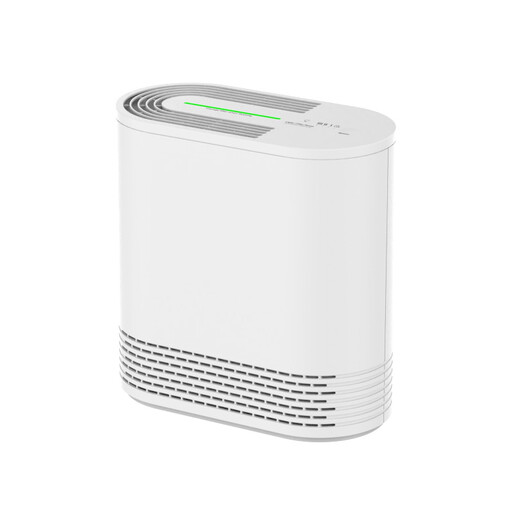
View the Lavieair K01 Air Purifier
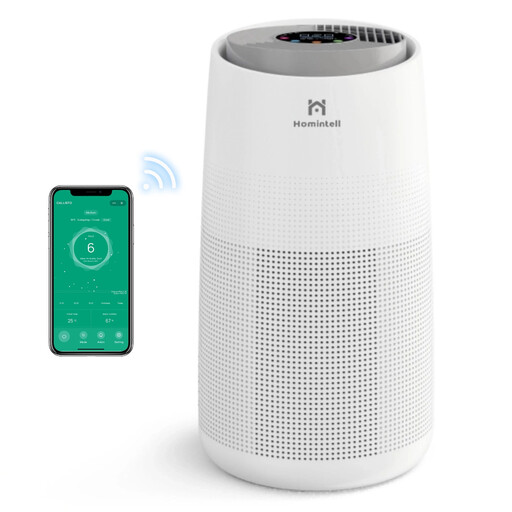
View the Homintell Smart Air Purifier
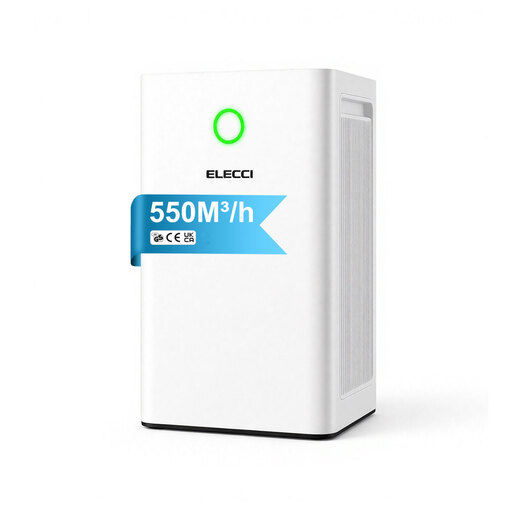
View the ELECCI True HEPA Filter Air Purifier
These recommendations cover a range of common needs, but every home is different. If you're looking for a different size, feature set or price point, there are many other models to consider.
Explore our full range of HEPA home air filters to find the perfect match for your home.
Do air purifiers really work for allergies? Yes, an air purifier equipped with a True HEPA filter is specifically designed to capture common airborne allergens. By trapping particles like pollen, dust mites, mould spores and pet dander, it can help reduce the concentration of these irritants in your indoor air, which may help to alleviate symptoms.
How often do I need to change the filter? This depends on the model, your home's air quality and how often you use it. Generally, HEPA and activated carbon filters need replacing every 6 to 12 months. Many modern units include a filter replacement indicator light to remind you. Choosing a model with a washable pre-filter can also help prolong the life of the main filters by capturing larger debris first.
Can I run an air purifier all day? Yes, home air purifiers are designed for continuous operation to maintain air quality. To manage energy consumption and noise, look for models with an 'Auto Mode' that adjusts fan speed as needed, or a quiet air purifier with a low-power 'Sleep Mode' for efficient and unobtrusive overnight use.