
24/7 Customer Support

Free returns

Same-day & Next-day Delivery

Quality Guaranteed

Unlock Your Welcome Offers: FREE Delivery | Up to 80% OFF | Free 30-day JoyPlus trial
Download the APP
Indoor air can contain dust, pollen, pet dander, smoke particles and household odours. An air purifier may help reduce airborne particles in bedrooms, living rooms, home offices and other enclosed spaces, but choosing the right model requires more than looking at a large filtration percentage on the box.
The most useful comparison points are airflow, filter construction, noise, maintenance and the size of the room you intend to use it in.
A product may advertise an impressive particle-capture figure, but this does not tell you how quickly it cleans a room. A small unit with limited airflow may be suitable for a bedside table yet struggle in an open-plan lounge.
Check the Clean Air Delivery Rate (CADR) as well as the filter type. CADR is normally shown in cubic metres per hour, or m³/h. A higher figure generally indicates that more filtered air can be delivered over a given period, although actual performance also depends on room layout, doors, ceilings and fan speed.
Coverage figures can vary according to the manufacturer’s testing method and the number of air changes assumed. A unit advertised for a large room may only achieve that figure at a louder, higher fan setting.
For a UK bedroom or study, compare the stated room size with the CADR and consider whether you will use the purifier in sleep mode. For larger living spaces, a higher-CADR model or more than one unit may be more practical than relying on a compact purifier at full speed.
A purifier is not a one-off purchase. HEPA and carbon filters collect material over time and usually require replacement. A washable pre-filter can reduce dust build-up on the main filter, but it does not make every filter washable.
Before ordering, check:
A HEPA air purifier is designed to capture fine airborne particles through a dense filter layer. Product descriptions may refer to H12, H13 or another grade, but buyers should check the complete filtration system rather than focusing on the grade alone.
A useful arrangement is:
An air purifier with activated carbon filter can be more suitable for homes with cooking smells, smoke or pet odours than a particle-only model. Carbon performance depends on the amount and quality of carbon used, so avoid assuming that every thin carbon layer offers the same odour control.
Use CADR to compare airflow between models. For example, the compact Lavieair K01 is listed at 85 m³/h, while the Ormos H12 model is listed at 150 m³/h. Larger options include the Princess Smart Air Purifier 160 at 160 m³/h, the Homintell Mercury at 200 m³/h, and the Homintell Callisto at 300 m³/h.
These figures provide a useful comparison, but they should not be treated as a guarantee for every room. Measure your room, account for open doors and select a model that can operate at a comfortable speed without excessive noise.
A quiet air purifier is more likely to remain switched on overnight. Look for a published sleep-mode noise figure rather than relying only on terms such as “silent” or “whisper-quiet”. Some compact models list noise from around 20–25 dB, while others quote noise under 36 dB in their quieter setting.
A PM2.5 air purifier with a sensor can display fine-particle readings and adjust airflow automatically. TVOC sensors may also indicate certain volatile organic compounds, although readings can vary between sensors and should be treated as an indication rather than a laboratory measurement.
Smart controls, timers, child locks and filter reminders are practical additions. However, UV and ioniser functions deserve attention: follow the manual, keep UV sources away from direct viewing and check suitability if anyone in the household has a medical implant.
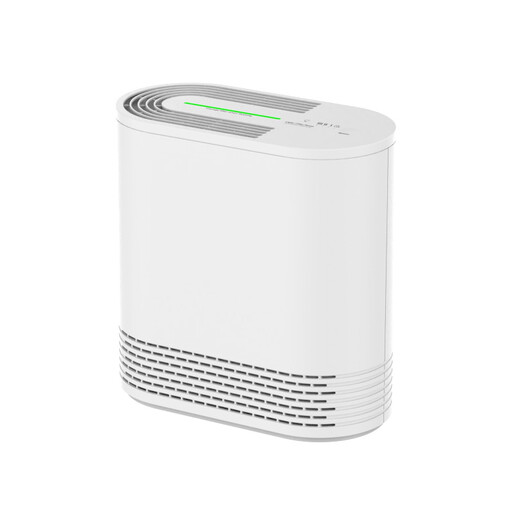
Why This Fits Their Persona: Its 85 m³/h CADR is suited to smaller UK bedrooms, offices and studies where a compact footprint and modest power use are priorities.
The specification states the CADR clearly and identifies the washable pre-filter, H13 HEPA filter and activated carbon layer.
Three fan speeds, sleep mode, night light and a filter replacement reminder.
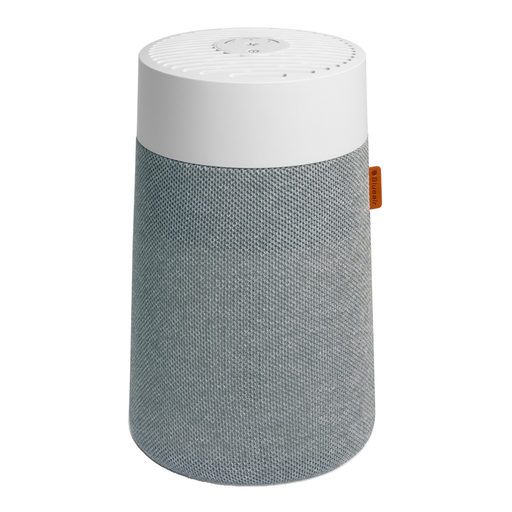
Why This Fits Their Persona: A compact 20 m² model for buyers who value simple controls, understated styling and low stated noise for bedrooms or offices.
Its listed room coverage and noise figure make it easier to judge against a specific bedroom or office rather than an unspecified “whole-home” claim.
HEPASilent filtration, washable interchangeable pre-filter and noise from approximately 20 dB.
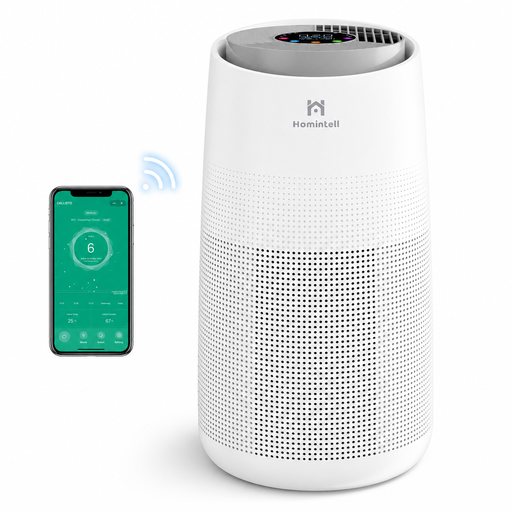
Why This Fits Their Persona: Designed for medium-sized rooms up to the stated 36 m², making it suitable for busy living rooms, pet households or open home-working areas.
The 300 m³/h CADR is stated alongside the room figure, while the three-stage filter identifies both HEPA and activated carbon.
Wi-Fi control, PM2.5 and temperature/humidity display, timer, child lock and sleep mode listed at 26 dB.
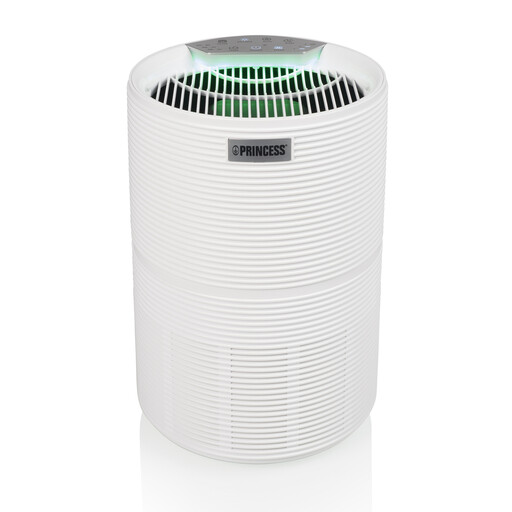
Why This Fits Their Persona: A practical option for residents who want app and voice control alongside air-quality information in a medium-sized room.
It specifies CADR, filtration layers and control methods rather than presenting connectivity as a substitute for airflow information.
H13 HEPA, activated carbon, colour-coded air-quality indicator, temperature and humidity display and an eight-hour timer.
We have compiled a complete, real-time list of products that fully satisfy these strict selection criteria and UK safety regulations.
Place the purifier on a stable, dry surface with clear space around the air inlets and outlet. Avoid positioning it behind curtains, tight against furniture or beside a heat source. Keep electrical appliances away from water and unplug the unit before moving, cleaning or replacing filters.
For pet owners, vacuuming floors and soft furnishings remains useful because an air purifier does not remove settled hair or dust. For allergy-sensitive households, close windows during periods of high outdoor pollen if appropriate and use the purifier consistently rather than only when air already feels stale.
It can be useful where the main priorities are quieter operation, fine-particle filtration and compact sizing. Choose a bedroom air purifier with a published sleep-mode noise level, a suitable CADR and a timer or automatic mode if you do not want continuous manual control.
The interval depends on the filter design, operating hours and indoor pollution levels. Many models provide a replacement reminder, but inspect the pre-filter regularly and follow the supplied manual. A washable pre-filter may be rinsed when instructed; HEPA and carbon cartridges should not be washed unless the manufacturer specifically states that they are washable.
Running cost depends on wattage, fan speed and hours of use. Compact models may list power ratings around 7–15 W, while larger units can use more at higher speeds. To estimate cost, multiply the appliance’s kilowatt rating by your electricity tariff and operating hours. Sleep or low-speed operation normally uses less power than continuous high-speed use.