
24/7 Customer Support

Free returns

Same-day & Next-day Delivery

Quality Guaranteed

Unlock Your Welcome Offers: FREE Delivery | Up to 80% OFF | Free 30-day JoyPlus trial
Download the APP
A purifier can look impressive on a product page yet prove disappointing in everyday use. UK households often buy based on a large “coverage” figure, a high-sounding filter grade or a long list of smart functions, without checking how those details translate into a real bedroom, flat or living room.
Before choosing among air purifiers for home use, watch for these common buying traps:
CADR is expressed in cubic metres per hour and indicates how quickly a purifier delivers filtered air. A higher figure generally suits a larger or more heavily used room, although actual performance depends on ceiling height, doors, windows and placement.
For a small bedroom or home office, a compact air purifier with a CADR around 85–150m³/h may be appropriate. Medium rooms may benefit from 150–300m³/h, while a large room air purifier with a CADR of 450m³/h or more may be more suitable for open-plan areas.
Do not place a small unit in a large open-plan space simply because the listed coverage appears generous. If you want to move one device between rooms, size it for the largest room where it will be used.
A practical three-stage design commonly includes:
Check whether the filter is replaceable. Some devices include washable outer components, but the HEPA and carbon sections are often consumable parts. Confirm the correct air purifier replacement filter before ordering.
For a bedroom, look for a published sleep-mode noise figure, a dimmable display and a timer. A PM2.5 sensor can automatically adjust fan speed or show changes in indoor particle levels, but sensor readings are indicators rather than a complete assessment of air quality.
A smart air purifier may offer app control, Wi-Fi scheduling or voice-assistant compatibility. These features are useful if you want to start purification remotely, but they should not outweigh CADR, filter availability and noise.
Place any purifier on a stable, dry surface with clear space around the air inlet and outlet. Keep it away from water, curtains, heaters and blocked corners. Always remove protective packaging from a new filter before switching the unit on.
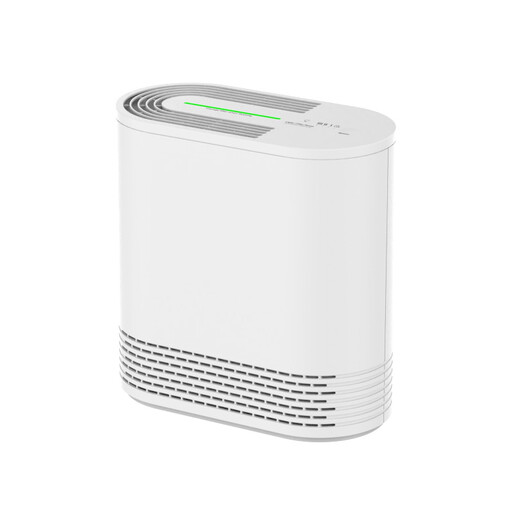
Why This Fits Their Persona: Its 85m³/h CADR and compact format suit a small bedroom, office or rented flat where space and electricity use matter.
The stated CADR is suited to smaller spaces, avoiding a mismatch between a compact unit and a large living area.
H13 HEPA and activated carbon filtration; washable pre-filter, three speeds, sleep mode and filter reminder.
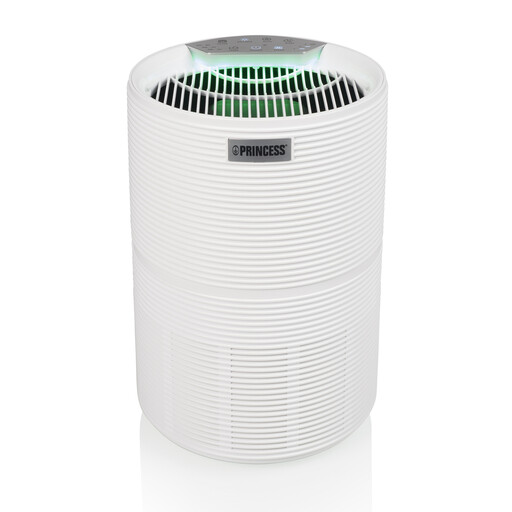
Why This Fits Their Persona: App and voice control suit connected UK homes where scheduling, monitoring and hands-free adjustments are priorities.
The 160m³/h CADR is clearly stated, helping shoppers judge it as a room-by-room model rather than an open-plan solution.
H13 HEPA, activated carbon and pre-filter; built-in air-quality indicator, temperature and humidity display, plus a two-year manufacturer’s warranty.
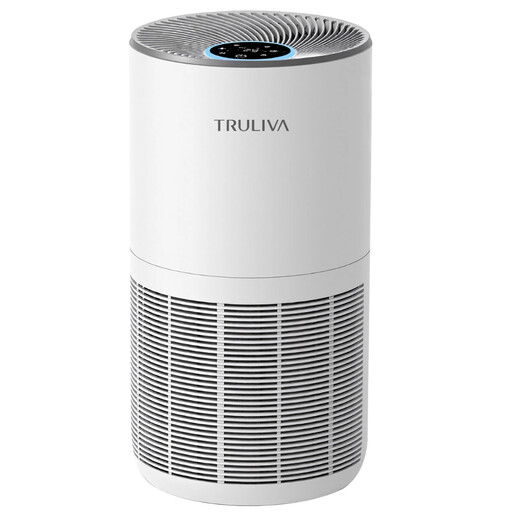
Why This Fits Their Persona: A higher-airflow option for larger bedrooms, living rooms, pet households or homes where cooking and household odours are frequent.
Its CADR and stated working area of 32–55m² give clearer sizing information than relying on an unexplained coverage headline.
Three-stage filtration with H13 HEPA and activated carbon; 360-degree air intake, PM2.5 display, child lock and 24-hour timer.
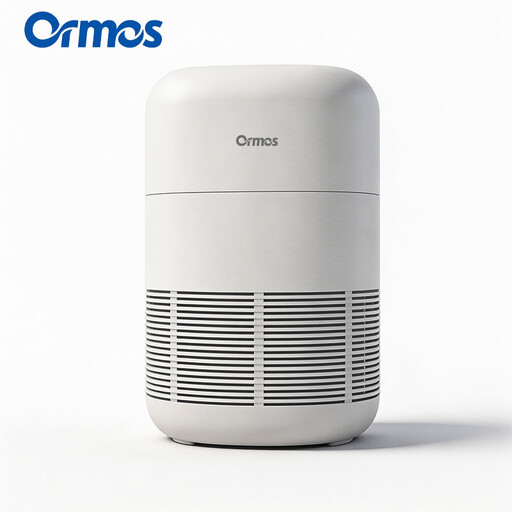
Why This Fits Their Persona: This bedroom and living-room model suits shoppers who want visible air-quality feedback without requiring a connected app.
The product specifies its H12 HEPA and activated carbon combination, CADR and minimum noise level, making the trade-offs easier to assess.
TVOC and PM2.5 display, auto and sleep modes, 360-degree circulation and stated operation from 36dB.
We have compiled a complete, real-time list of products that fully satisfy these strict selection criteria and UK safety regulations.
A purifier’s purchase price is only part of the budget. Check the replacement interval, filter price, power rating and whether the model requires a proprietary cartridge. A washable pre-filter can be vacuumed or rinsed when appropriate, but do not wash a HEPA or carbon filter unless the manual specifically allows it.
Keep doors and windows closed while running the unit if you are trying to clean a particular room, and avoid placing it directly against a wall. In homes with pets or smokers, filters may load more quickly because of additional hair, particles and odours.
They can be suitable for bedrooms when the CADR matches the room size and the unit has a low-noise sleep mode. Place it away from the bed’s immediate edge, keep the outlet unobstructed and use a timer if continuous operation is unnecessary.
There is no single interval for every home. Follow the manufacturer’s reminder or manual, and check the filter sooner if airflow drops, odours persist or the purifier operates in a smoky, dusty or pet-heavy environment. Replacement filters should match the exact model.
Running cost depends on wattage, fan speed and hours of use. A lower-power compact air purifier may use less electricity, while a higher-CADR model can draw more power at full speed. Compare the rated wattage and use sleep or automatic mode where appropriate.