Choose an air purifier for home-office dust by checking its particle clean-air delivery against the size of the room, then consider noise at the speed you will use and how you will maintain the filter. A particle-filtering purifier can reduce airborne dust, but it cannot clean dust already on surfaces; Which? advises dusting, vacuuming and ventilation alongside filtration.
Who might benefit
People working beside recurring airborne dust
If dust is regularly disturbed while you work, look for particle-cleaning capacity suited to the whole office, not just an appliance small enough to fit beside your desk. Which? assesses particle removal when testing air purifiers.
People who need a quiet workspace
Calls, recordings and sustained concentration make fan noise at a useful cleaning speed important. A quoted sleep-mode figure describes that mode, not necessarily the setting you will use throughout the working day.
Households also managing dust sources
If dust collects in furnishings or on surfaces, filtration is only one part of the routine. Which? recommends regular dusting, vacuuming and ventilation; Allergy UK notes that house dust mites cannot be completely removed from a home.
What to check before buying
Start with capacity for the room you actually use, then decide which fan setting you can work beside and how you will keep the filter serviceable.
| Concern |
What to check |
Who this matters to |
| Particle-cleaning capacity |
Measure the office and compare particulate clean-air delivery rate (CADR) or room coverage with its stated air-change basis. |
If my office is larger or its door stays open, I need enough airflow to address dust throughout the space. Around 42% of consumers put adequate particle-cleaning capacity first. |
| Noise during work |
Identify the fan mode behind each noise figure and look for noise information at a setting that provides useful airflow. |
During calls or concentrated work, I need a fan setting I can live with without relying solely on a low-speed claim. About 33% of consumers chiefly prioritise quiet operation. |
| Filter upkeep and dust sources |
Check the exact replacement filter and service guidance; plan to clean settled dust as well. |
If dust keeps collecting on furnishings and equipment, I need filtration I can maintain alongside regular cleaning. Roughly 25% of consumers place upkeep and source control first. |
Common buying mistakes
-
Choosing by the largest advertised room area
A coverage figure can represent slower air turnover than you expect. Levoit, for example, publishes different coverage areas for its Core 300 at different numbers of air changes per hour.
Measure your office and check the air-change basis behind the stated area before deciding whether the purifier has sufficient capacity.
-
Expecting filtration to replace cleaning
An air purifier addresses particles in the air, not dust already settled on a desk, carpet or soft furnishings. Allergy UK also notes that house dust mites cannot be completely removed from a home.
Keep dusting and vacuuming as part of the routine, using filtration to address airborne particles.
-
Comparing sleep-mode noise alone
A quiet low-speed setting does not tell you how loud the purifier will be at the setting needed to clean your room.
Check noise by fan mode where available, alongside airflow or independent particle-removal testing.
-
Overlooking routine filter and electricity use
A purifier used through the working day needs ongoing filter care and electricity. Filter intervals also vary by model and use.
Identify the exact replacement filter, follow the model’s service guidance and consider its power use over your planned running hours.
Relevant brands to consider
Levoit
The Core 300 and Core 300S are compact reference models for comparing home-office airflow, quieter modes and filter maintenance.
- Levoit lists a CADR of 187 m³/h for the Core 300 and describes a sleep mode for the Core 300S.
- Check the air-change basis behind coverage claims and the noise at the setting you intend to use; the quoted figures are manufacturer specifications.
Philips
The PureProtect Mini 900 Series AC0950/10 offers a compact model to examine if you want published airflow and particle-sensor information.
- Philips lists a 250 m³/h CADR and a PM2.5 sensor for the AC0950/10.
- Its coverage and low-noise figures are brand-published; check the operating conditions and the compatible replacement filter for the exact model.
Blueair
Blueair identifies its DustMagnet 5200 series as intended for small-to-medium rooms, including home offices.
- Blueair publishes a dust CADR of 133 cfm for the DustMagnet 5200 series.
- Check the mains configuration, replacement filter and warranty for the precise model you are considering.
Joybuy air purifiers for this task
These models cover different home-office sizing and feature preferences, from stated higher-airflow capacity to compact and sensor-equipped designs. Compare each model’s room-coverage basis and workday noise before choosing.
 No image available
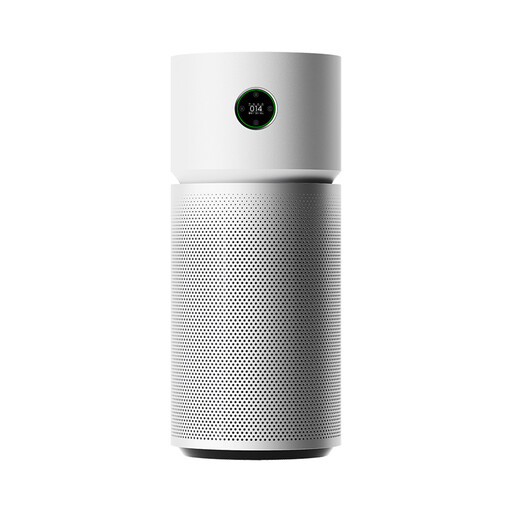
Xiaomi Smart Air Purifier Elite, white
Consider this model if you need a stated airflow figure for a larger home workspace. Its title lists a 600 m³/h CADR and coverage up to 125 m². Check noise at the speed you would use and the replacement-filter arrangements before buying.
Joybuy
 No image available
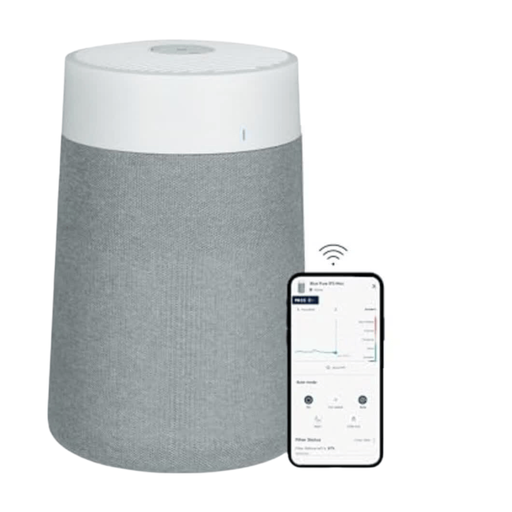
Blueair Blue Pure 511i Max, grey
Consider this model for a smaller office if its sizing suits your room. Its title states coverage up to 43 m² and identifies HEPASilent technology. Confirm the coverage basis and a clearly specified particulate CADR before comparing its cleaning capacity with other models.
Joybuy
 No image available
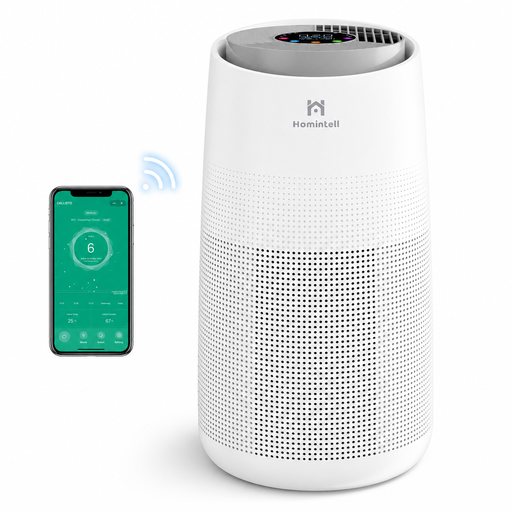
Homintell Smart Air Purifier, 300 m³/h CADR
Consider this model if a stated CADR helps you assess capacity for your office. Its title lists H13 HEPA and activated-carbon filters and a 36 m² room claim. Check the air-change basis and workday fan noise; consult the instructions before using its advertised UV and ioniser functions.
Joybuy
 No image available
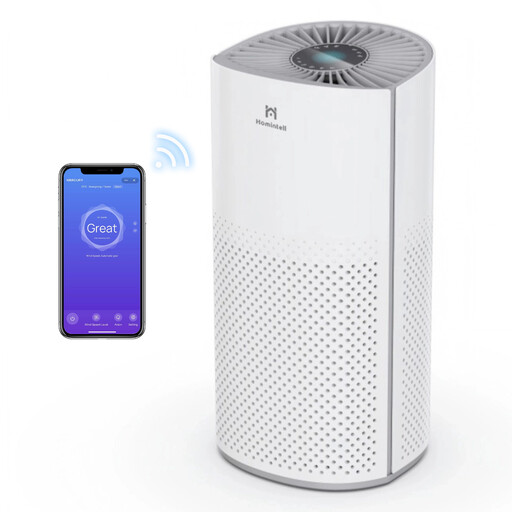
Homintell Smart Air Purifier, 200 m³/h CADR
Consider this variant when sizing a smaller workspace and comparing stated airflow. Its title lists H13 HEPA and activated-carbon filters. Confirm the applicable room-coverage figure and air-change basis, as well as noise at the fan setting you would use; consult the instructions for its advertised UV and ioniser functions.
Joybuy
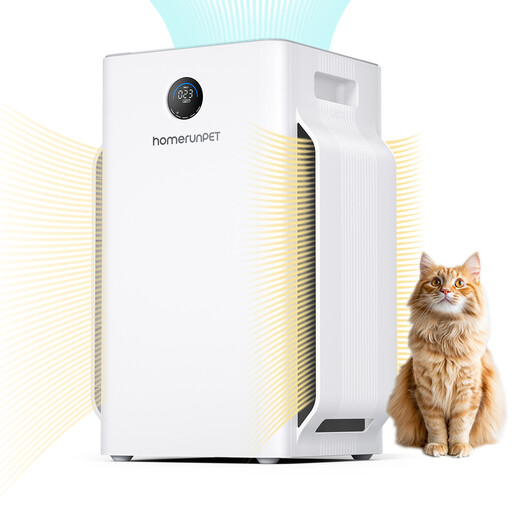 No image available
homerunPET D1 Air Purifier
Consider this pet-oriented model if hair as well as airborne dust affects your workspace. Its title describes a six-sided, U-shaped airflow channel and hair capture. Confirm its particulate CADR, room-sizing basis and noise at the speed you would use before relying on it for an office.
Joybuy
Frequently asked questions
Will an air purifier remove dust already on my desk?
No. A particle-filtering purifier addresses airborne dust, while settled dust needs physical cleaning. Which? recommends regular dusting, vacuuming and ventilation alongside filtration.
Which specification should I compare first for a home office?
Start with particulate CADR or a room-size rating that states its air-change basis. Compare that with your office size, then check noise at the fan setting you expect to use rather than relying on sleep-mode noise alone.
How often will the filter need replacing?
Follow the guidance for the exact purifier and filter, because service life varies with use and dust load. Levoit advises six to eight months for its Core 300 and Core 300S, while Philips describes up to one year for specified compatible AC0950/10 filters; neither interval applies automatically to another model.
Can an air purifier replace ventilation?
No. An air purifier used for particle filtration does not perform the same task as bringing fresh air into the room. The Health and Safety Executive describes ventilation as bringing in outside air and removing indoor air, so consider suitable ventilation alongside dust filtration.


