What to check before buying
Start with the conservatory’s size and how often it is open, then check particle filtration, day-to-day comfort and upkeep. Manufacturer room-size figures need particular care when the room exchanges air with the garden or adjoining spaces.
| Concern |
What to check |
Who this matters to |
| Clean-air capacity |
Measure the room and compare the exact model’s CADR and room-size claim. Consider open doors and the fan speed you can tolerate. |
If my conservatory opens onto the garden, I need airflow suited to that changing space rather than a bedroom-sized claim. Around 36% of consumers would put adequate clean-air capacity first. |
| Airborne dander |
Check what the exact particle-filter stage claims to capture and identify its matching replacement filter. |
When dander is my main concern, I want to distinguish airborne-particle filtration from a claim about visible pet hair. For around 29% of consumers, dander filtration would be the primary need. |
| Odours and noise |
Look for an activated-carbon stage if odours matter, and compare noise claims at the operating modes you expect to use. |
If I relax or work in the conservatory, I want odour control without choosing a fan setting I would avoid using. Around 21% of consumers would prioritise this combination of comfort and odour needs. |
| Upkeep and moisture |
Check the correct replacement filter and its stated interval. Address condensation and ventilation separately; plan safe socket access. |
Where condensation is already a problem, I need a manageable filter routine without mistaking a purifier for damp control. For around 14% of consumers, upkeep and moisture management would come first. |
Joybuy products for this use
These air purifiers offer particle-filter options to assess for a conservatory used by pets. Compare their stated capacity with your room and check any odour, noise or moisture-related conditions that matter to you.
 No image available
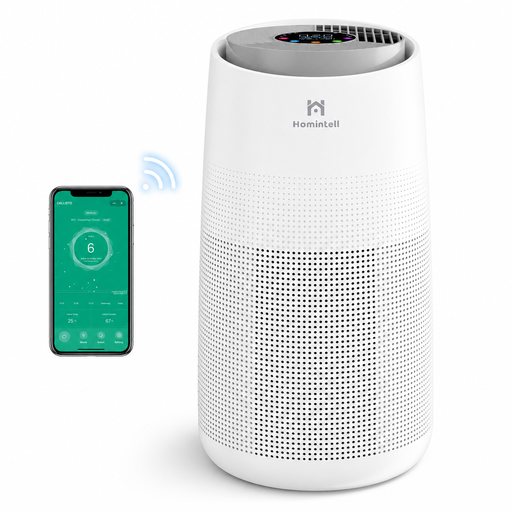
Homintell Smart Air Purifier, 300 m³/h CADR
Consider this model if you want to compare a stated clean-air output for your conservatory while filtering airborne pet dander.
Its title specifies 300 m³/h CADR, an H13 HEPA filter, activated carbon and Wi-Fi control. It also lists UV and ionizer functions; the Air Quality Expert Group for Defra and the devolved administrations advises caution with air-cleaning technologies using UV light or ionizing reactions. Check how these functions operate and whether they can be switched off. The product instructions rule out wet environments, so address damp separately.
Joybuy
 No image available
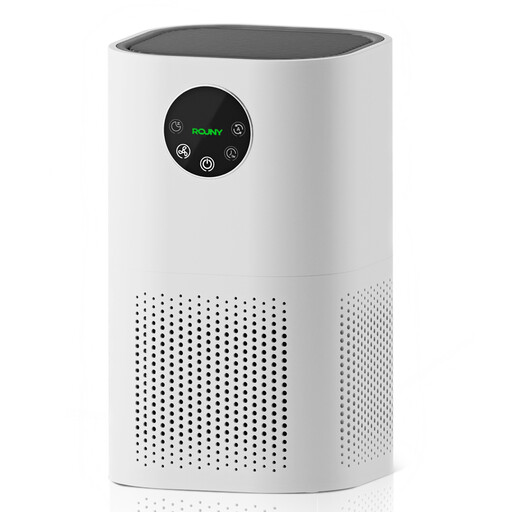
ROUNY AP-T1 Air Purifier, 150 m³/h CADR
Consider this model for a smaller, usually enclosed conservatory after comparing its stated room coverage with the space.
The title specifies an H13 True HEPA filter, 150 m³/h CADR, a 20–50 m² coverage claim and four fan speeds. Its ≤25 dB figure applies to sleep mode, not necessarily the setting needed for the room. If pet odours also matter, check the exact filter configuration for an activated-carbon stage.
Joybuy
 No image available
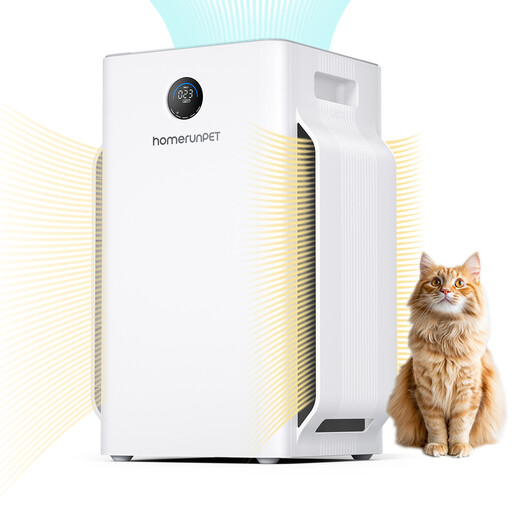
homerunPET D1 Air Purifier
Consider the D1 if your main concern is airborne pet dander in an enclosed conservatory, while checking whether its capacity suits the room.
The product name identifies a six-sided, U-shaped airflow channel. Check whether the optional dedicated deodorisation filter is included if odours matter. The product instructions advise against use in wet or damp environments.
Joybuy
 No image available
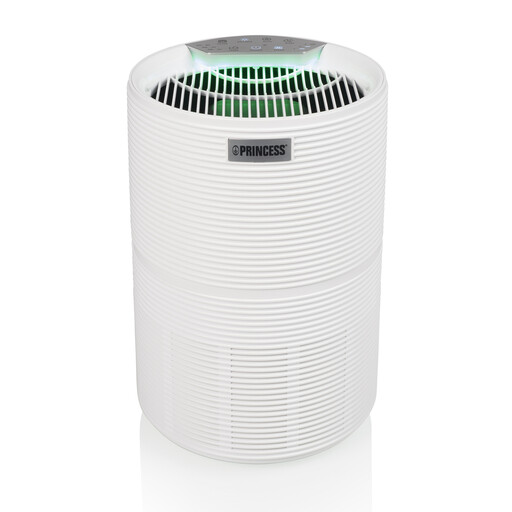
Princess Smart Air Purifier 160
Consider this model if you want a stated CADR alongside app controls, provided its room-size claim suits your conservatory.
The title specifies 160 m³/h CADR, an H13 HEPA filter, an air-quality sensor and an eight-hour timer. Check which room-coverage claim applies to this exact unit and how it sounds at the fan speed you expect to use.
Joybuy
 No image available
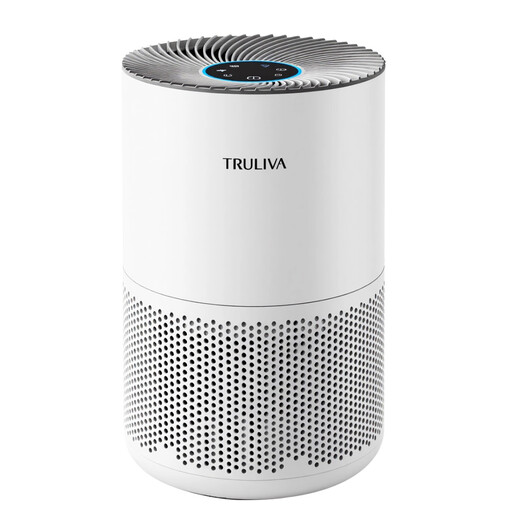
TRULIVA Air Purifier, 260 m³/h CADR
Consider this model when comparing stated clean-air output for a more demanding conservatory, but establish its applicable room coverage before deciding.
The title specifies 260 m³/h CADR, an H13 HEPA filter and a 24-hour timer. Room-coverage and noise claims differ within the product information, so confirm the correct figures for the exact unit and intended fan setting.
Joybuy
Frequently asked questions
Will an air purifier remove the source of pet dander?
No. A purifier treats air drawn through its filter; it does not remove material already settled on furnishings or floors. Allergy UK notes that pet-allergy triggers can come from dander, saliva and urine, so continue ordinary cleaning alongside air filtration.
How should I size an air purifier for a conservatory?
Measure the floor area, note the ceiling height and consider how often doors or windows are open before comparing an exact model’s CADR and room-size claim. For a sense of how model claims differ, Philips lists its 600i AC0650/20 at 170 m³/h and up to 44 m², and its 3000i AC3033/30 at 520 m³/h and up to 135 m²; those figures do not guarantee the same results in an open conservatory.
Do I need activated carbon for pet dander?
Prioritise a stated particle-filter stage for airborne dander; consider activated carbon separately if pet odours also matter. Levoit describes those as distinct stages in the Core 300S, rather than treating an odour filter as a substitute for particle filtration.
Can a purifier deal with condensation or mould?
No. A purifier does not correct the moisture conditions behind condensation or mould. UK government home-ventilation guidance explains that inadequate ventilation can trap moisture, so investigate moisture sources and ventilation separately.
What should I check when plugging one in?
Choose a suitable socket arrangement and inspect plugs and cables for damage. Electrical Safety First advises against connecting one extension lead to another and says cable reels should be fully unwound before use.


