
24/7 Customer Support

Free returns

Same-day & Next-day Delivery

Quality Guaranteed

Unlock Your Welcome Offers: FREE Delivery | Up to 80% OFF | Free 30-day JoyPlus trial
Download the APP
Choosing among air purifiers can be more complicated than expected. Product pages often highlight particle-capture percentages, room sizes and “smart” functions, but these figures do not always explain how a purifier will perform in a real UK bedroom, flat or family living room.
The most useful approach is to compare clean air delivery rate, filter construction, noise and ongoing maintenance before considering appearance or extra features. This guide explains the main buying pitfalls and matches different household needs with suitable options.
A coverage figure is not a universal performance standard. It may be calculated using a particular air-change rate, ceiling height or testing method. A large room with high ceilings, open doors and frequent cooking may need more airflow than the advertised area suggests.
CADR, or Clean Air Delivery Rate, is a more useful comparison point. Measured in cubic metres per hour, it indicates how quickly filtered air is delivered. For example, a 150m³/h model is generally more suitable for a smaller bedroom or office than a 300m³/h unit, while larger spaces may benefit from higher airflow.
A HEPA air purifier can help capture fine airborne particles, but the filter grade is only part of the system. A pre-filter helps collect larger dust and hair, while an activated carbon filter is intended to reduce some household odours and gases. Check whether the product includes all three stages and whether replacement filters are available.
Marketing statements such as “removes 99.97%” should be read carefully. The result may refer to a particular particle size and controlled test conditions, rather than every pollutant in an entire room.
A purifier may be quiet in sleep mode but noticeably louder at its highest setting. It is also not a one-off purchase: composite filters commonly require replacement after several months, depending on usage and indoor air quality.
Before buying, check the specified noise level, filter replacement interval and availability of the correct air purifier replacement filter. A washable pre-filter is useful, but it does not usually replace the main HEPA or carbon element.
Use the product’s CADR as a practical airflow reference rather than relying only on phrases such as “for large rooms”. A compact air purifier with a lower CADR may suit a bedside table, study or small office. For an open-plan living room, look for a higher figure and position the unit where air can circulate freely.
The supplied room-size guidance is still useful, but compare it with your actual space. If your home has an open layout, consider the combined area rather than assuming one small appliance will clean every connected room.
For general household use, a three-stage system usually consists of:
An H13 HEPA filter air purifier may appeal to shoppers prioritising fine-particle filtration, while an H12 model can offer a different balance of airflow, size and price. Compare the full specification rather than assuming the filter grade alone determines overall performance.
Pet owners should look for a washable or accessible pre-filter, adequate airflow and a replacement filter designed for regular hair and dander exposure. A purifier does not replace vacuuming, ventilation or normal cleaning.
For a bedroom, look for a stated sleep-mode noise level and dimmable indicators. A quiet air purifier may be more useful if it can run consistently overnight rather than only at a high setting for short periods.
Smart functions can include app control, air-quality sensors, timers and automatic fan adjustment. These features are convenient, but check whether Wi-Fi is required and whether the main controls still work without the app. Also confirm the filter access method and whether the filter-life reminder can be reset after replacement.
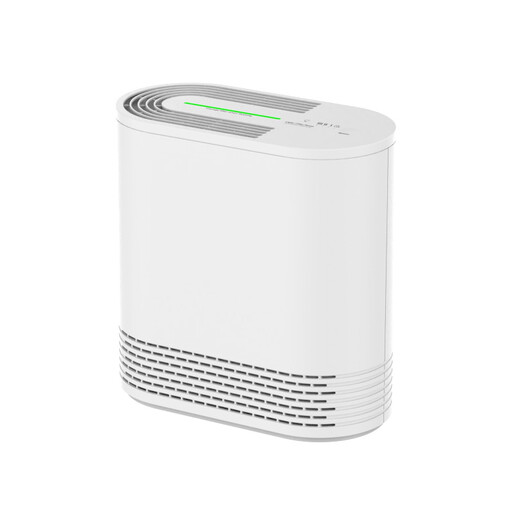
Why This Fits Their Persona: A straightforward choice for a small UK bedroom, study or home office, with a 15W power rating and a compact design.
Its stated 85m³/h CADR is more transparent than an unqualified room-size promise, and the washable pre-filter helps catch larger dust and hair.
H13 HEPA and activated carbon filtration; three fan speeds, sleep mode and a filter replacement reminder.
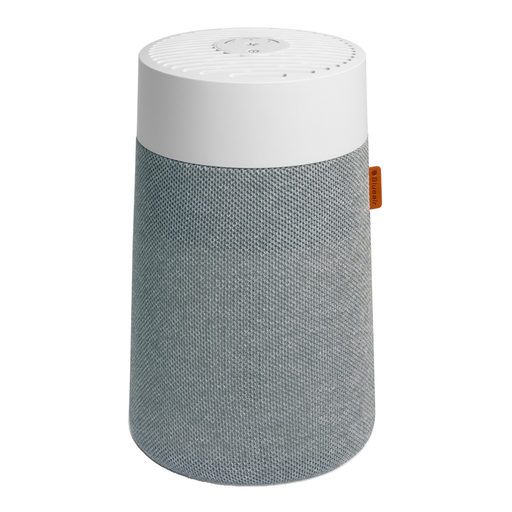
Why This Fits Their Persona: Its compact footprint, simple controls and stated coverage of up to 20m² suit a carefully furnished bedroom or home office.
The product specification gives a defined room limit and noise figure from approximately 20dB, helping set realistic expectations for personal spaces.
HEPASilent technology and a washable interchangeable pre-filter; approximately 10W power consumption.
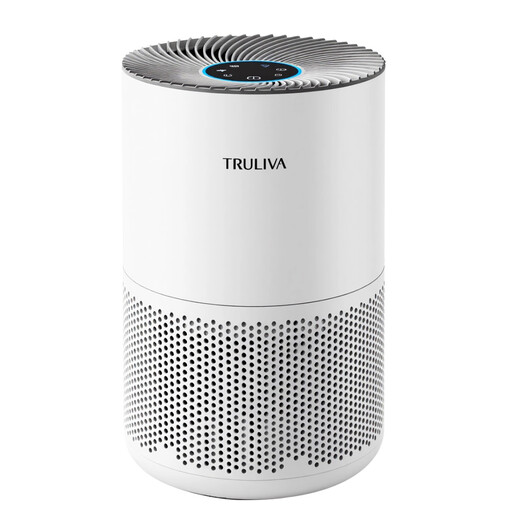
Why This Fits Their Persona: A higher-airflow option for larger living areas, offices or households dealing with pets, cooking odours and regular indoor activity.
Its listed CADR is 260m³/h, while the product information also states a 24dB sleep mode; buyers can compare airflow and quiet operation separately.
Four-stage filtration is specified, with timer, child lock and washable filter components.
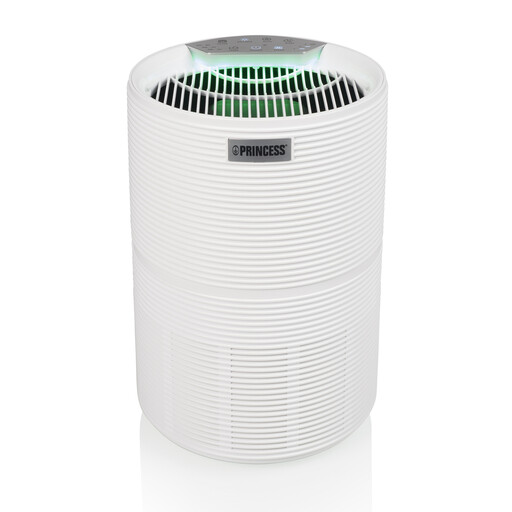
Why This Fits Their Persona: App and voice-control compatibility suits households that want to schedule purification or check room conditions remotely.
The listing identifies a 160m³/h CADR and a three-stage filter, rather than presenting smart connectivity as a substitute for core filtration.
H13 HEPA, activated carbon and pre-filter system; built-in air-quality, temperature and humidity displays.
We have compiled a complete, real-time list of products that fully satisfy these strict selection criteria and UK safety regulations.
Running cost depends on wattage, speed and daily usage. A 10–25W model generally uses less electricity than a larger high-airflow unit, but the exact cost depends on your tariff. Sleep or auto mode can reduce continuous high-speed operation. Remember to include replacement filter costs when comparing total ownership.
Put it on a stable surface with unobstructed airflow, away from curtains, walls and bedding. Avoid placing it directly beside your head or pushing it into a corner. If the main concern is pet dander or dust, position it in the room where those particles are most likely to accumulate, while maintaining the clearance stated in the manual.
Many composite filters last approximately six to twelve months, although smoking, pets, construction dust and constant high-speed use may shorten that period. Check the filter indicator and inspect the pre-filter regularly. Always buy a compatible replacement rather than relying on a similar-looking filter.