
24/7 Customer Support

Free returns

Same-day & Next-day Delivery

Quality Guaranteed

Unlock Your Welcome Offers: FREE Delivery | Up to 80% OFF | Free 30-day JoyPlus trial
Download the APP
Choosing among air purifiers can be harder than it first appears. Product pages often highlight particle-removal percentages, smart functions and large coverage figures, while leaving out the details that affect everyday performance.
For UK homes, flats and offices, three purchasing traps are particularly common:
Clean Air Delivery Rate (CADR) describes the volume of filtered air delivered per hour. As a general comparison:
Room-size claims should still be treated carefully. Check whether the figure assumes two air changes per hour, as stated for the Xiaomi Smart Air Purifier Elite, or whether it is simply a manufacturer recommendation.
A practical air purifier for home use commonly combines:
A HEPA air purifier can be useful where dust, pollen and pet dander are priorities. Carbon is the more relevant layer when looking for an air purifier for smoke and odours, although no domestic purifier should be treated as a substitute for ventilation or a source-control measure.
A washable pre-filter can reduce the amount of dust reaching the main filter. It does not necessarily mean that the HEPA or carbon section itself is washable. Always check the maintenance instructions before rinsing any component.
For an air purifier for bedroom, look for a stated sleep-mode noise level, not just the phrase “quiet”. The Xiaomi Smart Air Purifier 4 Compact GB lists a 20dB sleep mode, while the Lavieair K01 includes a sleep mode and night light for small rooms.
A smart air purifier may offer app control, schedules and filter reminders. An air purifier with air quality sensor can also adjust fan speed automatically or display PM2.5 readings. These features are convenient, but they should not replace checking the core CADR and filter design.
Useful practical features include:
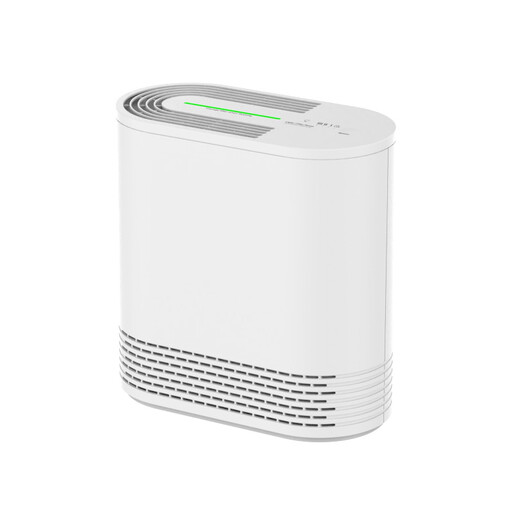
Why This Fits Their Persona: Its 85m³/h CADR is aimed at bedrooms, desks and compact rooms, making it a straightforward entry point for renters or anyone wanting room-by-room purification.
The stated CADR is suited to a small footprint rather than relying on a vague large-room promise. Its filter replacement reminder also helps with maintenance planning.
Three-stage filtration, including H13 HEPA and activated carbon; washable pre-filter; three speeds and sleep mode.
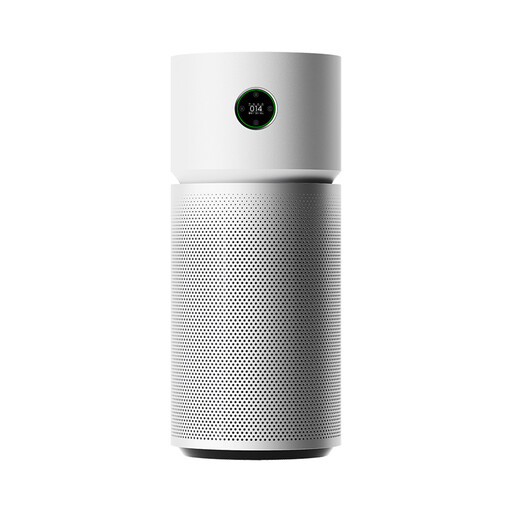
Why This Fits Their Persona: It is designed for larger UK living spaces and smart-home users who want app control, voice compatibility and visible air-quality information.
Its listed 600m³/h particle CADR provides a clearer basis for judging capacity than coverage wording alone. The 60W maximum input also makes energy use easier to consider.
PM2.5/PM10 sensing, OLED display, Xiaomi Home App and voice control; three-in-one filtration with activated carbon.
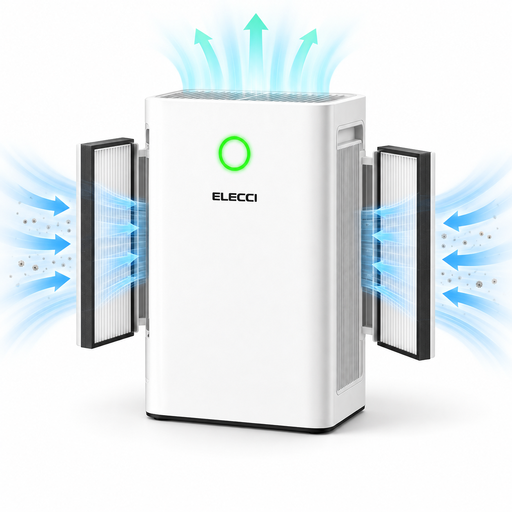
Why This Fits Their Persona: A listed 550m³/h CADR suits larger rooms, busy households and users prioritising particle, smoke, pet and odour filtration.
The high CADR is clearly stated for comparison, while the washable pre-filter helps manage larger dust and pet debris between main-filter replacements.
550m³/h CADR; dual-HEPA filter design; air-quality indicator, timer and stated 24dB sleep mode.
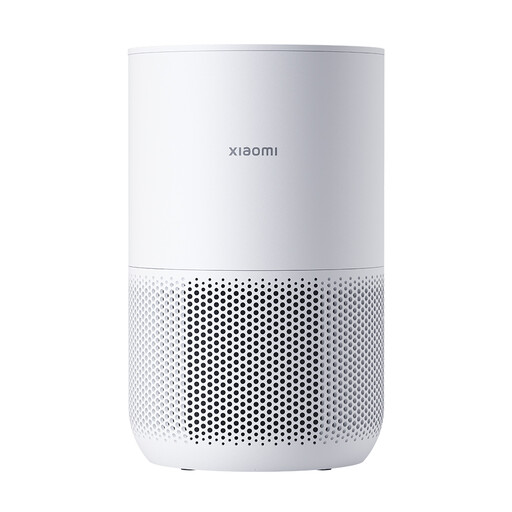
Why This Fits Their Persona: Its desktop-or-floor-standing format works well in UK bedrooms, studies and rented accommodation where space is limited.
The 230m³/h particle CADR is paired with a stated 16–27m² applicable area, helping shoppers match it to a realistic room size.
H13 HEPA filtration, 20dB sleep mode, 360-degree air intake and Xiaomi Home App control.
Place the unit on a stable, level surface with clear space around the air inlet and outlet. Avoid positioning it behind curtains, tight against furniture or beside a damp area such as a bathroom. In a bedroom, leave enough clearance for airflow and keep cables away from walking routes.
Run the purifier at a higher setting after cooking or during a dusty activity, then use auto or sleep mode for routine operation. Vacuum or clean a washable pre-filter as instructed, and replace the main filter when the indicator or manual recommends it. A purifier should complement normal ventilation, cooker extraction and sensible control of indoor pollution sources.
We have compiled a complete, real-time list of products that fully satisfy these strict selection criteria and UK safety regulations.
Consumption depends on motor power, fan speed and operating time. For comparison, the Xiaomi Smart Air Purifier Elite lists a maximum 60W input, while the Xiaomi Smart Air Purifier 4 Compact GB lists a maximum 27W. Actual use may be lower in sleep or automatic modes. Check the wattage label and your electricity tariff when estimating running cost.
Filter life varies with usage, indoor dust, pets and outdoor pollution. Some models provide an app or filter reminder; others state an estimated replacement period such as six to twelve months. Do not wash a non-washable HEPA or carbon filter, as this may damage its structure and reduce airflow.
A suitable quiet air purifier can run overnight if placed correctly and maintained according to its instructions. Select sleep mode, dim the display where possible and check the stated noise level. Air purifiers are designed for indoor air circulation, but they should not be used in wet environments or with blocked vents.