Who is this choice for?
The useful distinction depends on whether you are checking a particular label claim, avoiding caffeine or deciding when to buy your drink.
Travellers choosing cola with an airport meal
If “no added sugar” is a specific requirement, read the current pack for that claim and check its ingredients. If your concern is the declared sugar content instead, compare the sugars figure per 100ml; it answers a different question.
Travellers who also want to avoid caffeine
Look for a named caffeine-free version rather than assuming that zero sugar also means no caffeine. Coca-Cola GB identifies Coca-Cola Zero Sugar Caffeine Free, and Pepsi UK identifies Pepsi MAX No Caffeine, as separate options.
Travellers carrying a drink towards security
Check your departure airport’s rule before packing a can or bottle. GOV.UK says containers larger than 100ml cannot pass security at most UK airports; Heathrow says it permits containers up to 2 litres at Terminals 2, 3, 4 and 5.
What should you check?
Start with the claim on the pack, then check caffeine and ingredients. Finally, decide whether the container can travel through your airport’s security or whether you will buy a drink afterwards.
| Priority |
What to check |
Your needs |
| Sugar-related wording |
Read the current pack’s claim and ingredients, then compare sugars per 100ml. The Advertising Standards Authority and Committee of Advertising Practice explain that “no added sugars” has conditions of use; a 0g sugars figure alone does not establish that separate claim. |
If the exact “no added sugar” wording matters to me, I need to check for it rather than treat “zero sugar” as interchangeable. Tesco describes its Diet Cola as no added sugar; Coca-Cola GB and Pepsi UK list 0g sugars per 100ml for their standard Zero Sugar and MAX colas. |
| Caffeine |
Check the variant name and ingredients. Coca-Cola GB and Pepsi UK list caffeine in their standard Coca-Cola Zero Sugar and Pepsi MAX products, and identify separate caffeine-free versions. |
I may want cola with an airport meal without caffeine. In that case, I would look for Coca-Cola Zero Sugar Caffeine Free or Pepsi MAX No Caffeine and check the can I am buying. |
| Sweeteners |
Read the sweetener ingredients and any “contains a source of phenylalanine” warning. The NHS says aspartame is not suitable for people with phenylketonuria (PKU). |
If I need to avoid aspartame, a sugar-free or caffeine-free description does not answer my ingredient question; I need to check the current label. |
| Container size |
Compare the container’s stated volume with the rules at your departure airport and any airport where you will pass through security again. GOV.UK says containers over 100ml cannot pass security at most UK airports; Heathrow permits up to 2 litres at its listed terminals. |
A 330ml can for my meal may be straightforward to buy after screening, but I would check airport rules before taking one from home through security. |
Relevant brand references
These examples illustrate different label and caffeine choices; a brand’s presence here does not indicate what a particular airport shop carries.
Coca-Cola
Coca-Cola GB lists 0g sugars per 100ml for Coca-Cola Zero Sugar and its separately named Caffeine Free version.
- The named variants allow a choice between a product listing caffeine flavouring and one described as caffeine-free.
- Both product descriptions state that they contain a source of phenylalanine. Their zero-sugar wording alone does not establish a separate no-added-sugar claim.
Pepsi
Pepsi UK lists 0g sugars per 100ml for Pepsi MAX and Pepsi MAX No Caffeine.
- The standard MAX description includes caffeine; the No Caffeine variant is described as caffeine-free.
- The product information lists sweeteners and a source-of-phenylalanine warning for both variants. Check the particular pack’s ingredients.
Tesco
Tesco describes its Diet Cola as a no-added-sugar cola with caffeine and sweeteners, sold in a 2-litre bottle.
- Its explicit no-added-sugar wording is relevant when that precise claim is the buying criterion; its nutrition table lists less than 0.1g sugars per 100ml.
- The bottle exceeds the 100ml security limit at most UK airports. Check your departure airport’s rule before taking it through screening.
Joybuy cola options
These multipacks offer named caffeine-free and standard cola options for choosing a drink with food. Check the current can’s wording and ingredients if a specific no-added-sugar claim or sweetener requirement matters, and plan separately for airport security.
 No image available
Diet Coke No Caffeine, 24 × 330ml
The named no-caffeine variant is an option when caffeine matters alongside your cola choice. This pack contains 24 × 330ml cans; check the current can for its sugar-related wording and ingredients. A 330ml can exceeds the security limit at most UK airports, according to GOV.UK.
View on Joybuy
 No image available
Pepsi MAX Caffeine Free, 24 × 330ml
For a Pepsi MAX choice without caffeine, this is the named caffeine-free variant in a pack of 24 × 330ml cans. Pepsi UK describes Pepsi MAX No Caffeine as having 0g sugars per 100ml and states that it contains a source of phenylalanine; check the current can. GOV.UK’s usual 100ml security limit would exclude a 330ml can at most UK airports.
View on Joybuy
 No image available
Pepsi MAX, 24 × 330ml
This standard Pepsi MAX pack contains 24 × 330ml cans. Pepsi UK lists 0g sugars per 100ml for Pepsi MAX, alongside flavourings including caffeine and a source-of-phenylalanine warning. Check the current can if ingredients or precise claim wording matter; a 330ml can cannot pass security where the usual 100ml limit applies.
View on Joybuy
 No image available
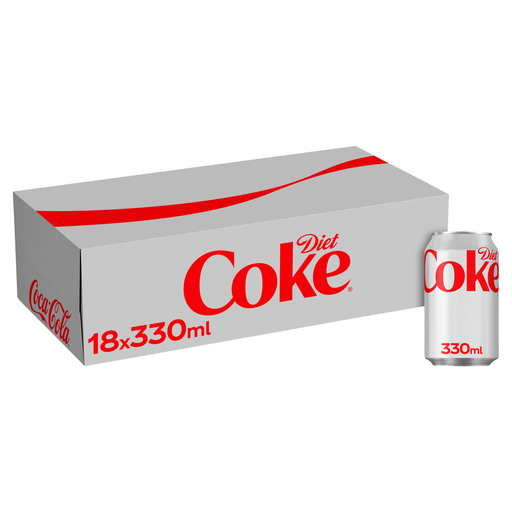
Diet Coke, 18 × 330ml
This pack offers 18 × 330ml cans of Diet Coke. If sugar-related wording, caffeine or sweeteners affect your choice, read the current can’s nutrition panel and ingredients rather than inferring them from the pack name. Check airport rules before taking a 330ml can through security.
View on Joybuy
 No image available
Coca-Cola Zero Sugar, 24 × 330ml
This pack contains 24 × 330ml cans of Coca-Cola Zero Sugar. Coca-Cola GB lists 0g sugars per 100ml, caffeine flavouring and a source-of-phenylalanine warning for the standard drink. Its name does not by itself establish a no-added-sugar claim; check the current can, and check security rules before carrying one from home.
View on Joybuy
Questions about cola and airport travel
Does “zero sugar” mean “no added sugar” on a UK cola?
No: a 0g sugars nutrition figure does not alone establish the separate “no added sugars” claim. The Advertising Standards Authority and Committee of Advertising Practice explain that the latter has conditions concerning added sugars and other foods used for sweetening. Check the current pack and ingredients if that exact claim is important.
Can I take a 330ml can through UK airport security?
Not at most UK airports under the rule described by GOV.UK, which excludes liquid containers larger than 100ml. Heathrow says containers up to 2 litres are permitted at Terminals 2, 3, 4 and 5. Check the rules at your departure airport and at any airport where you will pass through security again.
Which zero-sugar colas are also caffeine-free?
Coca-Cola GB describes Coca-Cola Zero Sugar Caffeine Free as caffeine-free and lists 0g sugars per 100ml; Pepsi UK provides the same sugar figure and a no-caffeine description for Pepsi MAX No Caffeine. Check the exact variant on the can, since the standard versions list caffeine.
Does a sugar-free cola suit someone who must avoid aspartame?
Sugar-free wording does not establish that a cola is free of aspartame. The NHS says aspartame is not suitable for people with PKU because it contains phenylalanine. Check the current ingredients and any phenylalanine warning on the particular drink.
What if I buy a drink after security and have a connecting flight?
Check the rules for any further security screening on your journey. GOV.UK says airport-bought liquids taken through security must be sealed in a security bag with the receipt visible; keep the bag unopened where that requirement applies.


