
24/7 Customer Support

Free returns

Same-day & Next-day Delivery

Quality Guaranteed

Unlock Your Welcome Offers: FREE Delivery | Up to 80% OFF | Free 30-day JoyPlus trial
Download the APP
As a home barista, you know that the quality of your brew starts long before the water hits the grounds. You have invested in high-quality speciality coffee beans, and protecting that investment is paramount. The biggest enemies of your beans' delicate flavour and aroma are oxygen, moisture, light and heat. A proper storage container is not a luxury; it is an essential piece of your coffee-making toolkit.
However, the market is filled with containers that promise freshness but fail to deliver. Many coffee enthusiasts in the UK find themselves disappointed after a few weeks, their expensive beans tasting stale and flat. Before you make a purchase, it is crucial to understand the common pitfalls.
To ensure you are choosing a container that genuinely protects your beans, focus on these non-negotiable features. This is the foundation of effective specialty coffee storage.
The term "airtight" is used loosely. A truly effective seal prevents air exchange. Look for canisters with thick, food-grade silicone gaskets that create a firm seal with the container body. Some advanced models, often called a vacuum coffee canister, include a pump system to actively remove air. While effective, a well-engineered passive seal is often sufficient for daily use. The key is a robust, durable design that will not degrade after repeated opening and closing.
This is what separates a basic container from a professional coffee bean cellar. The ideal relative humidity for storing roasted coffee beans is around 60%. A built-in hygrometer, or humidity monitor, provides a constant, at-a-glance reading of the conditions inside your canister. A coffee bean jar with humidity monitor allows you to see if the environment is stable, helping you understand how fresh your beans are and whether you need to store them in a different location in your home. It transforms storage from guesswork into a controlled process.
The material of your moisture-proof coffee container matters.
We have analysed the options to match different needs and priorities for home baristas.
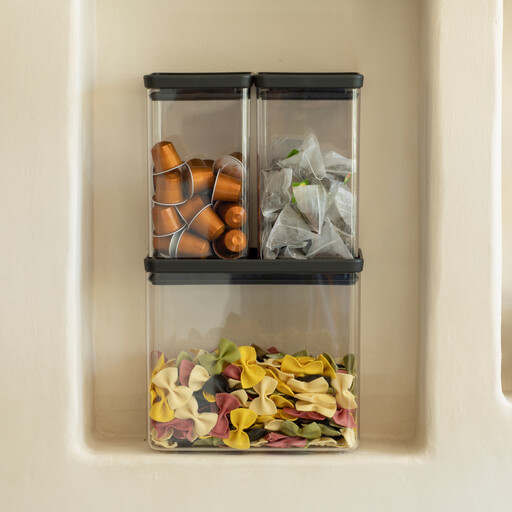
Why This Fits Their Persona: This set is for the coffee lover who is ready to move beyond the bag but isn't yet prepared to invest in advanced monitoring. It prioritises a reliable airtight seal and space efficiency, which is perfect for the typical UK kitchen.
It features a high-quality silicone seal that provides a genuinely airtight closure, avoiding the common pitfall of ineffective seals on cheaper, unbranded containers.
The stackable, space-efficient design is a major benefit. The set of three allows for storing different beans or separating decaf from regular.
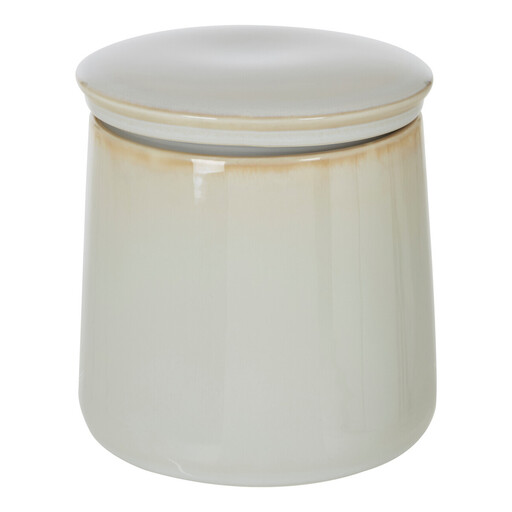
Why This Fits Their Persona: For those who view their home coffee station as a design feature, this canister prioritises aesthetics. It offers a significant visual and material upgrade from plastic, fitting beautifully into modern kitchen decor.
Crafted from glazed porcelain, it is completely inert and opaque. This avoids the pitfalls of light degradation and plastic odours tainting your expensive beans.
The primary advantage is its elegant, durable porcelain construction. The sleek, tapered design and matching lid create a cohesive and stylish look on any worktop.
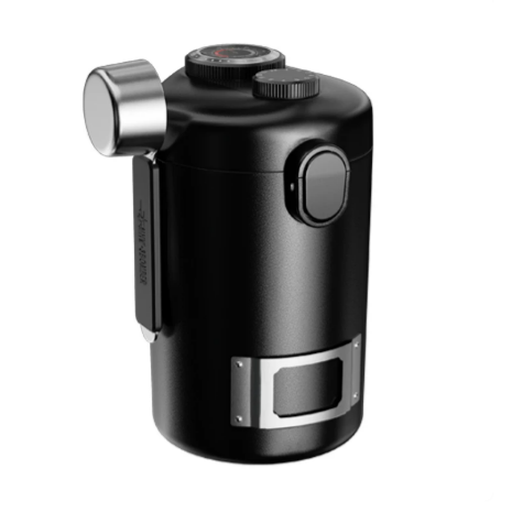
Why This Fits Their Persona: This is the ultimate tool for the home barista who treats coffee like a science. It provides direct control and feedback on the storage environment, making it a core part of their collection of home barista coffee accessories.
It directly solves the "hidden moisture trap" by integrating a hygrometer into the lid, giving you real-time data to ensure your beans are stored in optimal conditions.
The built-in humidity monitoring dial is the standout feature. Combined with a double-layer storage structure and a robust seal, it offers a complete, professional-grade storage system.
We have compiled a complete, real-time list of products that fully satisfy these strict selection criteria and UK safety regulations.
For roasted coffee beans, the target relative humidity (RH) inside your canister should be around 60%. Much higher can encourage mould, while much lower can cause the beans to dry out and lose their aromatic oils, resulting in a flat, lifeless brew. A hygrometer helps you keep an eye on this crucial variable.
While a good canister significantly extends freshness, coffee is always best when fresh. For optimal flavour, aim to use your beans within 2-4 weeks of the roast date. An airtight canister will help preserve the peak flavour during this window, protecting it from rapid degradation far better than the original bag.
Freshly roasted coffee releases carbon dioxide (CO2) for several days, a process called degassing. A one-way valve allows this CO2 to escape without letting oxygen in. This feature is most important if you are storing beans within 1-3 days of their roast date. If you typically buy beans that are already rested for a few days, a simple, high-quality airtight seal without a valve is perfectly adequate.