
24/7 Customer Support

Free returns

Same-day & Next-day Delivery

Quality Guaranteed

Unlock Your Welcome Offers: FREE Delivery | Up to 80% OFF | Free 30-day JoyPlus trial
Download the APP
Fresh coffee can lose its aroma when exposed to air, moisture, heat and strong household odours. A suitable airtight coffee storage canister helps limit these problems, but not every product described as “airtight” will suit your kitchen, coffee station or café routine.
Before buying, look beyond attractive finishes and promotional wording. The closure, materials, capacity and cleaning requirements have a greater effect on everyday usefulness than decorative features alone.
A lid that simply rests on top may keep dust out but offer limited protection from air exchange. Check for a silicone sealing ring, locking mechanism or vacuum-style closure. The lid should sit evenly, without rocking or leaving visible gaps.
Even a good coffee canister cannot restore freshness once beans or ground coffee have already been exposed for too long. Fill it with dry coffee, close it promptly and avoid repeatedly opening it unnecessarily.
A coffee container with humidity monitor can make changes inside the container easier to observe, but a dial is not a substitute for correct storage. It should be treated as a reference indicator rather than a laboratory-grade measuring instrument.
The most important factors remain a clean, dry interior and a properly fitted seal. A humidity gauge is useful when it supports better storage habits, not when it is used as the only reason to purchase.
A decorative coffee bean storage jar may look suitable on a worktop but be inconvenient if its opening is too narrow for a scoop or if coffee oils collect around an awkward seal. Likewise, a large container can be wasteful if you usually buy small quantities of beans.
Consider how much coffee you use between shopping trips, whether you store whole beans or ground coffee, and how easily the lid, sealing ring and inner walls can be cleaned.
For daily storage, look for an airtight and moisture-proof coffee canister with a sealing ring that remains flexible and sits securely in its channel. Moisture can affect ground coffee particularly quickly, while external odours may be absorbed by coffee if the container is opened frequently or stored near strongly scented foods.
The seal should be easy to inspect and clean. If it becomes cracked, loose or deformed, storage performance may decline and replacement may be more practical than continuing to use it.
A food-grade coffee storage jar should use materials intended for food contact, particularly where the material touches beans or grounds. Metal bodies can provide a durable, light-resistant outer shell, while food-grade plastic may offer visibility and lower weight.
A bamboo lid can add a natural appearance, but it should be kept dry and cleaned according to the care instructions. Avoid abrasive cleaners on finishes that may scratch or dull over time.
Check the stated dimensions rather than judging capacity from photographs. For example, the Maison by Premier Grocer canister measures 13 cm high, 11 cm wide and 11 cm long, making it suitable for a compact kitchen worktop, shelf or office coffee area.
A double-layer coffee storage container may help organise different dry goods or coffee-related accessories, but layered designs can require more careful cleaning. Make sure the internal arrangement suits your routine rather than adding complexity you will not use.
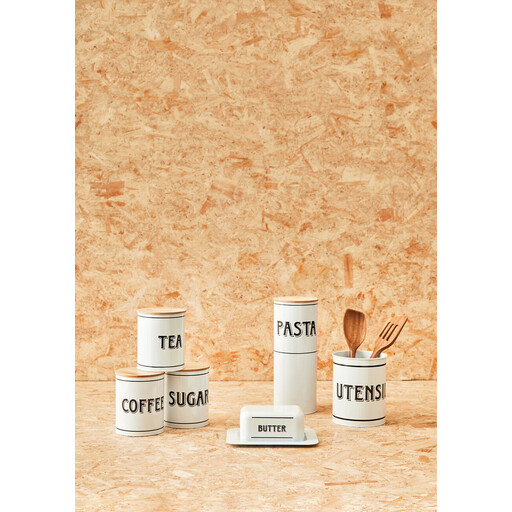
Why This Fits Their Persona: A straightforward choice for UK households setting up a coffee corner or replacing an open packet with a compact storage solution.
Its listed airtight design and bamboo lid address the common problem of relying on a loose cover, while the compact dimensions help avoid buying more capacity than needed.
Durable metal body, natural bamboo lid, white finish with black lettering, and suitability for coffee or other dry goods.
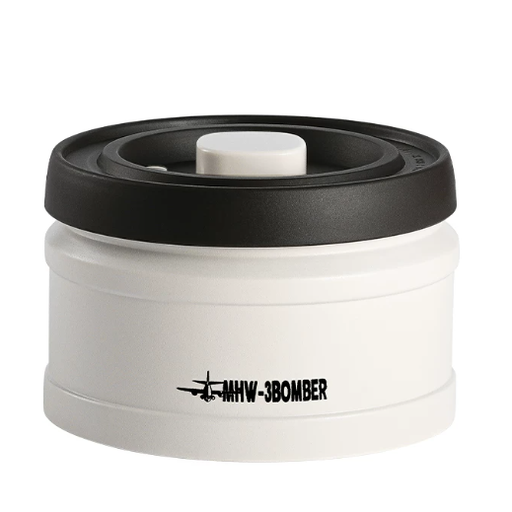
Why This Fits Their Persona: A practical option for coffee enthusiasts who prefer manual vacuum-style storage and want more than one canister for rotating beans or keeping a spare ready.
The manual vacuum format is designed for users who want an active closure method rather than a basic lid. Check the included instructions and seal condition before regular use.
Manual vacuum storage format and a two-item promotional offer, giving users flexibility for different coffee varieties.
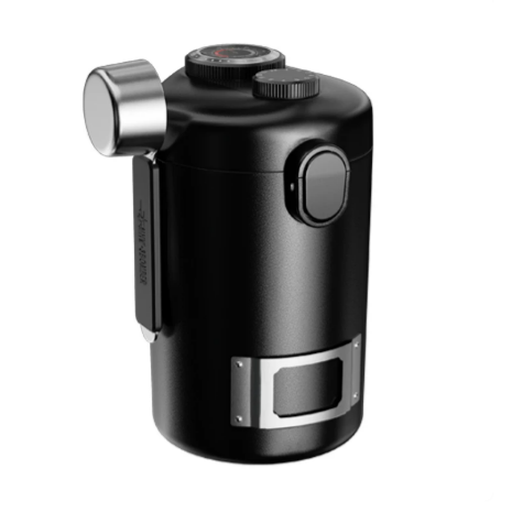
Why This Fits Their Persona: Designed for organised coffee stations, offices, cafés and users who store multiple dry goods or coffee types in one tabletop unit.
The listed silicone sealing ring and double-layer structure address moisture entry and organisation concerns. Its humidity dial is for reference, not precision measurement.
Food-grade contact materials, built-in humidity monitoring, double-layer storage and a format suitable for coffee, tea and dry goods.
We have compiled a complete, real-time list of products that fully satisfy these strict selection criteria and UK safety regulations.
Yes, provided it is clean, dry and large enough to avoid excessive compression or spillage. Ground coffee has more exposed surface area than whole beans, so limiting air, moisture and odour exposure is particularly useful. Use a container with a reliable seal and avoid opening it repeatedly throughout the day.
Lifespan depends on the body material, lid construction, frequency of use and cleaning routine. A metal body can remain functional for a long time if protected from dents and abrasive cleaning. Sealing rings are wear components, so check them periodically and stop using the container if the seal no longer fits securely.
It depends on how you store coffee. A humidity monitor can provide a quick visual reference, especially in a busy coffee station or when storing several dry goods. However, it does not remove the need to keep the container dry, close the lid correctly and store it away from heat. If you prefer simple storage, a well-sealed coffee canister without a dial may meet your needs.