
24/7 Customer Support

Free returns

Same-day & Next-day Delivery

Quality Guaranteed

Unlock Your Welcome Offers: FREE Delivery | Up to 80% OFF | Free 30-day JoyPlus trial
Download the APP
Airtight food storage containers can make a noticeable difference to pantry organisation, packed lunches and batch cooking. However, attractive packaging and phrases such as “fresh-keeping” or “leak-proof” do not always tell you whether a container will suit your cupboards, fridge or freezer.
The most common buying pitfalls are:
For dry food storage jars and pantry containers, an airtight seal helps limit exposure to air and moisture. Look for secure clips, a continuous gasket or a closely fitting lid. These features are more useful than vague freshness claims because they describe how the closure works.
For soups, sauces and prepared meals, choose leak-proof food containers with a lid designed for liquid foods. Test the closure before carrying a filled container in a work bag, and leave room at the top for foods that may expand when frozen.
An airtight lid is not a substitute for safe food handling. Perishable food should still be cooled, refrigerated and consumed according to appropriate food-safety guidance.
BPA-free food storage is a practical consideration for shoppers who prefer containers made without bisphenol A. The Sistema Ultra Square range described here uses clear Tritan material and is also stated to be phthalate-free and odourless. Its glass-like transparency makes it easier to identify flour, rice, cereal or leftovers without opening the lid.
Stainless steel food storage containers offer a different set of benefits. They are opaque, so you cannot see contents directly, but they can be useful for everyday meal preparation and robust kitchen storage. The PURECOOK options listed below use 304 stainless steel with polypropylene lids. Check the care instructions for the specific set, particularly when using the lid separately in a dishwasher or freezer.
Capacity should match the food you usually store:
Square containers can use cupboard space efficiently because they sit close together with fewer unused gaps. Round stainless steel containers may be easier to handle and clean, but they can leave more space between each item. Measure shelf height, cupboard depth and freezer drawers before ordering.
For freezer storage, look for containers specifically described as freezer-safe food containers, and allow space for expansion. You can also browse the wider range of freezer-proof containers with lids if freezer use is a priority.

Why This Fits Their Persona: A manageable size for a first pantry system, rented accommodation or smaller UK kitchens where cupboard and worktop space are limited.
Its square form is designed for stacking, while the easy-locking clips provide a clearly defined closure rather than relying on a loose push-on lid.
460ml capacity; clear BPA-free Tritan material; stated impact and shatter resistance.
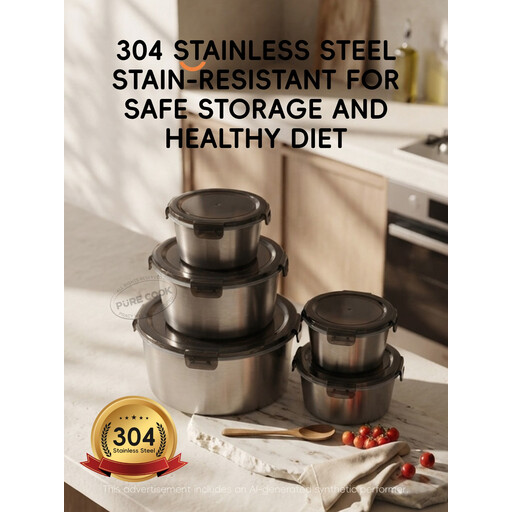
Why This Fits Their Persona: A multi-size option for households wanting one set for packed lunches, leftovers and fridge storage rather than several individual purchases.
The set uses 304 stainless steel rather than relying only on a transparent plastic body, and its product title specifies latching lids plus freezer and dishwasher suitability.
Five listed capacities from 350ml to 3,500ml; round format; black transparent PP latching lids.
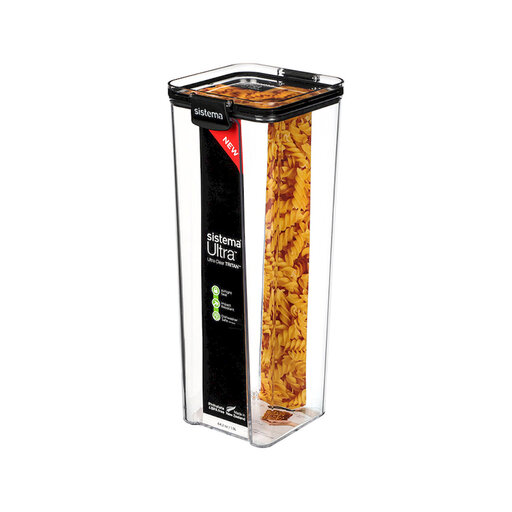
Why This Fits Their Persona: Designed around bulk ingredients, family portions and batch cooking, making it suitable for larger households and frequent home bakers.
The larger capacity is paired with stated impact and shatter resistance, while the square shape helps prevent wasted gaps in a pantry.
1.9L capacity; BPA-free and phthalate-free Tritan; airtight clip-secured lid.
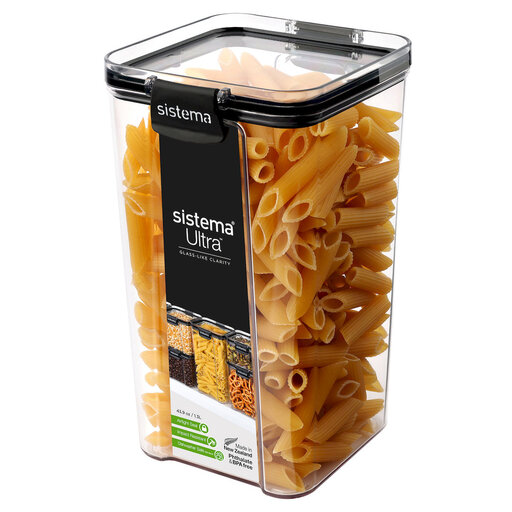
Why This Fits Their Persona: A middle-ground size for prepared meals, family leftovers, cereal and baking supplies when 460ml is too small but 1.9L is excessive.
The listed 11.3 × 10.2 × 18.0cm dimensions make shelf planning easier, and the clear body helps reduce forgotten ingredients.
1.3L capacity; stackable square profile; odourless, BPA-free and phthalate-free material.
We have compiled a complete, real-time list of products that fully satisfy these strict selection criteria and UK safety regulations.
They can be worthwhile for reducing exposure to air and moisture, organising cupboards and storing prepared food. The value depends on choosing suitable capacities, reliable closures and materials that match your intended use. A container that does not fit your shelf or cannot be cleaned easily may provide poor value regardless of its seal.
Only use a container when the product information specifically indicates freezer suitability. Leave expansion space and avoid sudden temperature changes that could damage the material. For a wider selection, view the freezer-proof containers with lids category.
Lifespan depends on frequency of use, handling, heat exposure and cleaning. Durable materials such as Tritan or 304 stainless steel may suit regular use, but seals, clips and lids are often the first parts to show wear. Inspect them regularly and follow the manufacturer’s washing and temperature guidance.