
24/7 Customer Support

Free returns

Same-day & Next-day Delivery

Quality Guaranteed

Unlock Your Welcome Offers: FREE Delivery | Up to 80% OFF | Free 30-day JoyPlus trial
Download the APP
Loose cereal, opened packets and leftover meals can quickly make a kitchen feel untidy. The right airtight food storage containers help organise cupboards, reduce reliance on cling film and make prepared food easier to manage. However, attractive packaging and phrases such as “airtight” do not always tell you whether a container suits your routine.
This guide from the Joybuy Product Recommendation Officer focuses on the details that matter in UK homes: seal design, capacity, materials, cleaning and safe use in the fridge, freezer or microwave.
A lid may look tightly closed but still allow air or moisture through if it has no flexible gasket or locking mechanism. For cereals and dry ingredients, this can lead to stale food or soft textures. For liquids and leftovers, a weak closure can cause leaks inside a packed fridge or lunch bag.
Look for silicone seals, clip-lock lids or clearly described locking systems. A container should also be closed on a clean, dry rim; crumbs or sauce around the seal can prevent proper closure.
A large container may hold more, but square or rectangular shapes usually make better use of shelf space than awkwardly rounded designs. Check the container’s external dimensions where available, particularly if you have narrow kitchen cupboards or a compact fridge.
A 4-litre cereal storage container may suit a family-sized bag of cereal or flour, while smaller 370ml or 460ml containers are more practical for herbs, snacks, baking ingredients and individual portions.
“Food storage” does not automatically mean oven-safe, microwave-safe or suitable for hot food. Plastic containers may be microwave-safe only with the lid removed, while glass containers may be suitable for oven use within stated temperature limits.
Always follow the product instructions. Do not place a sealed container in the microwave, and do not move glass directly between extreme temperatures unless the manufacturer says it is suitable.
For reliable everyday storage, prioritise a lid with a flexible silicone gasket and secure clips. Four-sided clips can distribute pressure around the rim, which is useful for liquids, sauces and prepared meals. A seal designed for dry goods may not perform identically when a container is carried in a bag, so check whether the listing specifically describes it as leak-proof or leak-resistant.
Clip lock containers are also easier to check visually: each clip should close fully without excessive force, and the lid should sit evenly around the container.
Plastic food storage containers are generally light and convenient for meal preparation, packed lunches and freezer organisation. BPA-free descriptions are useful when comparing products, but they do not replace correct use instructions. Look for resistance to staining and odours if you plan to store tomato-based dishes, coffee or spices.
Glass food storage containers are heavier but can be useful for serving, reheating and storing strongly coloured foods. Borosilicate glass is designed to handle temperature changes better than ordinary glass, although the stated temperature range still matters. Glass lids and plastic lids may have different care instructions.
A practical collection often combines several sizes rather than relying on one large box. Consider:
Also confirm whether the lid is dishwasher-safe, whether microwave use requires lid removal and whether the product is intended for the freezer. These details affect the container’s real cost and convenience over time.
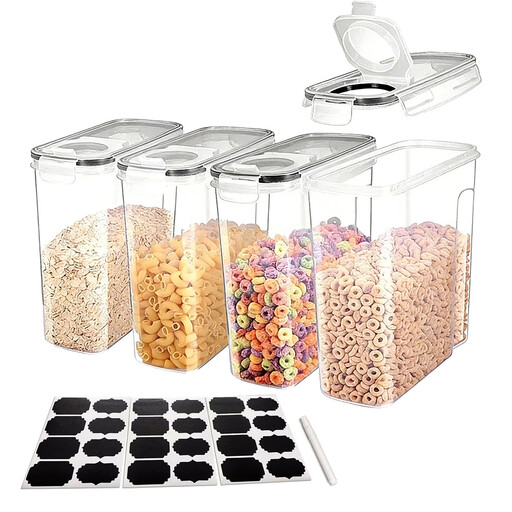
Why This Fits Their Persona: A four-piece set gives students, new renters and smaller households several matching containers for pantry organisation without buying individual pieces.
The transparent construction makes contents easier to identify, while the sealed, moisture-resistant design is suited to dry cupboard storage.
Four containers in one set; 4L capacity per container; transparent plastic for quick identification.
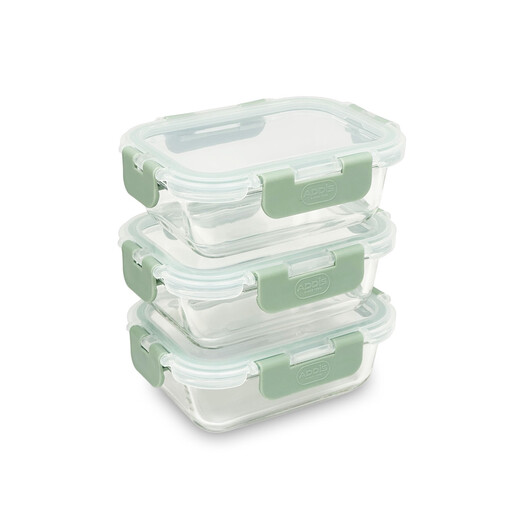
Why This Fits Their Persona: These smaller glass containers suit shoppers who value reusable storage for meals, leftovers and food preparation, with a format that can move from fridge to table.
The silicone gasket and clip-lock lid provide a clearly defined closure, while the stated appliance guidance helps avoid unsafe all-purpose assumptions.
Borosilicate glass; fridge, freezer and microwave use with lid removed; oven-safe glass with lid removed; dishwasher-safe.

Why This Fits Their Persona: The 460ml square format is useful for small cupboards, worktop organisation, packed snacks and baking ingredients where every centimetre matters.
Its square shape supports neat stacking, and the easy-locking clips and airtight lid are specified for dry goods and snacks.
BPA-free Tritan plastic; shatter and impact resistance; clear contents visibility; compact square profile.
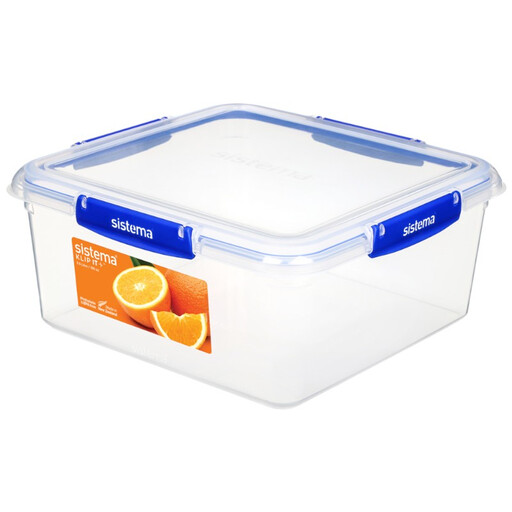
Why This Fits Their Persona: The 5.5L capacity is suited to batch cooking, bulk pantry goods and larger portions for families or regular meal preparation.
The flexible seal and easy-locking clips address closure concerns, while clearly stated microwave, freezer and dishwasher instructions support safer repeat use.
5.5L capacity; BPA-free plastic; suitable for fridge, freezer and microwave without the lid; top-rack dishwasher-safe.
We have compiled a complete, real-time list of products that fully satisfy these strict selection criteria and UK safety regulations.
Wash containers before first use and dry the rim and seal fully before closing. Avoid overfilling, as food can press against the lid and prevent a proper seal. For freezer storage, leave room for expansion, especially with soups or sauces.
Inspect clips, gaskets and lids periodically. A container that no longer closes evenly may be less suitable for liquids, even if the box itself remains usable for dry goods. Replacing a worn lid or seal, where available, can be more economical than replacing an entire collection.
Some are, but the instructions differ by product. Several plastic models are microwave-safe with the lid removed, while glass containers may also be microwave-safe under specified conditions. Never microwave a sealed container, and check the product guidance before heating.
There is no single lifespan. Durability depends on material, cleaning method, heat exposure and how often clips are opened. Glass can be durable but may break if dropped, while plastic is lighter and often more suitable for carrying. Replace any container with cracks, warped lids or damaged seals.
Plastic is lighter and convenient for packed meals, freezer use and everyday handling. Glass is heavier but can be suitable for serving and reheating when the product allows it. For many UK kitchens, a mixture of both materials provides more flexibility than choosing only one type.