
24/7 Customer Support

Free returns

Same-day & Next-day Delivery

Quality Guaranteed

Unlock Your Welcome Offers: FREE Delivery | Up to 80% OFF | Free 30-day JoyPlus trial
Download the APP
A well-organised kitchen can quickly become frustrating when containers leak, lids stop fitting or pantry staples lose their freshness. UK households also need to consider limited cupboard space, dishwasher compatibility and whether a container is suitable for the fridge, freezer or everyday lunch use.
The right airtight food storage containers should match the way you actually cook and store food. A large jar may suit flour or cereal but be impractical for leftovers, while a compact lunch container may not hold a family-sized portion. Before buying, look beyond attractive packaging and check the details that affect daily use.
An airtight gasket helps limit air exchange, but it does not automatically mean a container is safe to carry upside down. A seal can be poorly seated after washing, and some lids are designed for pantry storage rather than transport.
For lunches, sauces and liquid leftovers, look for locking clasps, a clearly described silicone seal and product information that specifically mentions leak-proof containers. Always carry jars by their base rather than the lid unless the manufacturer gives clear instructions otherwise.
A 12-piece set may sound generous, but the useful capacity depends on the size mix. Several small jars will not replace one larger container for pasta, cereal or baking flour. Conversely, oversized jars can waste shelf space and leave awkward gaps in a standard UK cupboard.
Check each container’s capacity and external dimensions. A practical kitchen storage containers set usually combines smaller jars for nuts and seeds with medium or large sizes for rice, oats, pasta and batch-cooked food.
Plastic, glass and stainless steel each have different limitations. A container may be dishwasher-safe but unsuitable for microwave use. A freezer-safe food container may still require headspace for liquids as they expand. A glass storage jar may be suitable for cold storage but not direct heat.
Read the care instructions before purchase, particularly when storing hot food. Do not assume that an airtight lid makes a container suitable for canning, pressure preservation or oven use.
For dry goods, a fitted silicone gasket can help reduce exposure to air and moisture. Lever-arm closures, clip-down lids and latching lids each have different handling characteristics:
No container keeps food fresh indefinitely. Store food while it is still suitable for consumption, use clean utensils and label leftovers with dates where appropriate.
BPA-free storage jars can be useful when you want lightweight pantry organisers that are easier to lift than glass. Transparent plastic also makes contents visible, although it may scratch or distort if exposed to harsh cleaning or high heat.
Glass storage jars are easy to inspect and do not retain odours as readily as some plastics. However, they are heavier and can break if dropped or exposed to sudden temperature changes.
Stainless steel food containers, particularly those made from 304 stainless steel, are suited to shoppers prioritising durability and resistance to everyday knocks. They are not transparent, so labels are helpful. Check the lid material and stated appliance compatibility separately from the steel body.
Measure your shelf depth and height before ordering. Stackable food storage containers can make better use of vertical space, but only if the lids and bases are designed to stack securely.
For regular use, dishwasher-safe food storage can reduce cleaning effort. Confirm whether this applies to the complete item or only selected parts. Plastic lids and silicone seals may have different care instructions from the container body. Avoid abrasive pads on transparent surfaces, and dry seals thoroughly before closing.
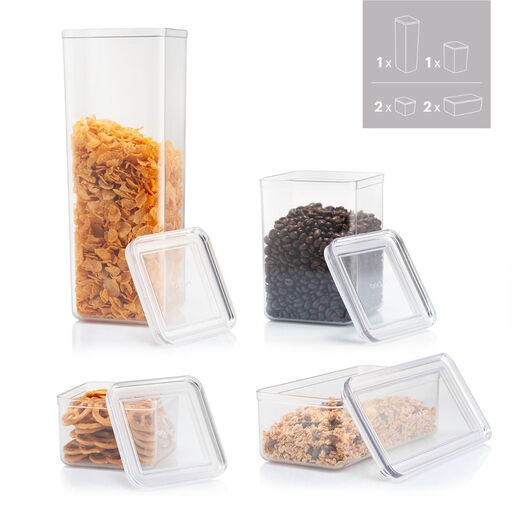
Why This Fits Their Persona: A practical starting set for renters, smaller kitchens and households beginning to organise dry staples such as coffee, pasta, flour and nuts.
The six-piece mix avoids buying multiple identical sizes that may not suit different pantry staples. Its transparent bodies and lids make stock levels visible.
Six jars provide a stated total capacity of 6.8 litres. The BPA-free plastic bodies use silicone gaskets and the components are dishwasher-safe, with top-rack washing recommended.

Why This Fits Their Persona: A 500ml option for shoppers who value visible contents and a traditional pantry appearance, whether storing dry goods, confectionery or household items.
Its lever-arm closure and silicone gasket are specified for airtight storage, giving shoppers more detail than a vague “freshness” label.
Clear glass shows the contents at a glance. The silicone seal is dishwasher-safe, and the reusable jar can also organise non-food household supplies.
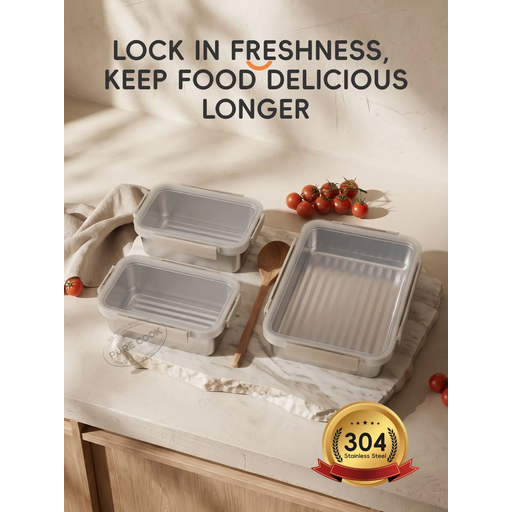
Why This Fits Their Persona: Suitable for meal preppers and busy households needing several rectangular sizes for fridge, freezer and general food storage.
The product listing identifies 304 stainless steel and describes the set as airtight, leak-proof, freezer- and dishwasher-safe, addressing several common appliance and durability questions.
The rectangular format can use shelf space efficiently. The stated size range includes 1,500ml and 2,400ml containers, useful for prepared meals and larger portions.
Wash new containers before use and dry every part thoroughly. For pantry storage, transfer ingredients only when the container is clean and dry. Add labels with the food name and date, especially when several ingredients look similar.
Leave room at the top when freezing liquids, and allow hot food to cool according to the product instructions before sealing. Keep glass away from sudden temperature changes, and do not place plastic containers in an oven or on direct heat unless specifically approved.
We have compiled a complete, real-time list of products that fully satisfy these strict selection criteria and UK safety regulations.
Only when the product description or care instructions states that they are freezer-safe. Leave expansion space for liquids, avoid sudden temperature changes with glass and check whether the lid remains flexible at low temperatures.
There is no universal lifespan. Seals can wear sooner when exposed to food residue, abrasive cleaning or repeated heat. Inspect silicone gaskets regularly and replace the container or seal if it becomes cracked, loose, permanently distorted or difficult to clean.
They may help limit avoidable waste by keeping dry ingredients organised and making leftovers easier to identify. The saving depends on correct storage, sensible portioning and using food before its recommended date. A durable reusable set can also reduce the need for disposable bags and wrap, but the purchase should still match your actual storage routine.