
24/7 Customer Support

Free returns

Same-day & Next-day Delivery

Quality Guaranteed

Unlock Your Welcome Offers: FREE Delivery | Up to 80% OFF | Free 30-day JoyPlus trial
Download the APP
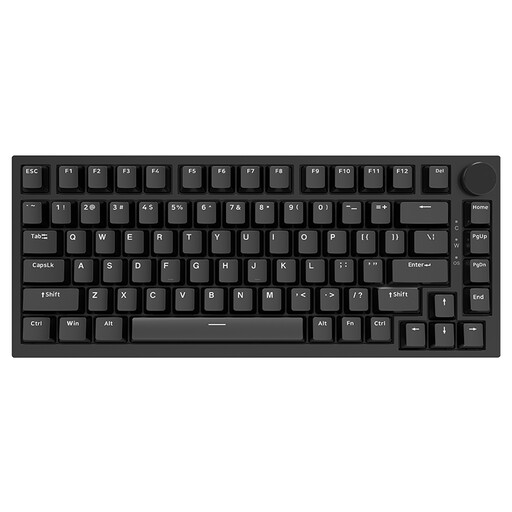
The AJAZZ AK820 mechanical keyboard targets users who want a compact board without giving up dedicated function keys, customisation or convenient volume control. It is aimed at gamers, programmers and home-office users who prefer a wired mechanical keyboard with a familiar QWERTY US layout.
However, product listings in this category can make similar keyboards appear more capable than they are. Before buying, check the layout, switch compatibility and connection details rather than relying on phrases such as “gaming-grade” or “professional performance”. The following guide explains the practical points that matter.
Written by the Joybuy Product Recommendation Officer.
A 75% mechanical keyboard normally retains the function row, arrow keys and a selection of navigation keys while removing the number pad. This saves desk space, but the arrangement can vary between models.
The AK820 is described as an 82-key, 75% compact mechanical keyboard, while its product title refers to 83 keys. This is a useful reminder to check the supplied layout image and key count before ordering. Buyers who frequently use a number pad for spreadsheets or data entry may find a tenkeyless or full-size keyboard more suitable.
Hot-swap sockets make switch replacement easier because no soldering is normally required. Nevertheless, buyers should check whether the PCB accepts 3-pin and 5-pin switches, whether the sockets are compatible with their preferred switch type and whether replacement keycaps match the layout.
The AK820 listing states that its PCB supports both 3-pin and 5-pin switches. This gives users more scope to change the typing feel later, but compatibility should still be confirmed before purchasing replacement parts.
An RGB mechanical keyboard may offer preset lighting modes, but lighting functions differ between models and software platforms. Foam layers and gasket mounting can influence sound and key feel, but they do not make a keyboard silent. Switch type, keycap design, desk surface and typing force also affect noise.
For a shared home or office environment, a linear switch may be more appropriate than a loud clicky switch, but no mechanical keyboard should be assumed to be silent without checking its switch and construction details.
The AJAZZ AK820 uses a 75% layout measuring approximately 327 × 136 × 40 mm and weighing around 0.8 kg. It uses a QWERTY US keyboard arrangement, so UK buyers should check whether the smaller Enter key, altered punctuation positions and US symbol layout suit their daily typing.
The keyboard is listed as compatible with Windows and macOS, with plug-and-play wired use through a USB Type-C cable. The product information also mentions compatibility with Android and certain consoles when used with an appropriate adapter. An adapter is not included, so console users should factor that into their setup.
The listed version includes linear red switches, which generally provide a smooth keystroke without the audible click associated with clicky switches. The product description states a switch life of up to 50 million clicks; this is a stated specification rather than a guarantee of actual service life.
Its hot-swappable mechanical keyboard design allows compatible switches to be removed and replaced without soldering. The listing also describes a gasket mount keyboard structure, a flexible PC plate and several layers of sound-dampening material, including PORON and other foam components. These features are intended to provide a softer feel and reduce resonance, although the final sound depends on the whole build.
The board uses OEM-profile PBT keycaps. PBT is commonly selected for its textured feel and resistance to surface shine compared with many ABS keycaps, although keycap longevity still depends on use and cleaning.
The AK820 includes a dedicated CNC volume knob, making it a practical gaming keyboard with volume knob for adjusting sound during games, video calls or music playback. Its backlight is described as 1.6 m RGB with 20 preset modes and software or shortcut control. Check software support on your operating system if customised lighting is important.
Why This Fits Their Persona: A practical starting point for UK students, first-time mechanical keyboard buyers and home users who want compact dimensions, wired reliability and switch customisation without adding wireless charging or battery maintenance.
The wired Type-C connection avoids battery concerns, while the hot-swap PCB provides an upgrade path instead of requiring a complete replacement when preferences change.
75% footprint, linear red switches, PBT keycaps and compatibility with 3-pin and 5-pin replacement switches.
Why This Fits Their Persona: Suitable for enthusiasts who value a more customisable typing setup, layered internal padding and physical media control for a tidy desk or hybrid workstation.
It combines stated gasket construction and foam layers with replaceable switches, rather than making lighting the only customisation feature.
PBT OEM keycaps, volume knob, adjustable feet and RGB presets controlled by shortcuts or compatible software.
Why This Fits Their Persona: A sensible match for users switching between gaming, programming and video calls who need arrow keys, function keys and quick volume adjustment without a full-size board.
The dedicated knob reduces reliance on keyboard shortcuts, while N-Key Rollover is listed for simultaneous key input during gaming and fast typing.
Stable wired transmission, compact desk footprint, linear switches and a physical control for rapid volume changes.
We have compiled a complete, real-time list of products that fully satisfy these strict selection criteria and UK safety regulations.
Yes, it is listed as compatible with Windows and macOS, but it uses a QWERTY US layout. UK users should check the key arrangement before buying, particularly if they regularly use UK-specific symbols.
The product description states that it is hot-swappable and supports 3-pin and 5-pin PCB-mounted switches. This means compatible switches can be changed without soldering. Always disconnect the keyboard and follow the replacement switch manufacturer’s fitting guidance.
A wired keyboard draws power through USB, so it does not require charging or disposable batteries. Its electricity use is generally small compared with higher-powered desktop equipment, although actual consumption depends on the computer port and lighting brightness. Turning off RGB effects when unnecessary can reduce power draw further.