
24/7 Customer Support

Free returns

Same-day & Next-day Delivery

Quality Guaranteed

Unlock Your Welcome Offers: FREE Delivery | Up to 80% OFF | Free 30-day JoyPlus trial
Download the APP
Choosing alcohol-free beer should be straightforward, but product labels and marketing terms can make comparison difficult. A can marked “zero”, “free” or “non-alcoholic” may not always mean exactly the same thing, while pack sizes, calorie figures and flavour styles vary considerably.
Whether you are a designated driver, reducing your alcohol intake, planning a barbecue or buying an alcohol-free beer multipack for home, check the details below before ordering.
“Alcohol-free”, “non-alcoholic” and “0.0 beer” are often used interchangeably in online searches, but the actual ABV should be your reference point. Some products labelled 0.0% may contain no more than 0.05% ABV, while a “low-alcohol” drink can contain more.
For example, Heineken 0.0 and San Miguel 0.0 are listed at 0.05% and 0.05% ABV respectively in the supplied product information. Peroni Nastro Azzurro Alcohol Free and Corona Cero are listed at 0.0% ABV. Always check the current packaging if complete avoidance is important to you.
A sugar-free beer is not necessarily an alcohol-free drink. The Asahi Style Free product listed here contains 4% ABV, despite its sugar-free positioning. It is therefore not a suitable substitute for alcohol-free lager when you need to avoid alcohol.
Similarly, imported beer such as Hanoi Beer and Saigon Beer contains around 4.8–5.1% ABV. These may suit shoppers looking for traditional lager flavour, but they belong in a different purchase decision from non-alcoholic beer.
A calorie figure per 100ml can appear low until it is multiplied by the full can or bottle. Compare products using the same serving size:
Low-calorie beer can still contain carbohydrates and sugars, so review the full nutrition table rather than relying on front-of-pack wording.
Look for the alcohol percentage, not just the product title. A genuine 0.0 beer should display 0.0% ABV, but some alcohol-free products may state up to 0.05% ABV. If you are pregnant, taking medication, avoiding alcohol for personal reasons or following medical advice, check the label and consult a medical professional where appropriate.
Alcohol-free products can still carry age restrictions in online shops. Follow the retailer’s requirements and keep drinks away from children. Alcohol-free does not automatically mean suitable for every individual or situation.
Select the style that matches what you normally drink:
For example, Guinness Draught 0.0 is described with roasted barley, coffee and chocolate notes, while Peroni Alcohol Free has a lighter Italian lager profile with delicate bitterness and citrus notes.
A four-pack is useful for trying a new product without committing to a large quantity. A 10-, 12- or 24-pack may offer better convenience for social occasions, but check storage space and best-before dates.
Cans are easy to stack and chill, while bottles may suit dinner service. Most products should be stored in a cool, dry place away from direct sunlight and served chilled. Follow the specific storage instructions printed on the packaging.
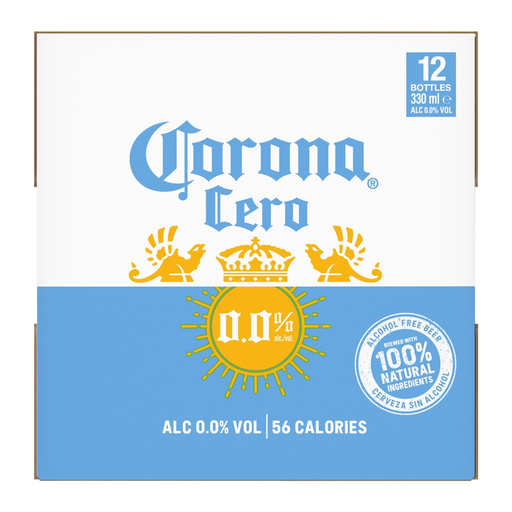
Why This Fits Their Persona: A 12-bottle format gives new shoppers a practical way to stock the cupboard for meals, weekends and casual gatherings without moving straight to a larger 24-pack.
The product information clearly states 0.0% ABV and gives a serving-specific calorie figure, making it easier to compare with other alcohol-free beer cans.
0.0% ABV; 56 kcal per 330ml bottle; crisp, citrus-style profile suited to chilled serving.
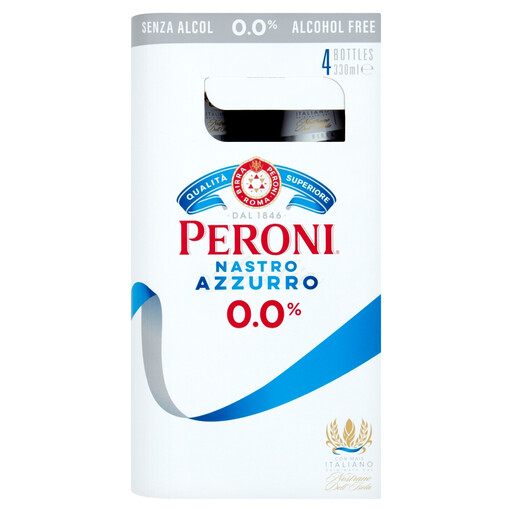
Why This Fits Their Persona: The smaller four-pack suits aperitifs, pizza nights and dinner pairings when presentation and portion control matter more than bulk purchasing.
Its listing specifies 0.0% ABV, 23 kcal per 100ml and 76 kcal per 330ml, avoiding vague low-calorie comparisons.
Brewed and bottled in Rome; 0.0% ABV; barley-based lager with maize and hops.

Why This Fits Their Persona: A 10-can pack is suited to regular home use, colder evenings and shoppers who prefer an alcohol-free stout over a pale lager.
The product is clearly presented as 0.0% alcohol-free stout, rather than relying on a general “lighter” or “low-alcohol” description.
440ml cans; roasted barley flavour profile; 17 kcal per 100ml; brewed in Dublin.
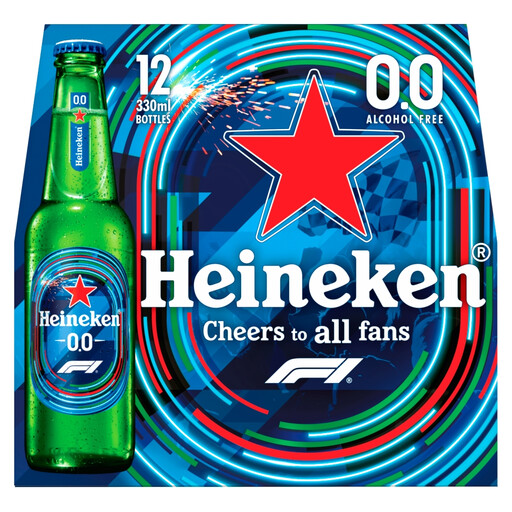
Why This Fits Their Persona: The 12-can format works for family gatherings, pub-style occasions at home and keeping a familiar lager alternative available.
The listing gives the ABV as 0.05% and provides nutrition per 100ml, allowing shoppers to make an informed comparison rather than assuming every “0.0” product is identical.
12 x 330ml cans; 21 kcal per 100ml; fruity and fresh malt notes with a light body.
We have compiled a complete, real-time list of products that fully satisfy these strict selection criteria and UK safety regulations.
Not always. Some products state 0.0% ABV, while others list up to 0.05% ABV. Read the product label if even trace alcohol is a concern. Also check ingredients and allergen information, particularly if you need to avoid barley or gluten.
Alcohol-free products vary in their stated ABV and are not a substitute for personal medical advice. If you are pregnant or following medical guidance, check the packaging and consult your midwife, GP or other qualified healthcare professional before choosing a product.
Larger alcohol-free beer multipacks can reduce the cost per can, but only if you will use the contents before the best-before date and have suitable storage. A four-pack or 10-pack may be more practical for trying a new lager, stout or cider. Compare the price per 330ml or 100ml, rather than the headline pack price alone.