
24/7 Customer Support

Free returns

Same-day & Next-day Delivery

Quality Guaranteed

Unlock Your Welcome Offers: FREE Delivery | Up to 80% OFF | Free 30-day JoyPlus trial
Download the APP
The world of alcohol-free drinks has transformed. Gone are the days when your only options were overly sweet juices or bland, fizzy water. Today, the shelves are filled with sophisticated non-alcoholic beer, elegant alcohol-free wine and complex spirits. But with so much choice comes a new challenge: how to spot the genuinely good from the cleverly marketed duds.
As a Joybuy Product Recommendation Officer, my role is to help you navigate this growing market. Many shoppers find themselves disappointed, having spent their money on drinks that fail to deliver on their promise. Let's look at the common pitfalls and how to avoid them.
To avoid disappointment, focus on a couple of core technical aspects that separate the premium zero alcohol drinks from the rest.
How the alcohol is removed is the single most important factor for flavour. Not all methods are equal.
Products that use advanced methods like vacuum distillation or reverse osmosis often state it on their packaging and generally deliver a more authentic taste.
A great alcohol-free drink starts with a great base. For non-alcoholic beer, look for brands that use high-quality ingredients like malted barley, specific hop varieties and pure water—the same as you would in a craft beer. For alcohol-free wine, the best results come from de-alcoholising a well-made, finished wine, rather than building a drink from unfermented grape juice and flavourings. This ensures the final product has structure, body and a recognisable wine-like character.
Here are a few options that align with these quality markers, matched to different needs and preferences.
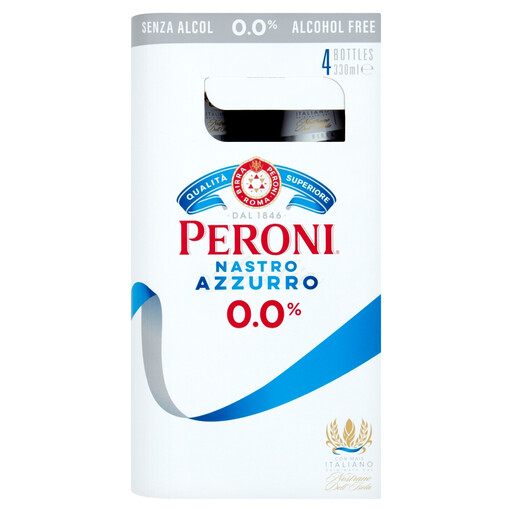
Why This Fits Their Persona: For those who enjoy a crisp, refreshing Italian lager after work or with a meal, this offers an authentic experience. It's ideal for designated drivers or anyone embracing mindful drinking options without wanting to feel like they're missing out on the classic lager taste.
It sidesteps the "flavourless fizz" trap by using an innovative dealcoholisation process that retains the crisp, refreshing taste and subtle citrus notes of the original Peroni Nastro Azzurro.
Brewed in Italy with the same high-quality ingredients, including exclusive Nostrano dell'Isola maize, for a genuinely premium taste. It contains less than 76 calories per 330ml bottle.

Why This Fits Their Persona: Perfect for those hosting baby showers, brunches or festive gatherings. It provides a sophisticated, inclusive option that allows everyone, including expectant mothers and sober curious guests, to join in the toast with an elegant, bubbly drink.
This is far from being "just juice." It is a carefully crafted sparkling beverage with a balanced profile of summer strawberries and raspberries, finishing with a crispness that avoids the cloying sweetness of lesser alternatives.
Features an alluring pink hue and fine, persistent bubbles for a premium look and feel. It's vegan-friendly and offers a refreshing, light taste that appeals to a wide audience.

Why This Fits Their Persona: For the drinker who loves the deep, roasted and creamy character of a classic stout. This is for someone who refuses to compromise on flavour and texture when choosing a non-alcoholic option, whether it's for a quiet night in or a social pub visit.
It directly counters the "flavourless" trap by using a cold filtration method to remove alcohol while preserving the signature notes of coffee, chocolate and roasted barley. It delivers the full-bodied experience of the original.
Provides the authentic smooth, creamy texture and perfectly balanced finish of Guinness. At only 17 calories per 100ml, it's a remarkably light yet satisfying choice.
We have compiled a complete, real-time list of products that fully satisfy these strict selection criteria and UK safety regulations.
1. Are alcohol-free drinks really 0.0% alcohol? In the UK, a drink can be legally labelled "alcohol-free" if it contains no more than 0.05% alcohol by volume (ABV). This is a trace amount, similar to what you might find in a ripe banana or a glass of orange juice. However, many brands, including some recommended above, now use advanced techniques to achieve a true 0.0% ABV. Always check the label if this is a critical factor for you.
2. Why are some alcohol-free drinks so expensive? It may seem counterintuitive, but creating a high-quality alcohol-free drink can be more complex than making its alcoholic equivalent. The processes of vacuum distillation or reverse osmosis require specialised equipment and add a significant step to production. You are paying for the technology that removes the alcohol while preserving the flavour, not just for the ingredients.
3. How can I make my alcohol-free drink taste better? Presentation makes a big difference. Always serve your low alcohol beverages well-chilled. Use the appropriate glassware—a proper pint glass for a lager or stout, a wine glass for a rosé or a highball for a spirit alternative. Adding a simple garnish, like a wedge of lime in a Corona Cero, can also elevate the sensory experience and make your drink feel more like a special occasion.