
24/7 Customer Support

Free returns

Same-day & Next-day Delivery

Quality Guaranteed

Unlock Your Welcome Offers: FREE Delivery | Up to 80% OFF | Free 30-day JoyPlus trial
Download the APP
Bleeding gums, mouth ulcers, plaque build-up and a strong flavour can make choosing an alcohol-free gum care mouthwash surprisingly difficult. Many bottles use broad phrases such as “deep clean” or “gum protection”, but the important details are usually found in the active ingredients, usage instructions and age restrictions.
A suitable rinse can complement brushing and interdental cleaning, but it should not replace them. If your gums bleed repeatedly, feel swollen or remain sore, arrange an appointment with a dentist rather than relying on mouthwash alone.
A medicated mouthwash containing an active ingredient such as chlorhexidine or hydrogen peroxide may be intended for short-term or targeted use. It is not automatically suitable as a permanent daily rinse.
For example, Colgate Peroxyl contains 1.5% hydrogen peroxide and its directions state that treatment should not exceed seven days unless advised by a dentist or doctor. Chlorhexidine products also have specific instructions and may cause temporary staining or taste changes.
By contrast, a daily gum care mouthwash is generally designed to form part of a twice-daily oral care routine. Always check the label rather than assuming that an alcohol-free formula is suitable for unlimited use.
A strong mint sensation does not tell you how a formula supports gum care. Some products contain fluoride for enamel protection, while others focus on antibacterial action, plaque reduction or cleansing oral debris.
If you have sensitive gums or a sensitive mouth, an alcohol-free formula may feel more comfortable than a rinse containing alcohol. However, it can still contain flavouring agents or other ingredients that cause irritation. Stop using any product that causes persistent burning, soreness or swelling.
A 300ml mouthwash may be practical for a short course or targeted treatment. A 500ml mouthwash can be more convenient for twice-daily use, but only if its recommended dosage suits your routine.
Using more than the stated measure will not necessarily improve results and will make the bottle run out sooner. Measure the recommended amount, spit it out and never swallow mouthwash.
For a mouthwash for gum disease or bleeding gums, check whether the formula contains an ingredient aimed at plaque bacteria or oral cleansing.
A plaque-reducing mouthwash can help reach areas that brushing may miss, but brushing twice daily and cleaning between teeth remain central to gum care.
“Alcohol-free” refers to the absence of alcohol as an ingredient; it does not mean that every user will find the product irritation-free. Check the full list for flavourings, surfactants and preservatives if you have a history of sensitivity.
Some products in the wider mouthwash market contain alcohol, including certain Total Care and gum-treatment formulas. Read the ingredients carefully if avoiding alcohol is essential.
Many adult rinses use 10ml for around one minute, while some products specify 20ml for 30 seconds. Follow the instructions for the exact product.
Some chlorhexidine mouthwashes should not be used immediately after brushing because toothpaste ingredients may affect their use. The label may recommend rinsing with water and waiting several minutes. Fluoride mouthwash instructions may instead advise avoiding food, drink or water for a period after rinsing. These details matter more than simply choosing the largest bottle.
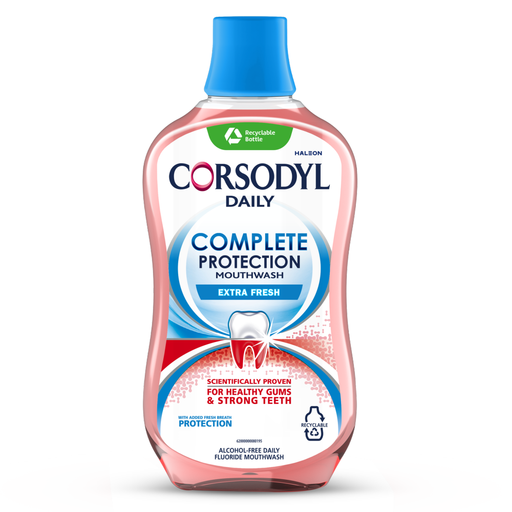
Why This Fits Their Persona: The 500ml size and twice-daily directions suit adults establishing a regular gum-care routine at home.
It is described as alcohol-free and intended for daily use, rather than presenting a short-term medicated rinse as an everyday product.
Contains sodium fluoride and zinc chloride; the label lists an 8-benefit daily gum-care format.
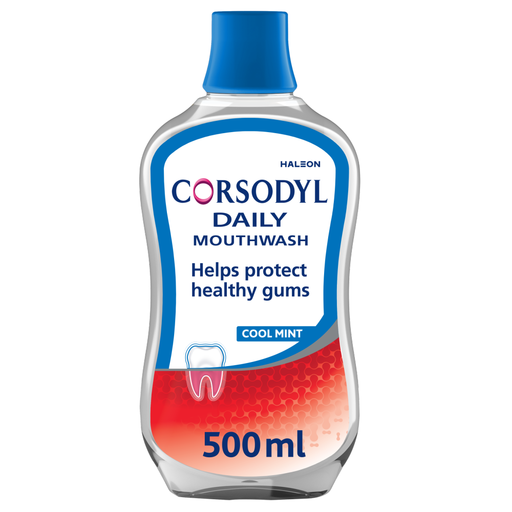
Why This Fits Their Persona: It combines a larger bottle with fluoride and 0.06% chlorhexidine for adults seeking a daily gum and enamel-care formula.
The active ingredients and adult-use directions are clearly listed, making it easier to distinguish daily care from intensive medicated treatment.
Alcohol-free cool mint formula; 500ml capacity; includes fluoride and 0.06% chlorhexidine.
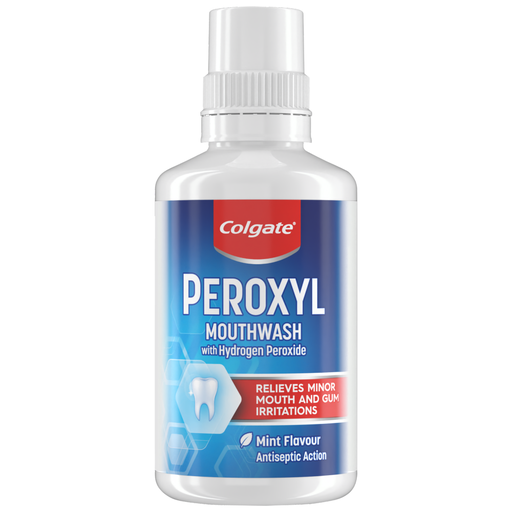
Why This Fits Their Persona: The targeted 300ml format suits adults dealing with minor mouth ulcers, gum irritation or oral debris after dental treatment, orthodontic work or similar procedures.
Its short-term directions help prevent buyers from treating a medicated rinse as an unlimited daily mouthwash.
Contains 1.5% hydrogen peroxide; ready to use; alcohol-free; directions specify use three times daily for no longer than seven days unless advised otherwise.
We have compiled a complete, real-time list of products that fully satisfy these strict selection criteria and UK safety regulations.
It may feel more comfortable for some people because it does not contain alcohol, but sensitivity can also be triggered by flavourings or other ingredients. Check the ingredient list and stop using the rinse if irritation persists.
Not necessarily. Chlorhexidine and hydrogen peroxide rinses can have specific treatment limits. Follow the product label or advice from your dentist or pharmacist. A daily gum care mouthwash is a more appropriate category for routine use when the label indicates daily suitability.
This depends on the dosage. At 10ml twice daily, a 500ml bottle provides approximately 25 days of use. At 20ml twice daily, it provides approximately 12.5 days. A 300ml bottle lasts around 15 days at 10ml twice daily or 7.5 days at 20ml twice daily. Actual usage should follow the directions on the packaging.