
24/7 Customer Support

Free returns

Same-day & Next-day Delivery

Quality Guaranteed

Unlock Your Welcome Offers: FREE Delivery | Up to 80% OFF | Free 30-day JoyPlus trial
Download the APP
Choosing an alcohol-free mouthwash is not simply a matter of picking the strongest mint flavour or the largest bottle. UK shoppers are often comparing daily freshness, plaque control, fluoride content, gum care and short-term medicated use at the same time.
The main risk is buying a product for the wrong purpose. A rinse designed for everyday cavity protection may not be appropriate for a gum condition, while a medicated mouthwash may not be intended for prolonged daily use. Use the following checks to avoid paying for features that do not match your routine.
An alcohol-free formula may feel gentler and reduce the burning sensation associated with some rinses, but it does not automatically make every product suitable for children, sensitive mouths or ongoing treatment. Check the age guidance, active ingredients and directions for use on the label.
For example, a fluoride rinse for daily use has different instructions from a medicated mouthwash containing chlorhexidine or hydrogen peroxide.
Some whitening mouthwash products use ingredients such as pyrophosphates or optical brighteners to help improve the appearance of surface stains or reflect light from the tooth surface. This is different from professional whitening or removing hardened deposits.
If your priority is a brighter-looking smile, compare the formula and usage instructions rather than relying on words such as “expert” or “maximum”.
A 1-litre bottle can offer more rinses, but value depends on how much you use each time. Many products specify 10 ml or 20 ml per rinse, often once or twice daily. A smaller bottle may be more practical for travel or for trying a flavour before committing to a larger size.
For cavity protection mouthwash, look for the fluoride concentration and follow the product label. Several everyday products listed here contain 225 ppm fluoride, while Listerine Total Care Milder Taste Zero Alcohol contains 450 ppm fluoride according to its product information.
Fluoride mouthwash is generally used as an addition to brushing, not a replacement for brushing with fluoride toothpaste. Some labels advise using the rinse at a different time from brushing and avoiding food, drink or water for a stated period afterwards. Follow the specific instructions supplied with the product.
A daily plaque protection mouthwash may contain an antibacterial ingredient such as cetylpyridinium chloride, alongside fluoride and flavouring agents. These products are intended to complement brushing and interdental cleaning.
A gum care mouthwash containing chlorhexidine requires more careful selection. Corsodyl Medicated Antibacterial Mouthwash Original Alcohol Free contains chlorhexidine digluconate 0.2% w/v and is described as a short-term treatment for gingivitis. Its label also warns that temporary tooth staining and taste changes may occur. Do not use it immediately after brushing; the product information advises waiting five minutes after rinsing thoroughly with water.
Aniseed, soft mint, cool mint and milder mint formulas provide different taste experiences. If you have a sensitive mouth or dislike a strong rinse, a milder-tasting alcohol-free mouthwash may be easier to use consistently.
Also check whether the bottle is 100 ml, 300 ml, 400 ml, 500 ml or 1 litre. For a household routine, a 500 ml or 1-litre size may reduce replacement frequency. For occasional or targeted use, a smaller bottle can help limit waste.
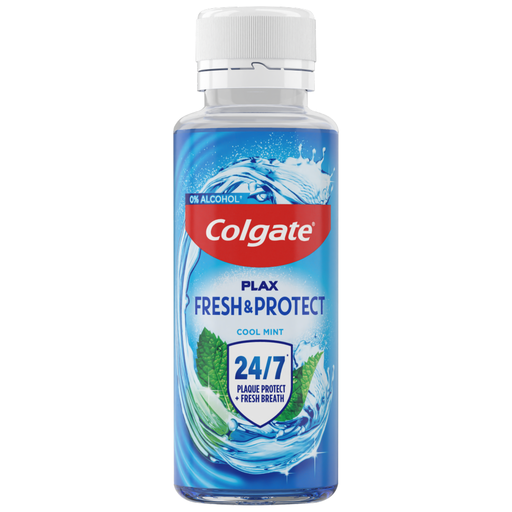
Why This Fits Their Persona: The 100 ml format is convenient for trying an alcohol-free daily mouthwash or keeping in a work bag, gym kit or overnight travel case.
It avoids committing to a large bottle before you know whether the cool mint flavour suits you.
Alcohol-free formula, cetylpyridinium chloride and sodium fluoride; the listed directions specify a 20 ml rinse for 30 seconds.
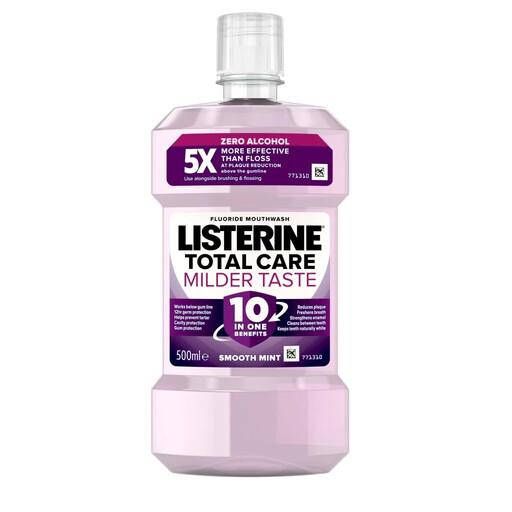
Why This Fits Their Persona: A shopper wanting several daily-care functions in one 500 ml bottle may appreciate the milder taste and listed fluoride and zinc chloride ingredients.
The product details state its fluoride level and recommended 20 ml dosage, making the comparison more transparent than relying on broad “complete care” wording alone.
500 ml volume, 450 ppm fluoride listed and a milder-taste alcohol-free formulation for twice-daily use.
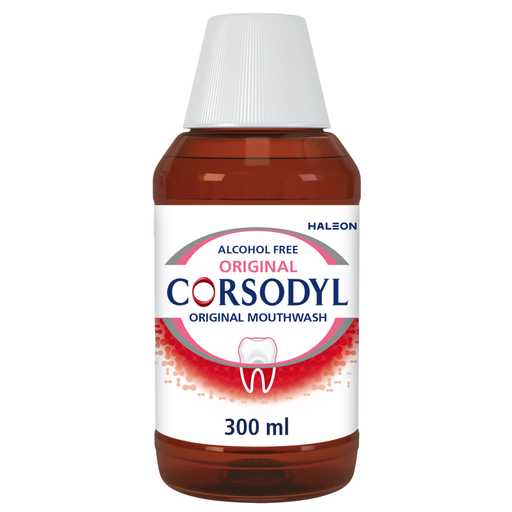
Why This Fits Their Persona: This is aimed at adults seeking a targeted, short-term medicated mouthwash for signs of gingivitis rather than a general fresh-breath rinse.
It clearly identifies chlorhexidine 0.2% w/v and short-term directions, helping prevent it being confused with an everyday mouthwash.
Medicated antibacterial formula and alcohol-free aniseed flavour. Always read the label and seek dental advice where appropriate.
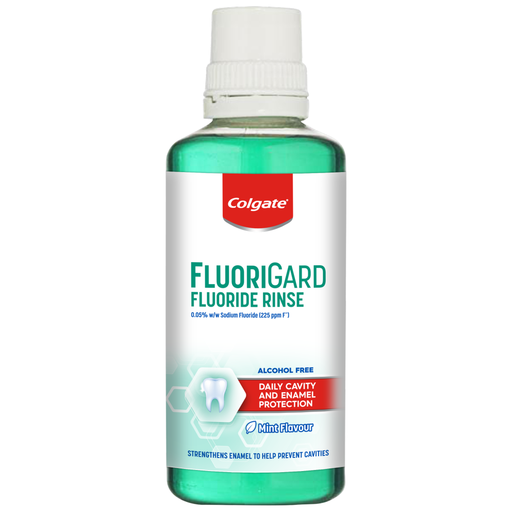
Why This Fits Their Persona: It suits adults and children over six following a once-daily fluoride rinse routine, subject to the product label and appropriate supervision.
Its stated 10 ml once-daily dosage and instruction to use at a different time from brushing make the routine easier to plan.
400 ml bottle and fluoride-focused formula listed at 225 ppm fluoride, with alcohol-free daily-rinse directions.
We have compiled a complete, real-time list of products that fully satisfy these strict selection criteria and UK safety regulations.
Some alcohol-free mouthwash products are specifically labelled for daily use, including fluoride and plaque-care rinses. Check the recommended frequency, dosage and age guidance. Medicated products may be intended for short-term treatment rather than permanent daily use.
This depends on the product. Fluoride rinses may advise using them at a different time from brushing, while other products provide their own timing instructions. Always follow the label, spit out the rinse and do not swallow it.
Calculate the approximate number of uses by dividing the bottle size by the stated dosage. For example, a 500 ml bottle used at 20 ml per rinse provides around 25 rinses. Twice-daily use will consume it more quickly than a once-daily routine, so dosage is more useful than bottle size alone when comparing running cost.