
24/7 Customer Support

Free returns

Same-day & Next-day Delivery

Quality Guaranteed

Unlock Your Welcome Offers: FREE Delivery | Up to 80% OFF | Free 30-day JoyPlus trial
Download the APP
Navigating the world of outdoor footwear can be as challenging as the rugged UK trails you plan to conquer. With so many brands promising the ultimate performance, it is easy to end up with a pair of shoes that look the part but fail to deliver when faced with a muddy path in the Peak District or a slick, rocky descent in Snowdonia. Many well-intentioned buyers fall into common traps, investing in features that sound impressive but prove impractical for British conditions.
Before you make a decision, it is crucial to understand a few frequent pitfalls that lead to buyer's remorse:
To choose wisely, you need to look past the marketing and focus on the core components that define a shoe's performance. Understanding these three areas will empower you to select footwear that truly matches your intended use.
The outsole is where the rubber meets the road—or, more accurately, the rock, mud and gravel. Its effectiveness comes down to two factors: the rubber compound and the lug pattern.
The midsole is the engine room of the shoe, responsible for shock absorption and stability. Most are made from EVA (ethylene vinyl acetate) foam, but the density and design vary significantly.
The upper part of the shoe wraps and secures your foot. Its material dictates breathability, durability and how it handles moisture.
Based on these practical criteria, we have identified several models that align with the needs of different UK outdoor enthusiasts. Instead of a single "best" shoe, we match footwear to specific user profiles.
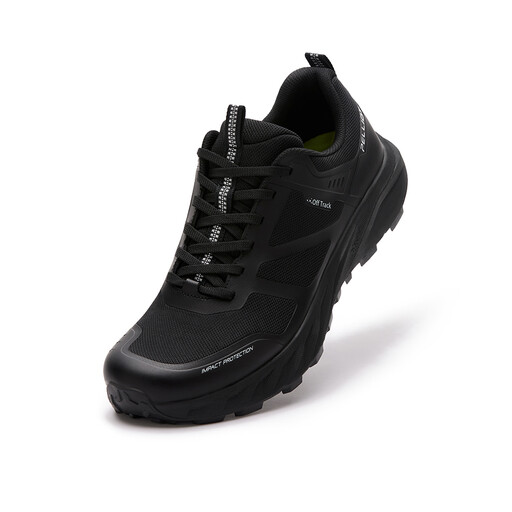
Why This Fits Their Persona: Ideal for those whose runs start at their front door and extend to local parklands or woodland trails. It offers a balance of features that perform well on both pavement and moderately challenging off-road surfaces.
It avoids the "one-sole-fits-all" trap with its ROCKYTEC outsole, which is engineered to provide reliable grip on varied terrain without the excessive lug depth that would be uncomfortable on harder ground.
The high-elastic EVA foam midsole provides responsive cushioning for hard surfaces, while the breathable sandwich mesh upper ensures feet stay comfortable as the effort increases.
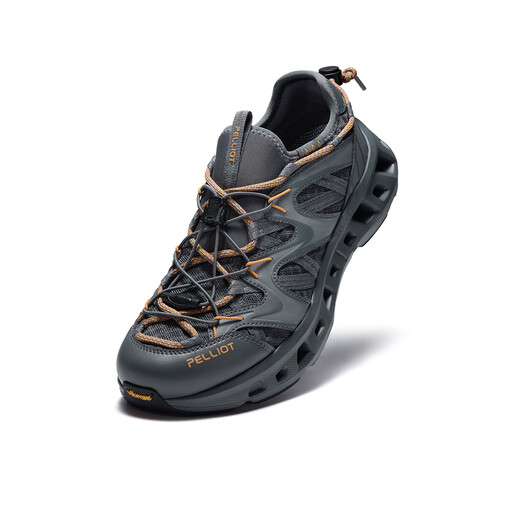
Why This Fits Their Persona: Perfect for hikers, coasteering enthusiasts or trail runners who frequently encounter streams, bogs and unpredictable downpours. This shoe is built to get wet and dry out fast.
It directly counters the "waterproof" fallacy by embracing water. Its rapid drainage system, with ports in the outsole and a micro-perforated mesh upper, expels water almost instantly, preventing waterlogging.
The Vibram Megagrip outsole provides outstanding traction on wet rocks and slippery surfaces. The quick-lace system allows for easy adjustments, even with cold, wet hands.
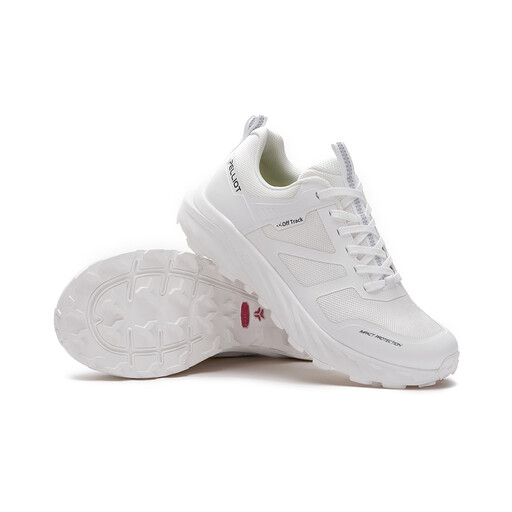
Why This Fits Their Persona: For the enthusiast who enjoys full-day hikes and values comfort over many miles. This shoe's focus on low weight and joint protection makes it a strong candidate for a lightweight trekking shoe.
It avoids the "over-cushioning" pitfall by using a high-elastic EVA foam that provides excellent shock absorption and rebound without feeling mushy, preserving a degree of ground-feel and stability.
The lightweight construction reduces leg fatigue over long distances, while the abrasion-resistant upper withstands scuffs and scrapes from trail hazards like rocks and branches.
We have compiled a complete, real-time list of products that fully satisfy these strict selection criteria and UK safety regulations.
The lifespan of all-terrain shoes depends heavily on usage, terrain and the runner's weight and gait. As a general guideline, most should provide reliable performance for 300 to 500 miles. You should consider replacing them when the outsole lugs are visibly worn down, the midsole feels compressed and less cushioned, or the upper begins to develop holes or tears.
Yes, many unisex trail running shoes are versatile enough for daily walking, especially if your walks include parks or unpaved paths. Their durable construction and supportive design can be very comfortable. However, if your daily use is exclusively on pavement, the aggressive outsoles may wear down faster than those on a standard road shoe.
The primary differences are weight and ankle support. All-terrain running shoes are lighter, more flexible and designed for faster movement, making them ideal for trail running and fast-paced hiking. Traditional hiking boots are heavier and more rigid, offering greater ankle support and protection, which is beneficial when carrying a heavy pack over very rough terrain.