
24/7 全天候客户支持

免费退货

当日/次日达

品质保障

开启新人专享福利: 全场免邮 | 低至 2 折 | 免费试用 30 天 JoyPlus 会员
下载 Joybuy
Finding the right pair of running shoes can feel like a challenge, especially in the UK where your route might take you from city pavements to muddy park trails in a single outing. Many runners find themselves buying multiple pairs of shoes—one for the road, one for the trail—which is both costly and inconvenient. The search for a single, versatile pair of all terrain running shoes that can handle it all is a common goal.
As a Joybuy Product Recommendation Officer, my role is to help you navigate the market and avoid common purchasing mistakes. Let's look at the key pitfalls that often lead to buyer's remorse.
To find a shoe that genuinely performs everywhere, you need to look past the marketing and focus on three core technical specifications.
The midsole is the heart of any running shoe, responsible for cushioning and stability. For all-terrain use, you need a material that can absorb impact on concrete but also provide a stable platform on unpredictable trails.
Look for shoes with a high-elastic EVA (Ethylene Vinyl Acetate) foam midsole. This material offers an excellent balance of properties. It's a key feature in lightweight cushioned running shoes, providing the shock absorbing qualities needed to protect your knees and ankles on hard surfaces, while remaining responsive enough to prevent a "sinking" feeling on soft ground.
The outsole is where the shoe meets the ground. This is the most critical feature for safety and performance on varied surfaces.
The upper part of the shoe needs to be durable enough to resist scuffs from rocks and branches, yet breathable enough to keep your feet comfortable.
A sandwich mesh and woven fabric construction is an effective solution. This combination allows heat and moisture to escape, making for a more comfortable run. Some models feature TPU (Thermoplastic Polyurethane) film overlays in high-wear areas for added durability without sacrificing the lightweight and breathable nature of the shoe. This construction is common in modern unisex running shoes, designed to offer a versatile fit for a wide range of runners.
Based on these essential criteria, we've matched some options to different types of runners.
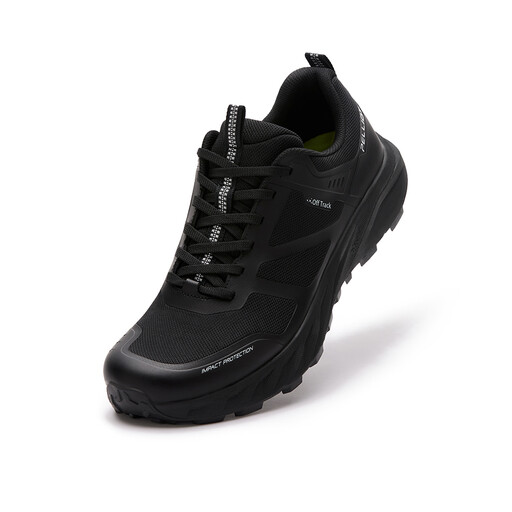
Why This Fits Their Persona: This runner splits their time between weekday runs on pavements and weekend trips to local woodlands or coastal paths. They need a single shoe that transitions seamlessly without feeling compromised on either surface.
It avoids the "trail-only overkill" by using a balanced outsole that provides grip on loose ground but doesn't feel harsh or wear prematurely on roads, thanks to its versatile lug design.
The high-elastic EVA midsole provides excellent shock absorption for hard surfaces, while the ROCKYTEC outsole offers reliable traction for light trail use.
Why This Fits Their Persona: This individual frequently runs on challenging UK trails, encountering wet rocks, muddy slopes and loose gravel. For them, confident grip and stability are non-negotiable, but they still need cushioning for harder sections of the trail.
It directly counters the "cushioning vs. grip" fallacy. The ROCKYTEC outsole is engineered for superior traction on wet surfaces, while the EVA midsole ensures joint protection without sacrificing stability.
Its primary advantage is the specialised outsole that provides strong, anti-slip grip on wet rocks and mud. The upper is also abrasion-resistant to withstand scratches from trail debris.
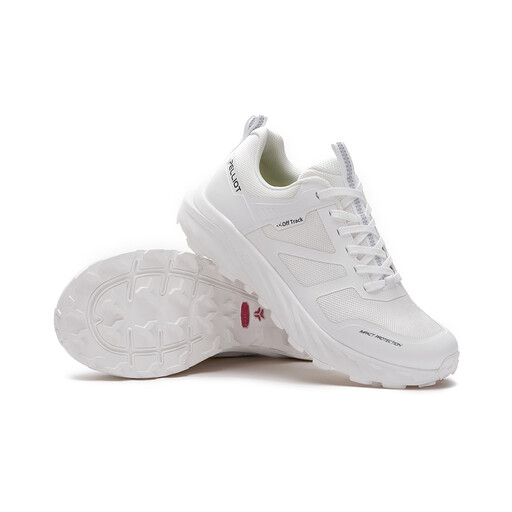
Why This Fits Their Persona: This runner prioritises comfort above all, logging high mileage on a mix of terrains. For them, preventing fatigue, hot spots and blisters is paramount to enjoying their long runs.
It avoids the "waterproofing misstep" by focusing on breathability. The sandwich mesh upper allows for rapid heat and moisture release, keeping feet cooler and drier than a non-breathable waterproof shoe would on most runs.
The combination of a lightweight design and a highly breathable upper reduces leg fatigue and improves overall comfort during extended periods of running.
We have compiled a complete, real-time list of products that fully satisfy these strict selection criteria and UK safety regulations.
The lifespan of any running shoe is typically measured in miles rather than time. Most all-terrain shoes should last between 300 and 500 miles. However, this depends heavily on your weight, running style, and the terrain. Look for signs of wear: if the cushioning feels flat and unresponsive, or if the outsole lugs have worn down significantly, it is time for a new pair.
You can, but it is not recommended for anything other than very light, dry and well-maintained trails. Standard road shoes lack the outsole grip needed for mud, wet rocks or loose dirt, increasing your risk of slips and falls. They also offer less protection from rocks and roots, and the delicate upper materials can be easily torn.
Not necessarily. While they excel at keeping your feet dry in puddles or boggy conditions, they are far less breathable. This can cause your feet to sweat excessively, leading to discomfort. For most UK conditions, which often involve intermittent rain rather than constant submersion, a breathable trail shoe that drains well and dries quickly is often a more versatile and comfortable option.