
24/7 Customer Support

Free returns

Same-day & Next-day Delivery

Quality Guaranteed

Unlock Your Welcome Offers: FREE Delivery | Up to 80% OFF | Free 30-day JoyPlus trial
Download the APP
For many UK car owners, a garage or covered parking space is a luxury. This leaves your vehicle exposed to the unpredictable British weather, from scorching summer sun and sudden downpours to winter frosts and abrasive winds. Over time, this exposure can lead to faded paintwork, water spots and general wear and tear.
An all weather car cover is a practical and cost-effective solution to protect your investment. However, with so many options available, choosing the right one can be a challenge. This guide is designed to help you understand the key features to look for and to present some carefully selected options for different vehicle types.
Before you buy, consider these essential factors to ensure you get the protection your car needs.
The material is the most critical aspect of an all weather car cover. Look for multi-layered fabrics, as each layer serves a specific purpose. A quality heavy duty car cover will typically feature:
A poorly fitting cover can be ineffective and may even cause damage. A cover that is too loose can flap in the wind, potentially scratching the paint, while one that is too tight can be difficult to use and may not provide full coverage.
Always choose a cover designed for your specific vehicle type, whether it's a car cover for an SUV, a saloon, or a hatchback. Measure your car's length and compare it to the manufacturer's size guide. Additionally, look for features like an elasticated hem and dedicated mirror pockets, which help to create a more tailored and secure fit.
The UK is no stranger to strong winds. A windproof car cover is a necessity, not a luxury. Check for multiple, robust straps—ideally at the front, middle and rear—that can be fastened underneath the vehicle. These straps prevent the cover from being blown away in a gale, ensuring your car remains protected.
Furthermore, reflective stripes are a valuable safety feature, especially if you park on the street. They enhance your car's visibility to other drivers and pedestrians at night, reducing the risk of accidental bumps and scrapes.
Based on features that offer robust, year-round protection, here are our recommendations for different vehicle types.
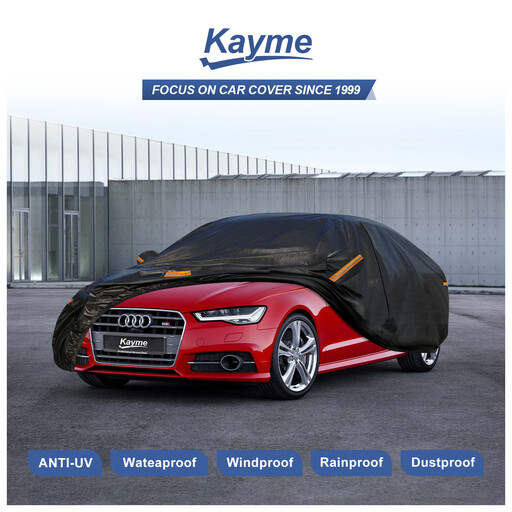
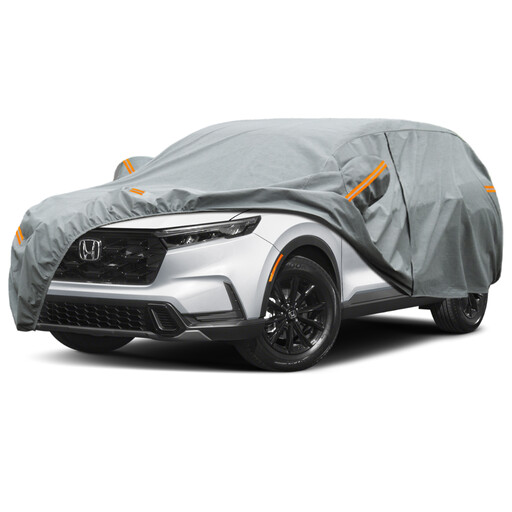

If the models above don't match your vehicle or you're searching for different types of protective covers, you can browse a wider range of solutions.
Explore our full collection of waterproof cover options to find the right fit for your needs.
A car cover can be bad for paint if it is made from abrasive material or if it is not secured properly, allowing it to flap against the car. To avoid this, always choose a cover with a soft, non-abrasive inner lining, like cotton. Ensuring the cover is fitted snugly with windproof straps will also prevent movement that could cause micro-scratches.
The most effective way to secure a car cover is by using its built-in straps. Look for a windproof car cover that has at least three straps: one at the front, one at the rear and one that runs across the middle underneath the car. An elasticated hem also helps the cover grip the bottom of the vehicle for added security.
It is generally not recommended to put a cover on a wet car. Doing so can trap moisture between the cover and the car's surface, which may lead to water spots, mould or potential damage to the paint's clear coat over time. It is always best to wait until the car is dry before covering it.