Choose dried fruit against each participant’s specific allergen requirements, checking the current pack’s ingredients, highlighted allergens and any precautionary statement. Plain raisins or sultanas can have shorter ingredient lists than mixed fruit snacks, but neither a short list nor a vegan label establishes suitability for everyone. If toddlers are taking part, follow NHS advice to offer dried fruit with a meal rather than as a between-meal snack.
Who is this for?
Parents organising an allergy-aware hunt
Start with the allergens a particular child needs to avoid. The Food Standards Agency cautions that vegan labelling is not a substitute for allergen labelling, so check the chosen pack rather than relying on a broad description such as “fruit-based”.
Hosts planning a shared hunt
Separate packs can help you allocate items to guests, but each flavour and recipe still needs checking. Whitworths’ Shots Variety Pack, for example, declares wheat, milk and soya allergens and carries precautionary wording for other allergens.
Parents including toddlers
Small fruit boxes may be easy to collect during a hunt. NHS guidance, however, says dried fruit such as raisins should be given to toddlers with meals, not as a snack between meals.
What should you check?
Establish who will receive each item before choosing a flavour or pack size. Check the current packaging for every option you plan to include.
| Priority |
What to check |
Your needs |
| Specific allergens |
Read the current pack’s ingredients, highlighted allergens and any “may contain” statement. Compare all three with the recipient’s requirements; the Food Standards Agency says vegan labelling alone is not a proxy for allergen labelling. |
I need to know whether this particular pack meets the requirements of the person receiving it, rather than assuming one “free-from” description covers the whole group. |
| Recipe and flavour |
Check every flavour in a mixed box, including coatings and added ingredients. Whitworths’ Shots Variety Pack declares wheat, milk and soya and has precautionary wording for other allergens; plain fruit listings may have shorter ingredient lists without being suitable for every allergy. |
A straightforward fruit option would make the hunt easier to organise, but I still need to assess each pack before giving it to someone. |
| Sulphites |
Look for sulphur dioxide or sulphites in the ingredients and allergen information when this matters to a participant. The Food Standards Agency identifies them as ingredients used in dried fruit. |
Someone attending needs to avoid sulphites, so the fruit type or a short-looking ingredient list is not enough for me to decide. |
| Toddlers and timing |
Consider when collected fruit will be eaten. The NHS advises giving toddlers dried fruit, including raisins, with meals rather than between meals because its sugars can contribute to tooth decay. |
I can let a toddler collect a fruit box, then keep it for a meal instead of making each find an immediate snack. |
Common buying mistakes
-
Treating a vegan label or short ingredient list as an allergy guarantee
The Food Standards Agency says vegan labelling alone cannot stand in for allergen labelling. A short recipe also does not settle whether precautionary allergen wording matters for a particular guest.
Check the current pack against that guest’s specific requirements, including ingredients, highlighted allergens and any precautionary statement.
-
Assuming all fruit snacks have similar ingredients
Coatings and mixed snack formats can change what needs checking. Whitworths’ Shots Variety Pack, for instance, declares wheat, milk and soya allergens and includes precautionary wording for other allergens.
Check each product and flavour separately before placing it in a shared hunt, and keep items allocated to the intended recipients.
-
Relying on an online listing instead of the pack
Ingredients and allergen information can change. Sainsbury’s advises shoppers to check product packaging before purchase or consumption.
Read the physical pack when buying and keep it available while deciding who can receive each item.
-
Making every toddler’s find an immediate fruit snack
The NHS advises serving dried fruit such as raisins to toddlers with meals rather than between meals because its sugars can contribute to tooth decay.
Let toddlers collect the boxes for later, or use a non-food hunt token if the activity calls for something to enjoy straight away.
Brand references for checking dried fruit
These examples show how ingredients and pack formats can differ. A brand name alone cannot establish whether an item meets an individual’s allergen requirements.
Tesco
Tesco lists both a larger seedless-raisin pack and a 12-pack of smaller raisin boxes.
- Tesco Seedless Raisins 1 kg lists raisins and sunflower oil; its separate 12-pack contains 12 × 14 g boxes.
- Those listing details do not establish suitability for a particular allergy. Check the current pack before including either format.
Sainsbury’s
Sainsbury’s provides own-brand allergen information and advises checking packaging before purchase or consumption.
- Its 1 kg sultanas listing gives the ingredients as sultanas and high-oleic sunflower oil.
- A short ingredient list does not answer every allergen or cross-contact question; assess the pack for the intended recipient.
M&S
M&S lists raisins with sunflower oil and publishes guidance on how it presents allergen information.
- M&S Food says allergens present are highlighted in ingredients and that it uses a blue statement where an allergen may be present through cross-contamination.
- Read the ingredients and any relevant statement on the chosen pack; the raisin listing alone does not establish suitability for every guest.
Whitworths
Whitworths’ mixed snack assortment illustrates why fruit-based products need flavour-by-flavour checks.
- The Shots Variety Pack offers several snack flavours in one assortment.
- Its allergen information declares wheat, milk and soya and includes precautionary wording for peanuts, other nuts, sesame and cereals containing gluten. Check each flavour against the intended recipient’s requirements.
Dried-fruit options on Joybuy
These individually portioned raisin and blueberry products are options to assess for an Easter egg hunt. Choose by the recipient’s requirements and the current pack label, not by fruit type or portion format alone.
 Image unavailable
Organix Goodies Raisins 12+ Months, 12 × 14 g
The 12 individual 14 g boxes can be allocated to hunt participants. Check each recipient’s allergen requirements against the current packaging; the 12+ months designation does not change NHS advice to serve dried fruit to toddlers with meals rather than between meals.
View on Joybuy
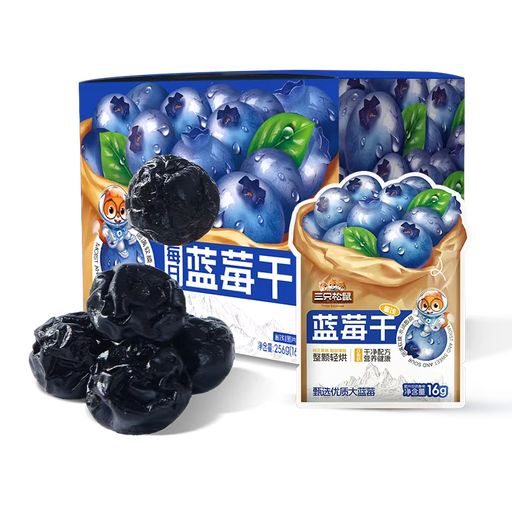 Image unavailable
Three Squirrels Daily Blueberry, 16 × 16 g
The 16 individual 16 g packs provide separate items for a hunt. Before assigning one to a guest, check the current pack’s ingredients, allergen information and any precautionary statement against that person’s requirements.
View on Joybuy
Questions about dried fruit for a hunt
Is vegan dried fruit automatically suitable for someone with a milk or egg allergy?
No. The Food Standards Agency says vegan labelling on its own is not a substitute for allergen labelling. Check the current pack’s ingredients and any precautionary statement against the person’s specific allergy requirements.
What should I check before putting dried fruit into an allergy-aware hunt?
Read the physical pack’s ingredients, highlighted allergens and any precautionary wording, then match them to the intended recipient’s requirements. Sainsbury’s advises checking packaging because product information can change; keep the pack available when allocating the items.
Are plain raisins or sultanas free from every allergen?
A plain-sounding name or short ingredient list cannot establish that. Tesco lists raisins and sunflower oil for one seedless-raisin product, while Sainsbury’s lists sultanas and high-oleic sunflower oil for one sultana product; check the chosen pack and any precautionary wording for the person who will eat it.
Why check dried fruit for sulphites?
The Food Standards Agency identifies sulphur dioxide and sulphites as ingredients used in dried fruit. If someone attending needs to avoid them, check the ingredients and allergen information on the particular pack rather than deciding from the fruit name.
Should toddlers eat their dried-fruit finds during the hunt?
The NHS advises giving toddlers dried fruit such as raisins with meals rather than as a snack between meals because its sugars can contribute to tooth decay. A toddler can collect a fruit box for a parent to serve later with a meal.


