Shared-kitchen biscuit bakers
If you bake occasional batches for yourself or to share, access to a clean oven and a setting you can use consistently may matter more than adding another appliance.


For occasional almond-biscuit batches, use the existing shared oven if you can book it, clean the equipment and get repeatable results from its controls. A countertop oven makes more sense when a separate appliance is permitted and fits your trays and worktop; consider a new built-in fan oven only when installation is allowed and regular batches justify its capacity. Whichever route you choose, an oven-cleaning feature does not replace controls for handling almond ingredients when food is supplied to others.
If you bake occasional batches for yourself or to share, access to a clean oven and a setting you can use consistently may matter more than adding another appliance.
If you cannot change the kitchen cabinets or electrical connections, a permitted countertop oven is an option. Check that its usable cavity fits your biscuit tray and that it can be placed as its manual requires.
If you bake larger or repeated batches, shelf space and model-specific evidence for multi-level baking become more important. A built-in fan oven is an option only if the kitchen owner permits installation and the appliance fits.
Start with the oven you already share if it meets your baking and access needs. A countertop appliance changes who controls the baking schedule; a new built-in oven changes the kitchen itself, so permission and installation compatibility come first.
Choose it when: It has usable controls and tray space, and you can agree on access and cleaning between users.
Trade-off: Other users affect availability and how the oven and trays are left for your next batch.
Choose it when: A separate appliance is allowed, installation is not an option and your batches fit a compact cavity.
Trade-off: A smaller cavity may mean more baking cycles, and the appliance needs suitable worktop and storage space.
Choose it when: Installation is permitted and you regularly need room for several trays.
Trade-off: Cabinet fit and electrical connection depend on the exact model; a fan setting alone does not establish even biscuit browning.
| Concern | What to check | Who this matters to |
|---|---|---|
| Repeatable baking | Check the fan-bake setting and evidence of temperature-control accuracy for the exact oven. | When I make repeated biscuit batches, I want to know whether the same setting gives me a usable result each time. Around 33% of consumers put repeatable baking first. |
| Shared-kitchen cleaning | Check how trays, racks and worktops will be cleaned and how almond ingredients will be handled. | If I prepare almond biscuits around other people’s food, I need an agreed way to manage ingredients and equipment between uses. For around 27% of consumers, shared-kitchen cleaning and allergen control are the primary concern. |
| Flexible access | Confirm permission for a countertop appliance, its placement requirements and the tray size it accepts. | When the communal oven is busy and I cannot alter the kitchen, I need a permitted way to control my own baking time. That flexibility comes first for around 20% of consumers. |
| Batch capacity | Compare usable tray dimensions, shelf positions and any multi-level instructions for the exact model. | If I bake several trays regularly, fitting the intended batches matters more to me than adding cooking modes. Around 20% of consumers chiefly need that capacity. |
A fan setting does not, by itself, tell you how accurately an oven holds its temperature or how your biscuits will brown. Which? assesses oven-control accuracy in its testing; manufacturer claims about multi-level baking apply to the stated models.
Look for relevant results for the exact oven where available. Otherwise, begin with a single tray and follow that oven’s instructions before planning multi-tray batches.
The space an appliance occupies is not the same as the space available for a baking tray. De’Longhi lists its EO12012 as a 12-litre countertop oven, which makes tray fit particularly important to check.
Measure the tray you intend to use, then compare it with the oven’s usable internal dimensions and your available worktop space.
A tray that does not fit can mean changing trays or baking the same batch in more cycles.
Cleaning the cavity alone does not address almond ingredients on trays, utensils or preparation surfaces. Food Standards Agency guidance for food businesses calls for systems to prevent, control and detect contamination.
Agree how equipment and surfaces will be cleaned between users. If you operate as a food business, include almond ingredients in your allergen-handling procedures.
Built-in dimensions and electrical arrangements are model-specific. Neff, for example, lists its B1GCC0AN0B as requiring electrical connection by an electrician; that does not establish the requirements of another oven.
Get permission from the kitchen owner or operator, measure the installation space and check the chosen model’s connection instructions before ordering.
Electrical work or cabinet changes can add steps to an installation that initially appears straightforward.
These brands provide examples of oven formats and model-specific features to compare. Check the exact appliance rather than assuming a feature applies across a brand’s range.
Built-in models to examine if you regularly bake across several shelf levels.
Built-in ovens with model-dependent fan-baking and door features.
Built-in models to compare for stated multi-tray cooking and cavity-cleaning features.
Built-in models to examine for stated airflow and model-specific cleaning options.
A countertop format to consider for small batches when a personal appliance is permitted.
These built-in ovens are options for a shared kitchen where a new installation is permitted. Compare their single- or double-oven layouts with your batch size, then confirm cabinet fit, electrical requirements and tray dimensions for the exact model.
 No image available
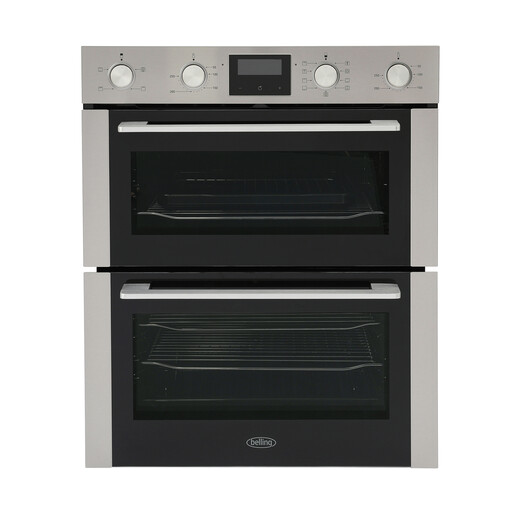
Consider the double-oven layout if regular batches call for separate cooking spaces. The product name specifies a 90 cm format; confirm the installation dimensions, electrical arrangement and usable tray sizes for the space you have. Agree on tray and utensil cleaning separately from any cavity-cleaning feature.
 No image available
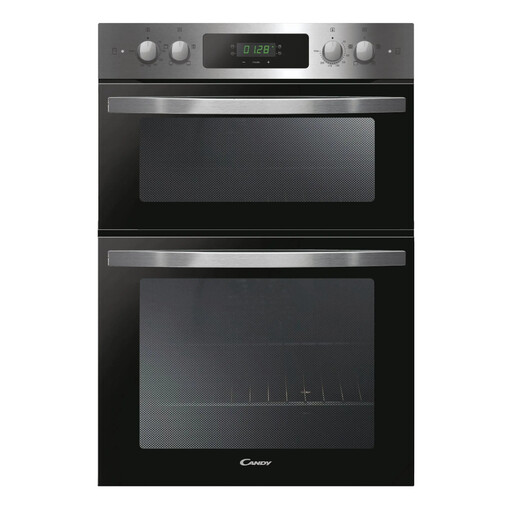
The built-under format is worth considering if the kitchen has an appropriate installation space and its owner agrees to the change. Check the cabinet opening, connection requirements and usable tray dimensions before relying on it for biscuit batches.
 No image available
A double-oven layout may be useful when you need separate cooking spaces. Check that this built-in model fits the intended cabinet, that its electrical connection is suitable and that your biscuit trays fit the usable cavity. Plan shared-equipment cleaning independently of the oven finish.
 No image available
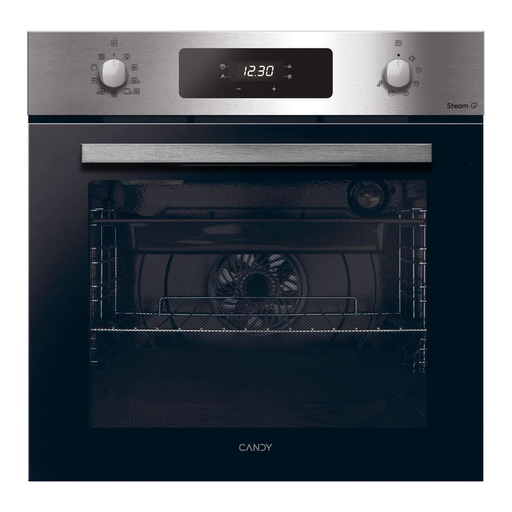
Consider this single-oven layout if one cavity suits your baking schedule. Its named pyrolytic-cleaning feature concerns the oven cavity; it does not replace cleaning trays, utensils and worktops used around almond ingredients. Confirm installation fit, electrical requirements and tray dimensions.
 No image available
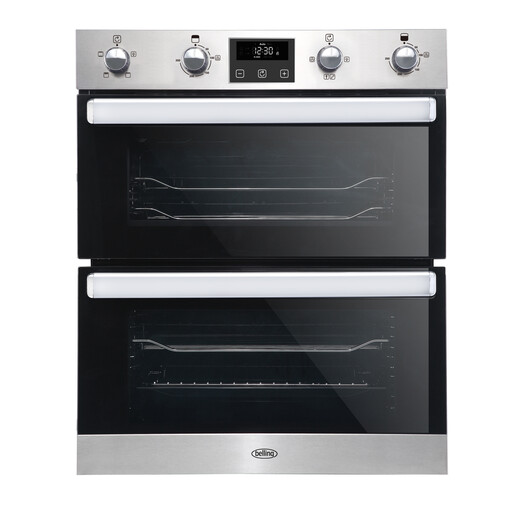
This built-under model is an option where the kitchen owner permits an installation. Confirm the supplied version’s cooking and cleaning configuration, then check its cavity and tray dimensions, cabinet fit and electrical connection before planning regular biscuit batches.
Yes, if the kitchen rules allow it and you can manage the shared equipment appropriately. Agree on cleaning the oven equipment and preparation surfaces; if you supply food as a business, follow allergen-control procedures for almond ingredients as well.
No. A cavity-cleaning programme does not manage ingredients or clean every tray, utensil and worktop. Food Standards Agency guidance for food businesses calls for systems to prevent, control and detect contamination, so those shared-kitchen procedures need separate attention.
Get permission from the household or kitchen operator first. Then use the exact model’s manual to check placement, ventilation and electrical instructions, and measure its usable cavity against your biscuit tray.
Not on its own. Check the exact oven’s instructions for multi-level baking and look for relevant temperature-control evidence where available. Which? assesses control accuracy in oven testing, while manufacturers’ multi-level claims apply to particular models.
GOV.UK says a food business that sells, cooks, stores or handles food must register with its local authority. If you plan to sell almond biscuits, check the registration arrangements for your business and the shared premises with the relevant local authority.