What should you check?
Start with the drink’s role in the meal, then compare age guidance, the current carton and the flavour the eater is likely to encounter.
| Priority |
What to check |
Your needs |
| Regular dairy replacement |
For a dairy-free child’s regular meals, NHS South West London advises looking for at least 120mg calcium per 100ml. Compare iodine, energy and protein per 100ml as well; do not assume that all fortified drinks have the same profile. |
If this drink will feature often in meals instead of dairy, I want to compare its stated nutrients with the role it needs to play in the child’s wider diet. |
| Age guidance |
Read the age statement for the exact product and distinguish use in food from use as a main milk. Sainsbury’s says its Unsweetened Almond Drink is not suitable as a main milk alternative for children under 3. |
Before making almond drink a regular part of a young child’s meals, I need to know whether the carton’s guidance fits its intended use. |
| Flavour and acceptance |
Check whether the drink is unsweetened or contains other flavour-affecting ingredients. Offer a small amount in a familiar food and allow for repeated, unpressured introductions, in line with NHS advice for fussy eaters. |
A familiar bowl of porridge or cereal gives me a way to introduce one change at a time, without expecting immediate acceptance. |
| Ingredients and fortification |
Compare the full ingredient lists, not just front-of-pack wording. The reviewed Plenish long-life drink lists three ingredients; fortified alternatives may also list texture agents and other added ingredients. |
I might prefer a shorter recipe, but if the drink is replacing dairy regularly, I also need to check which nutrients the chosen carton actually lists. |
| Nut allergens |
Almond is an ingredient in almond drink. Read the current carton for almond, other-nut and peanut warnings relevant to the eater; Sainsbury’s warns of other-nut allergy concerns for its reviewed drink. |
Where an allergy is involved, the allergen and cross-contact statements on this particular carton matter more than the drink’s flavour or fortification. |
| Storage and quantity |
Confirm that the exact product is labelled long-life or UHT, check the pack quantity and follow its refrigeration and use-by instructions after opening. Do not assume different cartons have the same opened-storage period. |
I want a cupboard option that suits how often meals use it, without overlooking the instructions that apply after opening. |
Brand and own-label examples
These examples show different product approaches; a brand name alone does not establish the ingredients or suitability of every drink it sells.
Alpro
Alpro Almond No Sugar Long Life is a UHT option described by Sainsbury’s and Alpro as containing added calcium, iodine and vitamins.
- Its reviewed product is described as having no sugars or sweeteners.
- Check the exact carton and age guidance before relying on an almond drink as a child’s regular milk alternative.
Sainsbury’s
Its reviewed Unsweetened Almond Drink is a fortified, long-life own-label option.
- Sainsbury’s lists 120mg calcium and 22.5µg iodine per 100ml for this product.
- Its label says the drink is not suitable as a main milk alternative for children under 3 and includes an other-nut allergy warning.
Plenish
The reviewed long-life organic almond drink is the short-ingredient option in this comparison.
- The Sainsbury’s and Plenish description lists almonds, water and salt.
- Do not take a simpler recipe to mean that it supplies the fortification wanted for regular dairy-free meals.
Rude Health
Its Organic Almond Drink is described by the brand as having a subtly sweet, nutty flavour.
- Its ingredient list includes rice as well as almonds, a distinction worth checking when choosing a flavour.
- Rude Health says this specific drink is suitable as part of a balanced diet for adults and children from 5 years onwards.
M&S
The reviewed Unsweetened Almond Drink is described by Marks & Spencer as enriched with calcium, iodine and vitamins D and B12.
- The stated fortification gives shoppers specific label details to compare.
- M&S warns against this product for people with nut or peanut allergy; check the current pack.
Tesco
Tesco describes its Unsweetened Almond Drink as a UHT product with added calcium, iodine and vitamins.
- It offers an own-label long-life route for shoppers comparing fortified drinks.
- Check the current carton’s full ingredients, nutrition and age guidance for the intended meal use.
Joybuy almond drink options
These Alpro listings offer almond drinks to consider for meals and cooking. Check each carton’s fortification, quantity and child-use guidance against the role you have in mind; the second listing does not establish that it is long-life.
 No image available
Alpro Almond No Sugars Long Life Drink 8 × 1L
The listing names cereal, smoothies and shakes as uses for this UHT almond drink. It states no sugars or sweeteners, added calcium and vitamins B2, B12 and D, and 0.5g protein per 100ml. Check the carton’s calcium amount, iodine information and age guidance if it will feature regularly in a child’s meals. Contains almond.
View on Joybuy
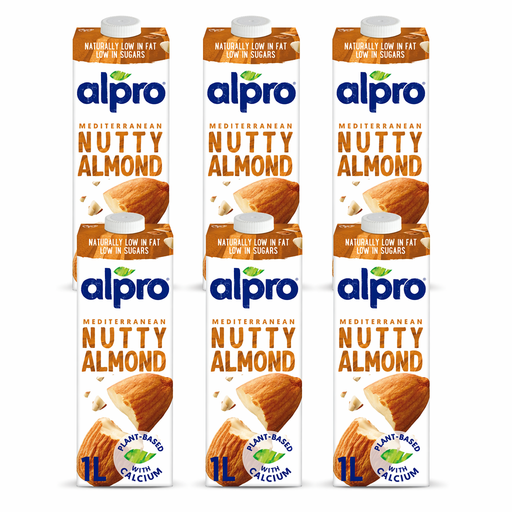 No image available
Alpro Almond Drink 1L
The listing describes cooking uses and names added calcium, iodine and vitamins B12, D2 and E. Sugar appears in its ingredients, so do not treat it as an unsweetened alternative. Confirm the pack quantity, long-life status, nutrition amounts and child-use guidance on the current product information before choosing it for fussy eater meals. Contains almond.
View on Joybuy
Questions about almond drink in meals
Can I use almond drink in a fussy eater’s meals?
Yes, you can try a small amount in a familiar food such as porridge or cereal, provided the drink is suitable for the eater. The NHS advises offering a variety of foods again without forcing a child to eat them. If almond drink will regularly replace dairy in a child’s meals, check age guidance and nutrition as well as acceptance.
Fortified or three-ingredient almond drink: which should I choose?
If the drink has a regular role in dairy-free meals for a child, check fortification first: NHS South West London advises looking for at least 120mg calcium per 100ml. A three-ingredient drink may suit a preference for a simpler recipe, but the reviewed Plenish long-life product does not list added calcium or iodine. Check the chosen carton and the child’s wider diet rather than treating either approach as automatically suitable.
Can almond drink be a young child’s main milk alternative?
Do not assume so from a dairy-free or fortified label. Sainsbury’s specifically says its reviewed Unsweetened Almond Drink is not suitable as a main milk alternative for children under 3. Follow the age statement for the exact product and seek appropriate individual advice if a young child needs to avoid dairy.
What if the child has a nut allergy?
Do not choose an almond drink for someone with an almond allergy. For other nut or peanut allergies, read the exact carton’s allergen and cross-contact warnings rather than assuming all almond drinks carry the same cautions. The reviewed Sainsbury’s and M&S products include additional allergy warnings.
How should I store long-life almond drink after opening?
Follow the instructions on the individual carton and refrigerate it where directed. The reviewed Sainsbury’s drink specifies use within 3 days of opening, while the reviewed Plenish long-life drink specifies 4 days; those periods should not be applied to other products.


