What should you check first?
Start with the flavour change in an accepted meal, then compare sweetness, the nutrition label and who will eat it.
| Priority |
What to check |
Your needs |
| Flavour change |
Look for a specific description such as delicate, subtle or light. Try a small amount in a familiar meal; the NHS and Cambridge University Hospitals advise repeated offers without pressure. |
I want to keep the meal recognisable while introducing an almond flavour. A maker’s taste description helps me choose what to try, but it cannot tell me whether the child will accept it. |
| Sweetness |
Check that the exact variant says unsweetened or no sugars, then read its sugars value on the nutrition panel. Do not assume every almond drink from the same brand has the same formulation. |
If this goes into everyday porridge or sauces, I want to know whether the carton contains sugar rather than relying on the words “almond drink” alone. |
| Fortification |
For regular child use, compare calcium on the nutrition panel and check whether iodine and vitamins D and B12 are listed. A short ingredient list does not establish that these nutrients have been added. |
When almond drink appears often in a child’s meals, I need to assess the actual carton alongside the rest of what the child eats. |
| Allergens |
Read the current ingredients and precautionary statements for almonds, other nuts and peanuts. Dairy-free does not mean suitable for someone with a nut allergy. |
Before serving a shared meal, I need to know whether everyone eating it can have the drink used in the recipe. |
| Age and preparation |
Check product-specific child-use wording and directions for hot food or drinks. The NHS advises continuing breast milk or first infant formula until at least age 1; Tesco warns against mixing its unsweetened almond drink with boiling water because it can curdle. |
For a young child or a hot meal, I want the carton’s instructions to fit the way the drink will actually be used. |
Relevant brand references
These examples show why flavour wording, ingredients and fortification need checking on the particular drink, not assumed from the brand name.
Alpro
Alpro describes its Roasted Almond No Sugars drink as delicate and creamy, making that named variant a starting point for a small trial in a familiar meal.
- Alpro UK lists no sugars or sweeteners, 120mg calcium and 22.5µg iodine per 100ml for this variant.
- Its ingredient list includes stabilisers, lecithins and natural flavouring; the taste description does not predict a child’s response.
Rude Health
Rude Health describes its No Sugars Organic Almond Drink as subtly nutty, with a light mouthfeel.
- The named drink lists spring water, 3% organic almonds, carob seed flour and sea salt.
- For regular child use, check the carton’s calcium, iodine and vitamin information separately; a short ingredient list does not establish fortification.
Plenish
Plenish describes its Almond M*lk as smooth and nutty. That flavour description is worth considering if the child notices nutty tastes in familiar food.
- Plenish lists water, organic almonds and salt, and says this product has no oils, additives or added sugar.
- Check the carton for fortification if the drink will feature regularly in a child’s meals.
Tesco
Tesco’s unsweetened 1L almond drink is an own-label option whose label gives nutrient and preparation information for meal use.
- Tesco Groceries lists added calcium, iodine and vitamins, with 0.3g sugars per 100ml.
- Tesco says to shake the carton and not mix the drink with boiling water, which can cause curdling.
Sainsbury's
Sainsbury's Unsweetened Long Life Almond Drink provides an example of an own-label carton with explicit fortification and child-use wording.
- Sainsbury's lists 120mg calcium and 22.5µg iodine per 100ml, plus vitamins D and B12.
- Its label says the drink can be used as part of a balanced diet from age 1 but is not suitable as a main milk alternative for children under 3.
M&S
M&S describes its Unsweetened Almond Drink as nutty, so its flavour may be noticeable in a meal where the child expects a familiar taste.
- Marks & Spencer lists added calcium, iodine and vitamins D and B12 for the unsweetened variant.
- M&S states that this drink is not suitable for people with nut or peanut allergy.
Joybuy almond drink options
These two Alpro listings offer different named variants for trying in familiar meals. Check the precise carton before choosing: the second listing should not be treated as the No Sugars variant.
 No image available
Alpro Almond No Sugars Long Life Drink, 8 x 1L
The No Sugars variant is an option to trial in a familiar meal when added sweetness is a concern; start with a small amount rather than assuming the flavour will be accepted. The listing names an 8 x 1L pack. If it will feature regularly in a child’s meals, check the carton for calcium, iodine and vitamin D information. It contains almond, so check allergy information before serving.
View on Joybuy
 No image available
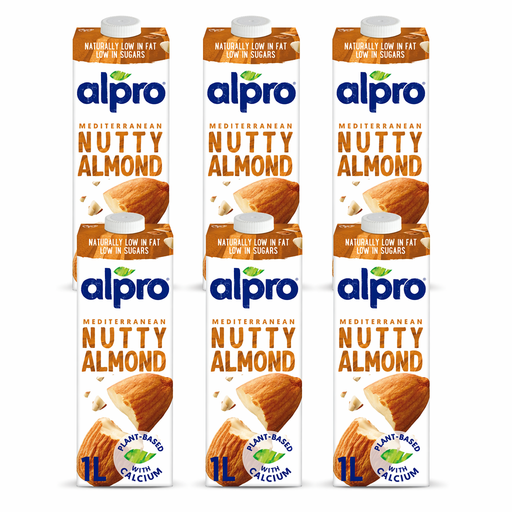
6 Alpro Almond Drink 1L
This listing describes a subtle almond flavour for uses including cereal and cooking. Its ingredient information includes sugar, so do not treat it as an unsweetened alternative: compare the carton’s sugars value if that distinction matters for the meal. Check its child-use advice and nut-allergy information before serving.
View on Joybuy
Questions about meals and child use
How can I introduce almond drink in a fussy eater’s meal?
Try a small amount in a meal the child already accepts, without changing several other ingredients at the same time. The NHS advises small portions and repeated offers without forcing a child to eat; Cambridge University Hospitals also recommends small, controlled steps.
What should I check if a child will have almond drink regularly?
Compare the exact carton’s sugars and calcium information, then check whether iodine and vitamins D and B12 are listed. Read any age-specific directions as well: Sainsbury's says its unsweetened long-life drink is not suitable as a main milk alternative for children under 3.
Can almond drink replace breast milk or infant formula before age 1?
No. The NHS says first infant formula is the only suitable alternative to breast milk in the first 12 months, and advises continuing breast milk or first infant formula until at least age 1.
Is almond drink suitable for a child with a nut or peanut allergy?
Do not assume it is suitable: almond drink contains a nut ingredient, and warnings about other nuts or peanuts vary by product. Read the current carton; M&S explicitly says its unsweetened almond drink is not suitable for people with nut or peanut allergy. Seek the child’s clinician’s advice rather than trialling it in a meal.
What should I do with an opened carton?
Follow that carton’s refrigeration and after-opening instructions rather than applying another product’s directions. Check them before planning meals across several days, as storage instructions are product-specific.


