Hosts catering for dairy-free guests
Keep the carton available so guests can check its current dairy, lactose and allergen declarations before using it at breakfast or in drinks.


Almond drink can be a cottage option for guests seeking a dairy-free or lactose-free drink, provided its current label meets their requirements and they do not need to avoid almonds or other relevant allergens. Check the allergen statement before choosing between a fortified everyday carton, a shorter ingredient list or a barista drink for foamed coffee. Almond drink is not a nut-free alternative: the Food Standards Agency classifies almonds as tree nuts.
Start with each guest’s stated requirements; a dairy-free label does not answer a nut-allergy question.
Keep the carton available so guests can check its current dairy, lactose and allergen declarations before using it at breakfast or in drinks.
Compare the ingredient list and nutrition panel: a no-sugars drink and a short-ingredient organic drink answer different preferences.
Decide whether guests need a drink intended for foamed coffee or simply an almond drink to add to tea and coffee.
Check guest-specific allergens first, then compare the carton’s ingredients, declared nutrients, storage instructions and intended use.
| Priority | What to check | Your needs |
|---|---|---|
| Allergens | Read the current dairy and lactose claims and the full allergen statement. Check almond, other-nut and peanut warnings against each guest’s requirements. | I need an alternative to dairy, but I must not offer almond drink to someone avoiding almonds or other relevant allergens. The Food Standards Agency classifies almonds as tree nuts. |
| Fortification | Compare declared calcium, iodine and vitamins on the specific carton. Alpro No Sugars, Tesco Unsweetened and M&S Unsweetened list added nutrients; do not assume every almond drink does. | If guests will use the carton regularly in place of dairy milk, I want its nutrient declarations to be clear. |
| Sugar and ingredients | Distinguish no-sugars from no-added-sugar wording, then read the nutrition panel. Alpro UK lists 0 g sugars per 100 ml for its Roasted Almond No Sugars Drink; Rude Health Pure Almond lists water and 5% organic Italian almonds. | I may prefer a particular sugar declaration or a short ingredient list. Neither tells me that a drink is nut-free or fortified. |
| Storage | Follow the unopened storage instructions, then refrigerate and use an opened carton within its own stated period. The product information for M&S, Plenish and Tesco gives different opened-carton periods. | For a changeover between bookings, I need to know when a shared carton was opened. |
| Coffee use | Look for a drink specifically intended for foam if guests make cappuccinos or flat whites. Sainsbury’s describes Alpro Barista Almond as foamable. | A splash in coffee is enough for some stays; for foamed espresso drinks, I would choose a carton labelled for that use. |
Almond is a tree nut, according to the Food Standards Agency. Tesco also warns that its almond drink may contain peanuts and other nuts; M&S says its almond drink is unsuitable for people with nut or peanut allergy.
Ask what each guest must avoid, keep the current carton available for inspection and choose another product category when almond drink does not meet their requirements.
A simple formulation and declared added nutrients are separate product characteristics. Rude Health Pure Almond lists water and almonds, while the cited Alpro No Sugars, Tesco and M&S drinks list added nutrients.
Compare the ingredient and nutrition panels according to what the guest wants from the drink.
Opened-carton instructions vary by product, so an unopened long-life label does not determine how long a carton can remain in the fridge after opening.
Mark the opening date, refrigerate as instructed and follow that carton’s use-within period.
A carton left beyond its stated period will need replacing rather than being passed on to the next guests.
A drink suitable for everyday use is not necessarily intended for foamed espresso drinks. Sainsbury’s describes Alpro Barista Almond specifically as foamable.
Choose a barista-labelled drink when foamed coffee matters; otherwise select for the guests’ other stated uses.
These product-line and retailer references help distinguish label claims; they do not establish suitability for every guest or indicate what Joybuy stocks.
Its almond range includes a no-sugars drink and a separate barista option.
Its Pure Almond and No Sugars Organic Almond drinks offer different short ingredient lists.
Its Organic Almond Drink is an option for comparing a short ingredient list.
Its Unsweetened Almond Drink 1L provides an own-label example with declared added nutrients.
Its Unsweetened Almond Drink is another own-label formulation with declared added nutrients.
Its listings provide product information for named Alpro and Plenish drinks, rather than a separate almond-drink formulation assessed here.
These Alpro cartons are options to compare for a cottage kitchen where guests can use almond drink; check the current label against each guest’s requirements before serving.
 No image available
The eight-carton pack is an option for stocking a cottage ahead of a stay. This No Sugars drink contains almond; check the current carton’s full allergen statement and storage instructions before serving it.
 No image available
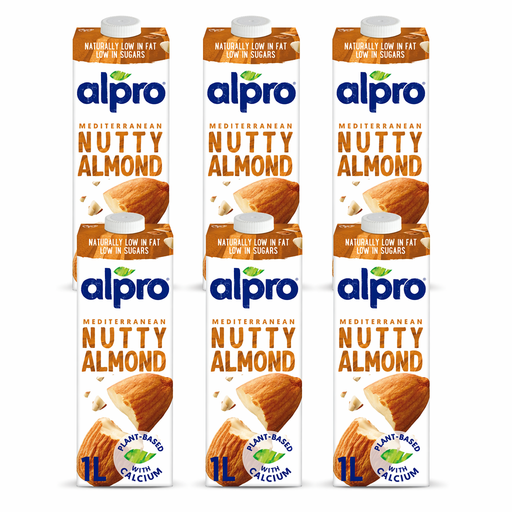
This six-carton pack is another almond drink option for a shared kitchen. Before serving it to guests with specific requirements, check the carton’s dairy, lactose and gluten declarations, full allergen statement and sugar information; do not assume it has the same formulation as Alpro No Sugars.
Do not offer almond drink as a nut-free alternative: the Food Standards Agency classifies almonds as tree nuts. Ask what the guest must avoid and check a different product category against their requirements and its current label. Tesco warns that its almond drink may contain peanuts and other nuts, while M&S says its product is unsuitable for people with nut or peanut allergy.
No. A dairy-free or lactose-free claim does not address almond or other nut allergies. Check the specific carton and the guest’s requirements; for a child or anyone following a medically managed exclusion diet, follow the dietary advice provided for that person rather than choosing solely by a free-from label.
If guests will use it regularly in place of dairy milk, compare the nutrients declared on the carton rather than assuming all almond drinks have the same additions. Alpro UK lists calcium and iodine for its Roasted Almond No Sugars Drink, and Tesco and Marks & Spencer list added calcium and iodine for their cited unsweetened drinks.
Follow that carton’s refrigeration and use-within instructions. The cited product information gives different periods after opening: 3 days for M&S Unsweetened, 4 days for Plenish Organic and 5 days for Tesco Unsweetened. Mark the opening date so the next guest is not left an out-of-date carton.
Choose a barista-labelled drink if guests expect foamed espresso drinks. Sainsbury’s describes Alpro Barista Almond as foamable; that does not mean an everyday almond drink will foam the same way, or that a barista drink meets a guest’s allergen requirements.