Winter hot-drink makers
If foam matters in coffee or cocoa, compare a drink specifically labelled for barista use with a standard almond drink. A creamy flavour description alone does not tell you how it will froth.


For porridge or cocoa, choose the flavour and texture described on the carton: roasted-almond and almond-and-oat drinks offer different ingredient profiles, while a barista-labelled drink is the more relevant choice when foam matters. If you regularly use almond drink instead of dairy, check for an unsweetened, calcium-fortified option. Almond drinks are not suitable for people with an almond or nut allergy.
If foam matters in coffee or cocoa, compare a drink specifically labelled for barista use with a standard almond drink. A creamy flavour description alone does not tell you how it will froth.
For porridge, cereal or baking, decide whether you want a roasted-almond flavour, a short ingredient list or a blend containing oats. Check the exact carton rather than treating those options as interchangeable.
If almond drink is a routine substitute for dairy, compare unsweetened status and added nutrients. Flavour and fortification answer different buying needs.
Start with how you will use the drink, then compare the exact carton’s ingredients, nutrition information and allergen label.
| Priority | What to check | Your needs |
|---|---|---|
| Regular dairy replacement | Check whether it is unsweetened and lists added calcium. Compare iodine and vitamins on the nutrition label where they matter to you. The NHS identifies unsweetened, calcium-fortified plant alternatives as part of the dairy-and-alternatives food group. | If I use almond drink every day, I want to know what has been added rather than judging it by its flavour. |
| Foam in hot drinks | Look for a barista or foamable designation on the exact product. Plenish describes its Barista Almond M*lk as designed for coffee and foam; that description does not establish how a different carton will perform. | For a foam-topped coffee or cocoa, texture matters more to me than a roasted flavour description. |
| Flavour and ingredients | Compare roasted-almond descriptions and ingredient lists. Rude Health lists water and 5% almonds for Pure Almond, while its Roasted Almond with Oat Drink lists 13% oats and 3% almonds. | In porridge or a pudding, I might prefer a pronounced almond note—or choose an oat-containing blend for its different ingredient profile. |
| Allergens | Read the current pack’s ingredients and allergen statement. The Food Standards Agency classifies almonds as tree nuts. | If an almond or nut allergy applies, I need an alternative to almond drink; dairy-free does not mean nut-free. |
Almonds are tree nuts, and an almond drink can pose a risk to someone with an almond or nut allergy.
Avoid almond drinks if that allergy applies, and read the allergen information on the current pack.
Creaminess does not tell you whether calcium, iodine or vitamins have been added.
Compare the nutrition labels of exact variants. For a regular dairy alternative, the NHS points to unsweetened, calcium-fortified plant drinks.
Plenish markets its Barista Almond M*lk for coffee and foam, but that claim does not establish the frothing performance of its standard drink or another product.
If foam is central to your hot drink, check for a barista or foamable designation on the carton you choose.
Rude Health’s Roasted Almond with Oat Drink lists 13% oats and 3% almonds; its Pure Almond lists water and 5% almonds. They have different ingredient profiles.
Compare the ingredient lists for the flavour or recipe you have in mind, and check the exact allergen statement.
Plenish offers a standard almond drink and a separate Barista Almond M*lk for coffee.
The named products include Pure Almond, a chilled drink with calcium and a roasted almond-and-oat blend.
M&S lists an unsweetened almond drink with added nutrients.
These Alpro almond drinks offer carton options for porridge, cereal, cooking and hot drinks. Check the exact pack for added nutrients and choose a drink labelled for barista use if foam is essential.
 No image available
For porridge, cereal or hot drinks when a no-sugars almond drink is the preference. Check the carton’s added nutrients if you use it regularly instead of dairy, and its barista designation if you need foam.
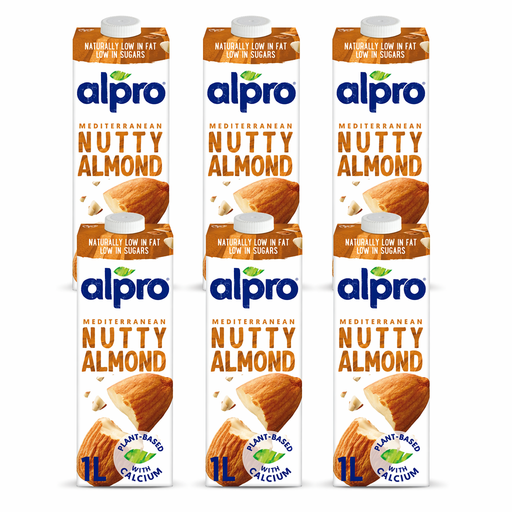 No image available
For cereal, cooking or a hot drink, compare the carton’s sugar content and added nutrients with your intended use. Sugar appears in this product’s ingredient information, so do not treat it as an unsweetened option.
Use more specific descriptions to make the choice: look for roasted almonds if you want that flavour, an almond-and-oat blend if its ingredients suit your recipe, or a barista designation when foam matters. The word “mature” alone does not tell you which of those features a carton has.
Look for one specifically labelled barista or foamable. Plenish describes its Barista Almond M*lk as designed for coffee and micro-foam; check the designation on the exact product rather than assuming a standard almond drink will froth.
Not automatically. The NHS says unsweetened, calcium-fortified plant alternatives can count within the dairy-and-alternatives food group. Check the exact carton for calcium and, where relevant to your diet, iodine and vitamins rather than assuming every almond drink contains them.
No if an almond or nut allergy applies: the Food Standards Agency classifies almonds as tree nuts. Dairy-free wording does not change the almond content; read the current pack’s allergen information when choosing an alternative.