Families using almond drink occasionally
For tea time, cereal or cooking, check the child’s age, almond allergy status and the carton’s ingredients and fortification. Occasional use is a different decision from choosing a child’s main milk drink.


For a child aged one or over who can safely have almonds, an unsweetened almond drink can be an occasional tea-time drink or ingredient; check the carton for calcium, iodine, vitamin D and vitamin B12. If it will be the child’s main milk alternative, Norfolk and Waveney Integrated Care System’s guidance for children aged one or over with cow’s-milk protein allergy favours suitable unsweetened, fortified soya or pea drinks over nut-based drinks because of their energy and protein content. Six imperial pints is about 3.41L, so four 1L cartons provide 4L.
How the child will use the drink matters more than finding a carton labelled for a family-sized shop.
For tea time, cereal or cooking, check the child’s age, almond allergy status and the carton’s ingredients and fortification. Occasional use is a different decision from choosing a child’s main milk drink.
Six imperial pints is about 3.41L. Four 1L cartons provide 4L, leaving about 0.59L beyond that quantity; plan when to open each carton.
Almond is a tree nut, as identified by the Food Standards Agency. Check the individual setting’s allergy policy before sending almond drink or food containing it.
Start with the child’s age and whether the drink is occasional or intended to replace their main milk drink. Then compare the exact carton’s ingredients, nutrients, volume and storage instructions.
| Priority | What to check | Your needs |
|---|---|---|
| Age and role | Check the child’s age and whether this is an occasional ingredient or their main milk drink. North East London NHS Foundation Trust says plant-based drinks should not replace breast milk or formula as the main drink before age one; Norfolk and Waveney Integrated Care System favours suitable fortified soya or pea drinks as main alternatives for children aged one or over with cow’s-milk protein allergy. | Is this for tea time, or would it become the milk drink my child relies on regularly? If my child has a restricted diet or food allergies, I need advice suited to their circumstances. |
| Ingredients and nutrients | Read the ingredient list and nutrition panel. Check whether the carton is unsweetened and lists added calcium, iodine, vitamin D and vitamin B12; compare energy and protein if it will be used regularly. | I want to know what is in the particular carton, rather than assuming every almond drink has the same ingredients or added nutrients. |
| Allergens and setting | Check the almond declaration, any precautionary nut statement and the child’s allergy requirements. Check the school or childcare setting’s own policy before packing it. | If the drink is leaving home, I need to know whether the child can have almonds and how the setting manages nut allergens. |
| Quantity | Check the stated carton count and total volume, not just a number in a listing title. Six imperial pints is about 3.41L; four 1L cartons provide 4L. | I’m shopping for around six pints, but I do not want to mistake a carton count for six pints or buy more than we can use. |
| Storage | Distinguish unopened long-life storage from instructions after opening. Follow each carton’s refrigeration and use-within directions; the periods can differ between products. | We may use several cartons over time, so I want to open them one at a time and follow the directions on each pack. |
North East London NHS Foundation Trust advises against replacing breast milk or formula with plant-based drinks as the main drink before age one. Norfolk and Waveney Integrated Care System notes that nut-based drinks can be low in energy and protein for children who need a main cow’s-milk alternative.
Keep the child’s age and the drink’s role separate. Seek individual professional advice where cow’s-milk protein allergy, restricted intake or multiple food allergies affect the choice.
The Food Standards Agency identifies almonds as tree nuts. A school or childcare setting may have procedures for managing allergens.
Check the setting’s current allergy policy before sending almond drink or almond-containing food.
An almond drink with few ingredients and one with added nutrients meet different shopping preferences. For example, Plenish describes its almond drink as almonds, spring water and salt, while fortified products list added nutrients separately.
When added calcium, iodine, vitamin D or vitamin B12 matter to the purchase, check the exact carton rather than relying on an organic or simple-ingredients description.
A four-carton purchase exceeds six imperial pints, and instructions for opened cartons vary by product. Long-life storage before opening does not determine how long a carton can be kept afterwards.
Open cartons as needed, refrigerate after opening and follow each pack’s use-within instruction.
Cartons opened together may reach their stated use-within dates before the household finishes them.
These product-line examples show why the formulation on the carton matters; a brand name alone does not establish whether a drink is unsweetened or fortified.
Its Original and No Sugars almond drinks are distinct formulations.
Its chilled Almond Drink with Calcium uses an almond-and-rice recipe.
Its organic almond drink is presented as a three-ingredient option.
Tesco lists an own-label unsweetened almond drink in a 1L carton.
Its own-label unsweetened almond drinks include long-life and chilled products.
Its unsweetened almond drink is described for uses including cereal and smoothies.
These Alpro options are relevant to tea-time use, but their listed pack quantities and formulations call for different checks before a roughly six-pint shop.
 No image available
The listing describes this almond drink for cereal, smoothies and hot drinks. It lists no sugars, plus calcium and vitamins B2, B12 and D. The stated 8 x 1L pack is substantially larger than the approximately 3.41L six-pint target; check whether the household can use that quantity. It contains almond, and opened cartons should be refrigerated and used within the listing’s stated five days. Check the pack for iodine and age guidance relevant to the child.
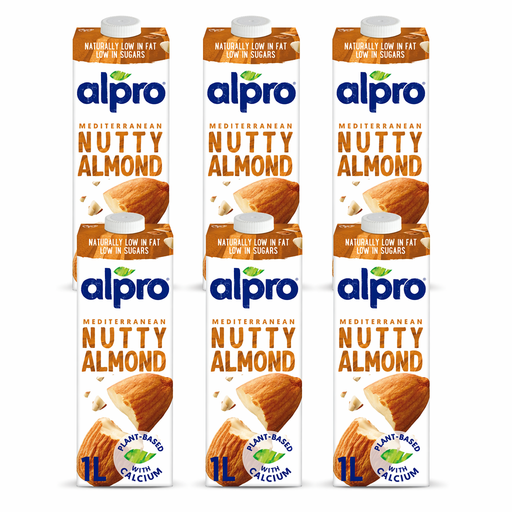 No image available
The listing describes hot and cold uses and lists calcium, iodine and vitamins B12 and D2. Its ingredients include sugar, so do not treat it as the No Sugars formulation. The title begins with “6”, while the description gives a net quantity of 1L: confirm the number of cartons and total volume before using it for a six-pint shop. It contains almond; follow the listing’s advice to consult a healthcare professional before introducing it into a child’s diet.
No: age, almond allergy and whether it is an occasional drink or the main milk drink all matter. North East London NHS Foundation Trust says plant-based drinks should not replace breast milk or formula as the main drink before age one. For children aged one or over who need a main alternative because of cow’s-milk protein allergy, Norfolk and Waveney Integrated Care System favours suitable unsweetened, fortified soya or pea products; seek individual advice where allergies or a restricted diet complicate the choice.
Check the ingredients and allergen statement, whether the drink is unsweetened, and whether calcium, iodine, vitamin D and vitamin B12 are listed. If it will be used regularly, compare the energy and protein information too; formulations differ even within the same brand.
Six imperial pints is about 3.41L. Four 1L cartons provide 4L, around 0.59L more than that quantity. Check a multipack’s stated carton count and total volume before buying.
Check the individual setting’s allergy policy before sending it. The Food Standards Agency identifies almonds as tree nuts, so the child’s allergy needs and the setting’s handling arrangements both matter; do not assume almond products are always allowed or always prohibited.
Follow the instructions on the exact carton and refrigerate it as directed. The reviewed Tesco own-label chilled drink says to use it within five days of opening, while Sainsbury’s chilled own-label product says three days. A long-life label describes storage before opening, not an extension of the opened-carton period.