For dairy-free afternoon tea, consider an unsweetened, calcium-fortified almond drink if it will regularly replace milk; choose a short-ingredient recipe for that preference, or a barista version when coffee foam matters. Almond is a tree nut, so it is unsuitable for a guest with an almond allergy. If an older guest has poor appetite or unintentional weight loss, do not assume almond drink meets their nutritional needs: compare the carton’s protein and energy information and seek individual advice.
Who is choosing the drink?
Older guests avoiding dairy
If almond drink will be used in tea, porridge or baking as well as at afternoon tea, compare the calcium and vitamin information on the carton. The NHS includes unsweetened, calcium-fortified plant drinks in its dairy-and-alternatives food group.
Family members hosting afternoon tea
Ask guests about allergies before choosing a drink, and keep its carton available so ingredients can be checked. A separate, clearly identified drink helps guests tell the alternatives apart.
Older guests who prefer an unsweetened drink
A no-sugars or unsweetened almond drink may suit a preference for tea without added sweetness. Check its protein and energy information too if the drink is replacing something used regularly.
What should you check?
Start with the intended guest’s allergies, then decide whether this is an occasional splash in tea or a regular replacement for milk. Foam for coffee is a separate reason to consider a barista drink.
| Priority |
What to check |
Your needs |
| Ingredients and allergens |
Read the full ingredients list and any precautionary allergen statement on the actual carton. Almond is a tree nut, as identified by the Food Standards Agency. |
I need a dairy-free choice that the intended guest can have. If they have an almond allergy, I need a suitable alternative to almond drink. |
| Added nutrients |
Compare calcium and any listed vitamins or iodine on the exact variant. Alpro and M&S describe different additions on their named unsweetened products; a brand name alone does not identify the formulation. |
If this regularly replaces milk in tea or food, I want to know what the particular drink contributes, rather than assume all almond drinks are alike. |
| Tea or coffee use |
Check the product’s stated use and ingredients. Plenish and Rude Health describe their barista almond drinks for coffee foam or steaming; that does not establish a nutritional advantage. |
For an ordinary cup of tea, flavour matters more to me than coffee foam. If I am serving cappuccinos too, a barista variant is worth considering. |
| Sugars, protein and energy |
Compare the nutrition panel per 100 ml or per serving, and distinguish ‘no sugars’ from ‘no added sugar’. NHS-linked guidance notes that dairy-free drinks can be lower in protein. |
I may prefer an unsweetened tea, but I would not use that preference alone to choose a drink for someone with poor appetite or unintentional weight loss. |
| Recipe and fortification |
Check the ingredients and added nutrients if choosing a simple organic recipe. University Hospitals Sussex NHS Foundation Trust notes that organic dairy alternatives are not fortified. |
A short ingredient list appeals to me, provided I am not counting on this drink for added calcium or vitamins. |
Common buying mistakes
-
Assuming every almond drink has the same added nutrients
Named products list different additions: M&S describes calcium, iodine and vitamins D and B12 in its Unsweetened Almond Drink, while a short-ingredient recipe may serve a different preference.
Compare the actual cartons for calcium, other added nutrients and nutrition values when almond drink will regularly replace milk.
-
Choosing a no-sugars drink for someone with poor appetite
Sugar wording does not tell you how much protein or energy a drink provides. NHS-linked guidance notes that dairy-free drinks can be lower in protein.
If poor appetite, weight loss, swallowing difficulty or another specific dietary concern is involved, seek advice from the person’s clinical team rather than relying on a general drink choice.
-
Serving almond drink without checking allergies
Almond is a tree nut. A dairy-free label does not make an almond drink suitable for a guest with an almond allergy.
Ask about allergies before serving, retain the carton for ingredient checks and clearly identify any alternative drink.
-
Buying a barista carton solely for tea
Plenish and Rude Health describe their barista almond variants in terms of coffee foam or steaming. That feature does not settle which recipe or nutrition panel a tea drinker would prefer.
Choose a barista variant if coffee-style texture is wanted; for tea, compare flavour preferences, ingredients and the exact carton’s nutrition information.
Brand and product-range references
These examples show why the exact product name matters: additions and intended uses vary within and between ranges.
Alpro
Alpro describes its Roasted Almond No Sugars Drink as dairy-free, without sugars or sweeteners, and a source of calcium and vitamins D and B12.
- A named no-sugars product with stated added nutrients to compare on the carton.
- It contains almond and is unsuitable for someone with an almond allergy.
M&S
M&S lists both sweetened and unsweetened almond drinks. It describes the unsweetened version as enriched with calcium, iodine and vitamins D and B12.
- The named unsweetened variant has clearly described nutrient additions.
- Check the variant and current carton rather than applying one recipe’s details to the whole range.
Rude Health
Rude Health describes Pure Almond as roasted almonds blended with water, a separate Chilled Almond Drink with Calcium, and a Barista Almond drink for coffee use.
- The named products offer distinct choices for ingredients, added calcium or coffee preparation.
- Do not assume that the calcium addition or coffee-use description applies to every variant.
Plenish
Plenish describes its Almond M*lk as almonds, spring water and salt, and its separate Barista Almond M*lk as made for coffee foam.
- The standard and barista products address different ingredient and serving preferences.
- Check the exact product’s fortification if added nutrients matter to the choice.
Tesco
Tesco describes its Unsweetened Almond Drink as a UHT product with added calcium, potassium iodide, vitamin E, vitamin B12, riboflavin and vitamin D2.
- The named product lists several additions for carton-to-carton comparison.
- Check its current label for the recipe and nutrition information before selecting it.
Almond drinks on Joybuy
These Alpro almond drinks are options to consider for dairy-free tea. Compare their exact cartons for added nutrients and nutrition values, and confirm pack contents before ordering.
 No image available
Alpro Almond No Sugars Long Life Drink, 8 x 1L
For a dairy-free splash in tea, this long-life, no-sugars almond drink is a choice to compare. Check the carton’s calcium and vitamin quantities if it will regularly replace milk, and do not serve it to someone with an almond allergy.
View on Joybuy
 No image available
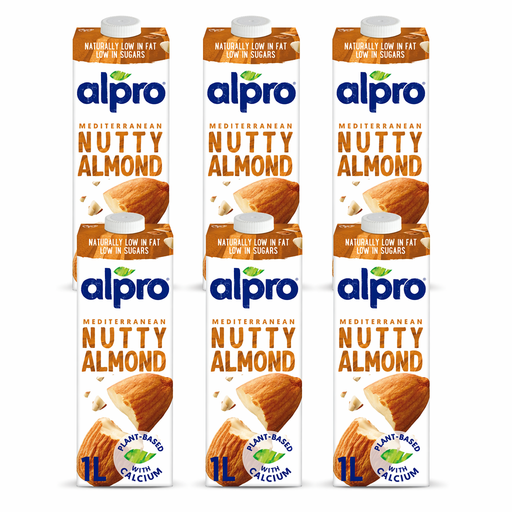
6 Alpro Almond Drink 1L
Consider this almond drink for tea or other hot uses, and check the carton if sugar level matters: sugar is listed as an ingredient. The title says ‘6’ while the product information states a 1 L net quantity, so confirm what the pack contains before ordering. It contains almond.
View on Joybuy
Questions about serving almond drink
Can I serve almond drink in tea at a dairy-free afternoon tea?
Yes, if the guest likes it and has no almond allergy. For a drink used regularly in place of milk, compare unsweetened, calcium-fortified cartons; a barista variant is more relevant when coffee foam is wanted.
Does fortification matter if an older guest regularly replaces milk with almond drink?
It is worth comparing. The NHS includes unsweetened, calcium-fortified plant drinks in its dairy-and-alternatives food group, but the added nutrients differ by product. Check the exact carton rather than assuming that every almond drink contains calcium or the same vitamins.
Does dairy-free mean an almond drink is suitable for every guest?
No. Almond is a tree nut, so almond drink is unsuitable for someone with an almond allergy. Ask guests about allergies and check the actual pack’s ingredients and precautionary allergen statement before serving.
Can almond drink replace dairy milk nutritionally?
Do not assume an almond drink has the same nutrient profile as dairy milk. Added nutrients vary, and NHS-linked guidance notes that dairy-free drinks can be lower in protein. If an older person has poor appetite, unintentional weight loss or specific dietary needs, seek individual clinical advice.


