What should you check before buying?
Start with your child’s age and how you will use the drink, then compare the allergen label, fortification and storage instructions on the exact carton.
| Priority |
What to check |
Your needs |
| Age and use |
Check the carton’s age statement. Department for Education guidance permits small amounts of plant-based drink in cooking from around 6 months, but not as a main drink before 12 months. |
I’m adding a little almond drink to food, not replacing breast milk or first infant formula. |
| Almond allergen |
Read the almond declaration and any warning about other nuts. The NHS advises introducing foods that can trigger allergy one at a time, in very small amounts, from around 6 months. |
Almond is new to my baby, so I want to introduce it separately where I can watch for a reaction. |
| Fortification |
Check calcium per 100 ml and whether iodine is listed; do not assume one means the other. For plant-based dairy alternatives used in babies’ milk-free diets, Black Country 0–18 years NHS guidance specifies at least 120 mg calcium per 100 ml and advises checking iodine. |
If I’m using a plant drink in place of dairy in recipes, I want to compare the nutrients on the individual carton. |
| Formulation |
Look for an unsweetened variant and read its ingredients. A filtered, organic or short-ingredient-list description does not establish how the drink is fortified. |
I’d rather choose the formulation for the recipe than rely on front-of-pack wording. |
| Storage |
Confirm whether the carton is chilled or long-life, then read its unopened and after-opening instructions. Sainsbury’s, for example, says to refrigerate its Unsweetened Almond Drink and use it within 3 days of opening. |
Cupboard storage before opening would help my household, but I also need a carton size we can use after opening. |
Almond drink brands and variants
Brand names cover different formulations, so use these examples to identify which variant’s label you need to compare.
Alpro
Tesco lists Alpro almond drinks in No Sugar and Original long-life variants, as well as a chilled No Sugar variant.
- The No Sugar long-life variant combines a stated formulation with an unopened-storage format.
- Neither its name nor its storage format makes it a replacement main drink for a baby under 12 months; check the exact carton’s nutrients and allergens.
Rude Health
Rude Health describes a standard Almond Drink and a separate Chilled Almond Drink with Calcium.
- The brand lists spring water, organic rice, 1% organic Italian almonds, sunflower oil and salt for its standard Almond Drink.
- The chilled calcium variant is a different product. Check the exact variant for calcium and iodine rather than transferring one carton’s details to another.
Plenish
Plenish describes its almond drink as made with water, organic almonds and salt; Tesco lists a long-life Plenish almond drink.
- Its short stated ingredient list may suit a household choosing by ingredients.
- If fortification is the reason for choosing a dairy alternative, check the carton for calcium and iodine rather than inferring them from the ingredient-list length.
Tesco
Tesco lists an own-label unsweetened almond drink alongside branded chilled and long-life options.
- The category offers different formulations and storage formats to compare.
- A category listing cannot establish an individual carton’s fortification, allergen warnings or after-opening instructions.
Sainsbury's
Sainsbury’s gives specific child-use and storage statements for its Unsweetened Almond Drink.
- Sainsbury’s says this product can be used as part of a balanced diet from 1 year of age.
- Sainsbury’s says it is not suitable as a main milk alternative for children under 3 or for customers allergic to other nuts because of manufacturing methods.
M&S
M&S describes its Unsweetened Almond Drink as enriched with calcium, iodine and vitamins D and B12.
- Its stated calcium and iodine enrichment gives shoppers specific nutrients to compare on the carton.
- That enrichment does not change Department for Education guidance against giving plant-based drinks as a main drink before 12 months.
Joybuy almond drinks for weaning recipes
These Alpro almond drinks are options to consider for recipes using small amounts from around 6 months, not as main drinks for babies under 12 months. The No Sugars 8 × 1L pack is labelled long-life; check each carton for the formulation and storage instructions you need.
 No image available
Alpro Almond No Sugars Long Life Drink, 8 × 1L
Consider this for recipes where a no-sugars almond drink and unopened cupboard storage suit your household. The pack contains eight 1L cartons; long-life packaging does not make it a main drink for a baby under 12 months. Check the carton’s calcium and iodine information, allergen warnings and after-opening storage instructions before use.
View on Joybuy
 No image available
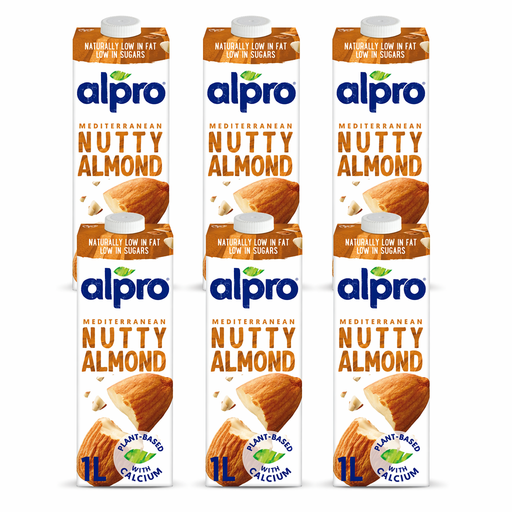
Alpro Almond Drink, 6 × 1L
This six-carton almond drink pack is another option for cooking with small amounts, but its listed ingredients include sugar, so it does not meet an unsweetened preference. Check the carton for its calcium and iodine amounts, allergen warnings and unopened-storage format. Do not use it as a main drink for a baby under 12 months.
View on Joybuy
Questions about almond drink and weaning
Can I use almond drink during baby-led weaning?
Yes, in small amounts in food from around 6 months, according to Department for Education guidance. It should not replace breast milk or first infant formula as a baby’s main drink before 12 months. If you are avoiding cow’s milk because of a suspected or diagnosed allergy, ask a GP, dietitian or allergy team about an appropriate infant milk.
Is filtered or long-life almond drink more suitable for a baby?
Neither description changes the age and use guidance: a small amount may be used in food from around 6 months, but almond drink is not a main drink before 12 months. Choose long-life packaging if unopened cupboard storage is useful, then check the exact carton for allergens, formulation and fortification.
How should I introduce almond for the first time?
The NHS advises introducing foods that can trigger allergy from around 6 months, one at a time and in very small amounts, so a possible reaction is easier to identify. Choose a time when you can observe your baby. If your child has a known food allergy or has been assessed as being at high risk, seek clinical advice before introducing almond at home.
Does a short ingredient list tell me whether an almond drink is fortified?
No. Check the exact carton for added nutrients and the calcium amount per 100 ml rather than relying on its ingredient-list length. Black Country 0–18 years NHS guidance for babies’ milk-free diets advises choosing plant-based dairy alternatives with at least 120 mg calcium per 100 ml and checking for iodine.
Can I send an almond-containing recipe to nursery?
Check the nursery’s current allergy policy before sending it. Almond is a nut allergen, and the setting’s rules may affect whether an almond-containing food can be brought in, regardless of whether the carton is filtered, chilled or long-life.


