Who is this choice for?
Care-home catering decisions need to account for the individual resident as well as how the drink will be stored, handled and served.
Care-home catering teams
Teams serving almond drink with tea, cereal or meals need to identify the exact carton, record its ingredients and allergens, and follow its storage instructions. The Care Quality Commission says residents’ nutritional needs must be assessed and food provided to meet them.
Residents who prefer an almond drink
Preference and dairy avoidance can guide the choice when the resident’s assessed plan permits almonds. The drink must still fit their wider food and fluid intake; the Food Standards Agency identifies almonds as nuts.
Residents with poor appetite or malnutrition risk
An ordinary almond drink should not be selected as nutritional support solely because it is dairy-free. NHS Gloucestershire and PrescQIPP’s care-home catering guidance considers energy, protein, vitamins, minerals, fibre and fluid together; follow the resident’s nutrition-care plan and any dietetic advice.
What should you check before buying?
Start with the resident’s plan and allergy record, then compare exact cartons for nutrition, ingredients and storage rather than treating all almond drinks as interchangeable.
| Priority |
What to check |
Your needs |
| Individual nutrition |
Compare energy and protein per 100ml with the resident’s plan. If the drink replaces dairy, check the exact carton for calcium and relevant vitamins or iodine rather than assuming it is fortified. University Hospitals Sussex NHS Foundation Trust advises checking fortification when choosing plant-based drinks. |
“I need a drink that fits this resident’s assessed intake, not one carton chosen for everyone.” |
| Nut allergy |
Read the exact pack’s ingredients and allergen declaration. Check the resident’s allergy record and use the home’s handling controls to prevent cross-contact; the Food Standards Agency identifies almonds as nuts. |
“This resident has a nut allergy, so almond drink is not an option; I need to check a suitable non-nut alternative instead.” |
| Storage and service |
Confirm whether the named variant is long-life or UHT, then follow its unopened and post-opening instructions. Match carton size to the amount likely to be served after opening. |
“We keep unopened cartons for routine service, but staff also need clear instructions for an opened carton.” |
| Recipe and intended use |
Check added-sugar wording alongside the ingredients and nutrition table. Confirm any extra ingredients in a mixed drink and whether its flavour suits the resident’s intended use. |
“A simpler recipe matters to this resident, but I still need to know whether the whole diet meets their nutritional needs.” |
Which brands provide useful references?
These product-line examples show why the exact variant matters; a brand name alone does not establish nutritional or allergen suitability.
Alpro
Tesco Groceries lists separate Alpro Almond Original and Almond No Sugar long-life drinks in 1L cartons.
- The named long-life variants provide specific cartons to check for unopened-stock use.
- Do not assume the two variants share a recipe or nutrient profile; check the current carton selected for service.
Rude Health
Rude Health lists a roasted almond-and-oat UHT drink, while Tesco Groceries lists a separately named organic almond long-life drink.
- The named formats give catering teams distinct products to assess for their intended use.
- Rude Health’s roasted almond-and-oat ingredient list includes both oats and almonds. Check the exact variant rather than applying that recipe to another carton.
Plenish
Plenish describes its Almond M*lk multipack as containing almonds, water and salt.
- The brand’s stated short ingredient list may help when a resident prefers a simpler recipe.
- That ingredient list does not establish whether the drink supplies the fortification required by an individual resident’s plan.
Tesco
Tesco Groceries lists own-label almond drinks alongside branded long-life variants.
- The category offers named variants that can be compared carton by carton.
- Check each own-label carton’s format, ingredients, allergens and nutrition; a category listing does not establish those details for every variant.
Joybuy almond-drink options
These almond-drink packs are starting points for care-home label checks. Confirm each resident’s suitability and the exact pack details before using either in a menu.
 No image available
Alpro Almond No Sugars Long Life Drink, 8 × 1L
The long-life 8 × 1L format is relevant to teams planning unopened stock for routine almond-drink service. Check the current pack’s nutrition and storage instructions against each resident’s plan. It contains almond, so do not serve it to a resident with a nut allergy; follow the home’s cross-contact controls.
View on Joybuy
 No image available
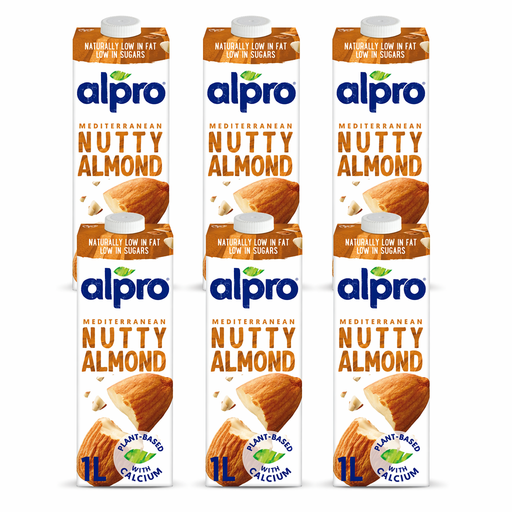
Alpro Almond Drink, 6 × 1L
This almond-drink pack is an option to assess for residents whose care plans permit almonds. Check the current carton’s nutrition, ingredients and storage instructions before treating it as suitable for routine service or unopened ambient stock. Do not serve almond drink to a resident with a nut allergy.
View on Joybuy
Common questions
Is almond drink suitable for every resident who avoids dairy?
No. Almond drink contains a nut allergen, and dairy avoidance alone does not show that its energy, protein or fortification meets a resident’s needs. Check the allergy record, the exact carton and the resident’s assessed nutrition-care plan.
Can a long-life almond drink stay out of the fridge after opening?
Do not assume so. “Long life” identifies an unopened format, not one set of instructions for every opened carton. Follow the manufacturer’s instructions for the exact product and incorporate them into the home’s food-handling procedures.
Does “filtered almond milk” establish that a drink suits care-home use?
No. The word “filtered” does not establish the drink’s nutrient content, allergen suitability or storage requirements. Check the named product’s ingredients, nutrition table and pack instructions against the resident’s needs.
Should a no-sugar almond drink be chosen for a resident with poor intake?
Not on that description alone. A resident with poor intake may need a plan that accounts for energy, protein and micronutrients; compare the exact drink with that plan and follow any dietetic advice. University Hospitals Sussex NHS Foundation Trust advises checking fortification when choosing plant-based drinks.
How should a care home handle almond as an allergen?
Check each resident’s allergy record and the exact pack declaration before service. The Food Standards Agency identifies almonds as nuts and advises controlling allergenic ingredients and protecting other foods from cross-contact; follow the home’s documented procedures.


