Who needs to check what?
The first decision is about the child’s allergens and the snack setting, not the flavour or the length of the ingredients list.
Families avoiding dairy
Check the drink’s current milk-allergen and precautionary information as well as its almond declaration. If it regularly takes the place of dairy for a child aged 1 or over, calcium fortification is another distinction to consider. The NHS says unsweetened, calcium-fortified milk alternatives can be given from age 1 as part of a balanced diet.
Families packing for an allergy-aware club
Ask the organiser whether nut-containing drinks may be brought in, even if your own child can have almonds. Almond is a tree nut, and the venue’s arrangements may take other children’s allergies into account.
Families comparing simpler recipes
A short ingredients list can help you compare recipes, but it does not remove the almond ingredient. Check any precautionary allergen statement, the drink’s fortification and any age guidance on the particular product.
What matters when choosing?
Check allergy suitability and the venue’s rules before comparing sugar, fortification or recipe simplicity.
| Priority |
What to check |
Your needs |
| Almond as an ingredient |
Read the current ingredients and emphasised allergens. The Food Standards Agency classifies almonds as tree nuts; a dairy-free or vegan label does not remove an almond ingredient. |
If the child has an almond allergy or an allergy plan that excludes nuts, I need a different drink and must check that alternative’s own allergens. |
| Precautionary allergens |
Look separately for ‘may contain’ or production-environment statements. These concern possible unintended allergen presence, rather than the almond deliberately included in the drink. |
When I’m choosing for a child with an allergy, I need to assess the exact carton’s warnings against their allergy plan, not rely on plant-based wording. |
| Venue arrangements |
Ask the holiday club or school about nut-containing drinks and any requirements for labelled food. Keep the original carton available where practical. |
Even if my child can have almonds, I need to know whether this shared setting permits an almond drink. |
| Fortification |
If the drink regularly replaces dairy for a child aged 1 or over, check whether the specific carton is unsweetened and lists added calcium. Check other listed nutrients separately; not every almond drink has the same recipe. |
I want to distinguish a drink used occasionally with a snack from one that forms part of my child’s regular milk-alternative intake. |
| Recipe and sugar |
Compare the ingredients and nutrition panel on the exact variant. ‘No sugars’ and a short ingredients list describe different features; neither establishes allergy suitability or fortification. |
If avoiding added sugar or choosing fewer ingredients matters to me, I still need to make the allergen and nutrition checks first. |
Almond-drink brands to compare
These examples show why the exact variant matters: an almond ingredient is common to them, while recipes, fortification and precautionary wording differ.
Alpro
Alpro’s UK Roasted Almond No Sugars drink is an almond-containing option with listed fortification.
- The product lists added calcium, iodine and vitamins, alongside almond in its ingredients.
- ‘No Sugars’ does not mean nut-free; check the current carton for the child’s allergens.
Plenish
Plenish’s reviewed organic almond drink uses a three-ingredient recipe.
- The listed ingredients are spring water, organic almonds and sea salt.
- That recipe contains almond and does not list added calcium or vitamins; compare fortification if the drink is used regularly in place of dairy.
Rude Health
Rude Health has distinct almond-drink recipes, including a No Sugars organic variant.
- The reviewed No Sugars product lists four ingredients, including almonds.
- Its label says it may contain traces of other nuts. The brand describes its standard Almond Drink as suitable as part of a balanced diet from age 5 onwards; do not apply that statement to every variant.
Tesco
Tesco’s reviewed Unsweetened Almond Drink lists added nutrients and explicit nut-allergen information.
- The listed fortification includes calcium, iodine and vitamins.
- Tesco states that it contains almond and may contain peanuts and other nuts.
M&S
M&S’s reviewed Unsweetened Almond Drink lists calcium and other added nutrients.
- The product information lists calcium, iodine and vitamins D and B12.
- M&S states that this product is not suitable for people with a nut or peanut allergy and advises checking the current label.
Almond drinks on Joybuy
These two Alpro almond-drink multipacks are options to compare when the child can have almonds and the holiday venue permits nut-containing drinks. They differ in their stated sugar ingredients and listed fortification.
 No image available
Alpro Almond No Sugars Long Life Drink, 8 x 1L
For a child who can have almonds, this dairy-free option is listed with no sugars or sweeteners, plus calcium and vitamins B2, B12 and D. It contains almond, so it is not an option where almonds must be avoided. The product description specifies room-temperature storage before opening, then refrigeration and use within 5 days; check the current carton’s full allergen wording before packing it.
View on Joybuy
 No image available
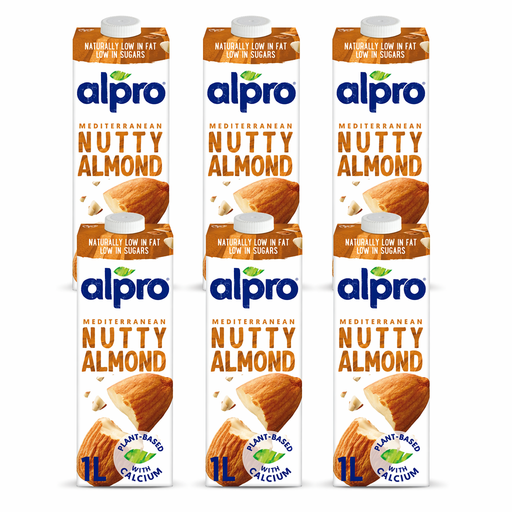
Alpro Almond Drink, 6 x 1L
This almond-drink multipack lists calcium, iodine and vitamins B12, D2 and E, but also lists sugar as an ingredient; it is not the No Sugars variant. It contains almond. If choosing it for a child, check the current carton’s allergen wording and age guidance, as well as the holiday venue’s nut policy.
View on Joybuy
Common questions
Is an almond drink suitable for a child with an almond allergy?
No. Almond is a tree nut and is an ingredient in almond drinks; dairy-free, vegan or gluten-free wording does not cancel that ingredient. Follow the child’s allergy plan when choosing and checking an alternative.
Does ‘vegan’ mean an almond drink is suitable for a child with a milk allergy?
Not on its own. Check the exact drink’s ingredients and precautionary milk-allergen information against the child’s allergy plan. Vegan wording is not a replacement for an allergen check.
At what age can a child have an almond drink?
The NHS says unsweetened, calcium-fortified milk alternatives, including almond drinks, can be given from age 1 as part of a balanced diet. That guidance does not make every almond-drink recipe or variant suitable for every child; check its label and the child’s allergens.
Can I pack an almond drink for a school holiday club?
Ask the organiser about its current nut-allergy arrangements before packing one. Permission depends on the particular setting, even if the child bringing the drink can have almonds; follow any request not to bring nut-containing food or drinks.
What does ‘may contain other nuts’ mean on an almond drink?
It is a precautionary warning about possible unintended presence of other nuts. Check it separately from the ingredients list: almond is already an intentional ingredient of the almond drink.


