Who is choosing the drink?
The first distinction is whether the almond drink is for a parent's diet or is being considered for a baby's feed.
Breastfeeding parents avoiding dairy
When an almond drink replaces dairy in the parent's diet, compare fortification rather than treating plant drinks as interchangeable. The NHS advises calcium and vitamin D in dairy alternatives, plus iodine when following a vegan diet.
Parents managing a milk-free household
An adult's dairy-free drink and a baby's feed are separate choices. If cow's-milk protein allergy is suspected, seek a feeding plan from a GP, health visitor or dietitian rather than substituting almond drink for the baby's milk.
Families checking nut allergens
Dairy-free does not mean nut-free. Anyone choosing a drink for a person with a relevant allergy needs to check the specific pack's ingredients and precautionary allergen wording.
What should you check first?
Establish who will drink it first; for adult use, check allergens and fortification before choosing between sweetness and a shorter ingredient list.
| Priority |
What to check |
Your needs |
| Fortification |
For dairy alternatives during breastfeeding, the NHS advises calcium and vitamin D fortification. Check for iodine too if following a vegan diet; read the exact variant's label. |
I'm replacing dairy regularly while breastfeeding, so I want to know which nutrients this particular drink declares. |
| Nut allergens |
Read the ingredients, highlighted allergens and any precautionary statement on the carton. Almond drinks contain almond; warnings about other nuts can differ by product. |
Dairy-free only helps me if the drink's nut-allergen information is also suitable for the person having it. |
| Sugars |
Distinguish an unsweetened or no-added-sugar description from the sugars figure on the nutrition panel. Compare figures on the same per-100ml basis. |
For cereal, drinks or cooking, I may prefer an unsweetened option and want to compare the cartons directly. |
| Ingredient list |
Compare the named ingredients and the fortification information separately. A short list does not, by itself, establish the nutrients provided. |
Fewer ingredients matter to me, but I don't want to mistake that preference for a check on fortification. |
| Infant feeding |
The NHS says almond drinks should not be given to babies under one as a main milk drink. Ask a GP, health visitor or dietitian about feeding when cow's-milk protein allergy is suspected. |
I'm choosing an adult drink, not a replacement for my baby's breast milk or appropriate formula. |
Brand and retailer examples
These examples show why the exact variant matters: fortification, ingredients and allergen statements are product-specific.
Alpro
Tesco Groceries lists Alpro Almond Original with added calcium, iodine and vitamins B12, D2 and E.
- The cited variant gives a parent specific fortification to compare with their needs.
- Almond Original's details must not be assumed to apply to every Alpro almond drink; check the chosen carton and its allergens.
Plenish
Plenish describes its Almond M*lk as containing almonds, spring water and salt.
- The cited product offers a short ingredient list for an adult who prefers one.
- That ingredient list does not establish the fortification advised for a breastfeeding parent replacing dairy.
Rude Health
Rude Health's No Sugars Organic Almond Drink lists water, 3% organic almonds, carob seed flour and salt.
- The named variant lets an adult compare a no-sugars option with other ingredient lists.
- Its product page says it may contain traces of other nuts; check the pack for the intended consumer.
M&S
M&S lists calcium, iodine and vitamins D and B12 for its Unsweetened Almond Drink.
- The cited variant combines an unsweetened description with declared fortification.
- M&S says this drink is not suitable for people with a nut allergy and advises checking the current label.
Tesco
Tesco Groceries lists own-label and branded products in its almond-drinks category, including Alpro, Plenish and Rude Health.
- The category offers several named products whose individual labels can be compared.
- Use each product's own label for ingredients, fortification and allergen information rather than applying one listing's details to another.
Almond drinks on Joybuy
These Alpro almond-drink listings are options for an adult choosing a dairy alternative. Check each variant's carton against your fortification, sugar and allergen needs; neither is a baby's main milk drink.
 No image available
Alpro Almond No Sugars Long Life Drink, 8 x 1L
The listed No Sugars variant is an adult option for cereal or drinks. If it will regularly replace dairy during breastfeeding, check calcium and vitamin D on the carton, plus iodine if following a vegan diet. It contains almond, so it is unsuitable for someone who needs to avoid it.
View on Joybuy
 No image available
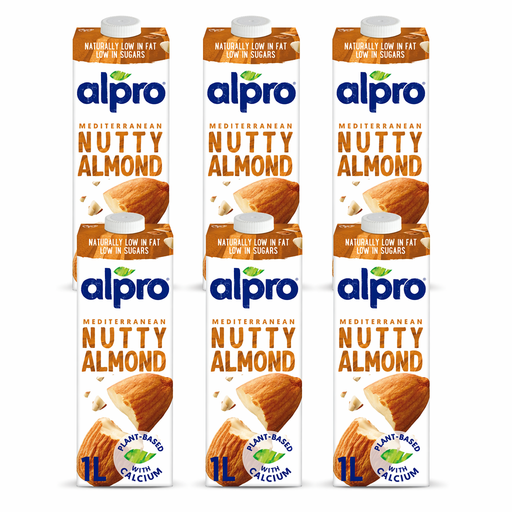
Alpro Almond Drink 1L
For an adult considering almond drink in hot or cold drinks or cooking, compare this variant's fortification with your needs. Its listed ingredients include sugar, so check the nutrition panel if sugars matter to you. Confirm the number of cartons before ordering, and avoid the drink if almond is an allergen you need to exclude.
View on Joybuy
Common questions
Can I drink almond milk while breastfeeding if I avoid dairy?
An almond drink can be part of the parent's diet if almonds are suitable for them. When choosing a dairy alternative, the NHS advises calcium and vitamin D fortification, plus iodine if following a vegan diet; check the exact carton rather than assuming all almond drinks contain the same added nutrients.
Does dairy-free mean an almond drink is suitable for a nut allergy?
No. Almond is a tree nut, and dairy-free does not mean nut-free. Check the pack's ingredients and any precautionary wording; Rude Health says its cited No Sugars drink may contain traces of other nuts, while M&S identifies its cited Unsweetened Almond Drink as unsuitable for people with a nut allergy.
Can almond drink replace my baby's breast milk or formula?
No, not as a main milk drink before age one. The NHS says babies under one should not be given drinks such as almond drink as their main milk; ask a GP, health visitor or dietitian about an appropriate feeding plan if cow's-milk protein allergy is suspected.
Should I switch my breastfed baby to almond drink if I suspect a milk allergy?
No; almond drink is not a substitute feed for the baby. NHS Lanarkshire's cow's-milk protein allergy guidance describes a managed milk-free trial in the breastfeeding parent's diet and notes that specialist formula may be needed if formula is introduced. Follow the clinical plan given for your baby.
Is a “may contain” warning the same as a listed ingredient?
No. The Food Standards Agency describes precautionary allergen wording as a way to communicate possible unintentional allergen presence. Check both the ingredients and any precautionary statement on the specific pack when managing an allergy.


