People making dairy-free shakes
If you avoid dairy or lactose, a suitably labelled almond drink can provide the liquid base. Check its protein per serving and choose a separate protein-containing ingredient if that matters to your post-workout meal.


For a dairy-free post-workout shake, choose an almond drink that meets your ingredient requirements, but include a separate protein-containing food or ingredient: Alpro Almond No Sugars lists just 0.5 g protein per 100 ml. An explicitly fortified drink suits a preference for added calcium or vitamins, while a shorter ingredient list serves a different preference; neither choice makes almond drinks suitable for someone allergic to almonds.
An almond drink can fill different roles in a post-workout shake. The right carton depends on what you avoid and what the rest of your food or drink will provide.
If you avoid dairy or lactose, a suitably labelled almond drink can provide the liquid base. Check its protein per serving and choose a separate protein-containing ingredient if that matters to your post-workout meal.
If you want to avoid added oils or other ingredients, compare the complete lists rather than relying on the drink’s name. A simple recipe does not tell you how much protein or added calcium it provides.
If added calcium, iodine or vitamins are part of your choice, look for those nutrients on the specific carton. Almond-drink recipes differ, even within a brand’s range.
Start with the ingredient and allergen information, then compare protein per serving and any added nutrients. Treat claims about sugars and ingredient simplicity as separate questions.
| Priority | What to check | Your needs |
|---|---|---|
| Protein contribution | Read the protein figure per 100 ml and calculate it for the amount you will drink. Sainsbury’s lists 0.5 g per 100 ml for Alpro Almond No Sugars; the drink alone is not a substantial protein serving. | I’m using almond drink as a shake base and will choose another protein-containing food or ingredient for my post-workout meal. |
| Ingredients and allergens | Check the current carton for milk-related claims, the full ingredients and any precautionary allergen wording. The Food Standards Agency identifies almonds as tree nuts; a dairy-free claim does not mean nut-free. | I need to avoid particular ingredients, so I’ll check the exact product rather than assume every plant drink meets the same requirements. |
| Sugars and recipe | Check the sugars figure and the exact wording of any claim. Read the ingredient list separately if oils or other additions matter: Plenish describes its Almond M*lk as water, organic almonds and salt. | A no-sugars drink or a short ingredient list might matter to me, but they are different reasons to choose a carton. |
| Fortification | Look for the particular nutrients you want in the ingredients and nutrition information. Rude Health’s chilled almond drink lists calcium carbonate, while its Pure Almond has a different recipe. | If I want added calcium, iodine or vitamins, I’ll choose a carton that explicitly lists them rather than assume they come with every almond drink. |
Alpro Almond No Sugars lists 0.5 g protein per 100 ml on Sainsbury’s product listing. Using more of the drink changes the total, but the label figure is low for someone seeking a substantial protein contribution.
Work out the protein in the amount you will use, then consider a separate protein-containing food or ingredient that fits your requirements.
An almond drink contains almonds. Alpro Almond No Sugars is labelled dairy-free, yet its Sainsbury’s listing also says it contains almonds and may contain nuts.
Do not choose an almond drink for someone allergic to almonds. Check the current pack and its precautionary wording for any other relevant allergy.
Plenish describes its Almond M*lk as three ingredients. Rude Health lists calcium carbonate in a different, chilled almond-drink recipe. Ingredient simplicity and added nutrients are separate product characteristics.
If fortification matters, confirm the named nutrients on the carton you intend to buy.
The carton you receive is the practical point of reference for its ingredients and allergen wording, particularly when an ingredient must be avoided.
Read the current on-pack information before using the drink, rather than relying only on a previous listing or front-of-pack phrase.
These examples illustrate different recipes and label details, not a judgement about every product each brand makes.
Its Almond No Sugars drink is one option for a dairy-free shake base with added nutrients.
Its Almond M*lk offers a short ingredient list for shoppers who prioritise recipe simplicity.
Its Pure Almond and chilled almond drink with calcium offer two distinct recipes.
Its Unsweetened Almond Drink is an own-label example with added nutrients.
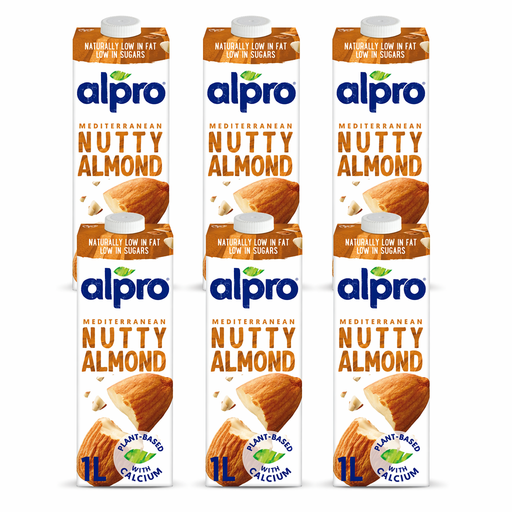
These Alpro almond-drink packs are options to consider as the liquid base for a post-workout shake. Compare their exact labels if sugars, added nutrients or protein contribution affect your choice.
 No image available
This dairy-free almond drink can serve as a shake base, with a separate protein-containing food or ingredient alongside it. Sainsbury’s lists 0.5 g protein per 100 ml for Alpro Almond No Sugars, while Joybuy’s product information lists calcium and vitamins B2, B12 and D2 in the ingredients. It contains almonds; check the current carton for any other relevant allergen wording.
 No image available
For a shake using this almond drink, check the current carton’s protein and sugars figures before deciding what else to include. Read its ingredients if particular added nutrients matter, and check the allergen wording: it contains almonds.
Do not assume an almond drink supplies a substantial protein serving. Sainsbury’s lists 0.5 g protein per 100 ml for Alpro Almond No Sugars. If protein is part of your post-workout plan, check the amount in the drink you use and choose another protein-containing food or ingredient as needed.
Some almond drinks are explicitly labelled for those needs: Sainsbury’s identifies Alpro Almond No Sugars as dairy-free and lactose-free. Check the exact carton, because that label does not establish that every almond drink meets your requirements.
No. Almond drinks contain almonds, which the Food Standards Agency identifies as tree nuts. For any other relevant nut allergy, check the current ingredients and precautionary allergen wording rather than treating a dairy-free claim as an allergy assurance.
A short list can suit a preference to avoid certain added ingredients, but it does not establish the drink’s protein contribution or fortification. Compare the exact carton’s nutrition information with what you want from the rest of your shake or meal.