Who is this choice for?
The allergen being avoided determines whether an almond drink belongs on the shopping list at all.
People avoiding cow’s milk who can eat almonds
Check that the particular drink is suitable for milk avoidance, then read its full ingredient list and any precautionary allergen statement for other allergens that matter to you. The Food Standards Agency says a “free-from milk” label guarantees the specified allergen is absent.
Parents choosing a milk substitute for a child over one
Age and the child’s wider diet matter alongside the allergy label. Frimley Healthier Together NHS guidance advises choosing plant-based drinks fortified with calcium and iodine; seek individual clinical advice where a child’s diet is restricted.
Dairy-free coffee and cereal shoppers
If almonds are suitable, decide whether fortification, a short ingredient list or a drink intended to foam in coffee matters most. None of those features replaces a check of the current allergen label.
What should you check before buying?
Start with the allergens relevant to the person drinking it, then compare nutrition information and intended use.
| Priority | What to check | Your needs |
|---|
| Relevant allergens |
Read the current ingredient and allergen declaration for milk and every other allergen you must avoid. Almond is a tree nut, as identified by the Food Standards Agency. |
I need to avoid cow’s milk, but almonds must also be suitable for the person who will drink this. If they have an almond allergy, an almond drink is not the choice. |
| Precautionary wording |
Check any “may contain” or facility statement on the exact carton for allergens relevant to you. The Food Standards Agency explains that such wording communicates possible unintended allergen presence. |
A warning about an allergen I must avoid could change which carton I choose, even when that allergen is not listed as an ingredient. |
| Milk replacement |
Compare the nutrition panels, including calcium and iodine fortification. For children, follow age-appropriate advice; Frimley Healthier Together NHS guidance says plant-based drinks should not be the main milk drink before age one. |
If this drink will regularly take the place of cow’s milk, I want to know what the particular product provides rather than relying on “dairy-free” wording. |
| Intended use |
Compare the listed ingredients and format with how you will use the drink. Alpro describes its Barista Almond drink as foamable for coffee; Plenish and Rude Health list different, shorter recipes for specified products. |
For coffee, foaming may matter to me. For cereal or cooking, I may prefer a particular ingredient list, provided the allergy checks come first. |
Which brand ranges illustrate the options?
These named products show how almond content, fortification and intended use can differ; brand identity alone does not settle allergy suitability.
Alpro
Its specified Almond Original Chilled and Barista Almond drinks illustrate fortified and coffee-focused options.
- Alpro lists 2.3% almond, calcium, iodine and vitamins D2 and B12 for Almond Original Chilled.
- Alpro describes Barista Almond as foamable for coffee; that description does not establish suitability for an almond allergy.
Plenish
A reference for shoppers comparing a short ingredient list, if almonds are suitable for them.
- Plenish lists spring water, 4% organic almonds and sea salt for its specified UHT almond drink.
- The brand states that this product is produced in a facility handling nuts and celery; check the current carton for allergens relevant to you.
Rude Health
Its specified products illustrate why recipes should be compared by variant rather than brand name.
- Rude Health lists water and 5% organic Italian almonds for Pure Almond; its Chilled Almond Drink with Calcium lists 1% almond, rice, sunflower oil and calcium carbonate.
- Rude Health says Pure Almond is made in a facility handling nuts. The two recipes should not be assumed to have the same nutrition information.
Tesco
Its specified own-label unsweetened drink provides another formulation to compare against the named brands.
- Tesco describes its Unsweetened Almond Drink as a UHT drink with added calcium, potassium iodide and vitamins.
- Check the current product carton rather than assuming the online description settles individual allergen suitability.
Almond drinks on Joybuy
These Alpro almond drinks are options to consider when avoiding cow’s milk and almonds are suitable for the intended user. Check the current carton’s allergen information before choosing either one.
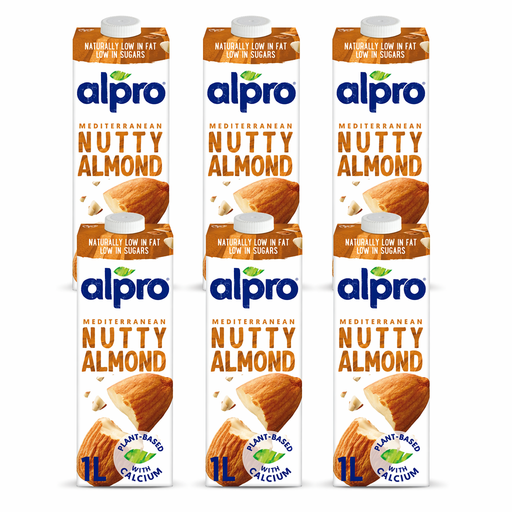 Image unavailable
Alpro Almond Drink 1L
The Joybuy listing describes this as a dairy-free almond drink and lists calcium and potassium iodide. Almond is an ingredient, so it is unsuitable for someone with an almond allergy. Check the current carton for milk and other relevant allergen statements; the listing title indicates six, but confirm the carton count before ordering.
View on Joybuy
 Image unavailable
Alpro Almond No Sugars Long Life Drink 8 × 1L
This long-life almond drink is listed as an 8 × 1L pack. The Joybuy listing describes it as dairy-free, states that it contains no sugars or sweeteners, and lists calcium and vitamins B2, B12 and D2. It contains almond and is not an infant-formula substitute. Check the current carton for relevant allergen statements and iodine information if iodine fortification matters to you.
View on Joybuy
Frequently asked questions
Can I choose almond milk if I have a cow’s-milk allergy?
An almond drink may be an option if almonds and its other ingredients are suitable for you. Check the current carton for milk in the ingredient and allergen declaration, plus any relevant precautionary statement. The Food Standards Agency says a “free-from milk” label guarantees that milk is absent; it does not address every other allergy.
Is almond milk suitable for someone with an almond allergy?
No. Almond milk contains almond, which the Food Standards Agency identifies as a tree nut. Consider a non-almond drink only after checking its ingredients and precautionary statements against the person’s other allergens.
What does a “may contain” statement tell me?
It communicates possible unintended presence of the named allergen, according to the Food Standards Agency. Check the statement on the exact carton and assess it against the allergens the intended user must avoid.
Should an almond drink be fortified?
If it will be an important replacement for cow’s milk, compare its calcium and iodine information rather than assuming all almond drinks provide the same nutrients. Frimley Healthier Together NHS guidance particularly advises calcium and iodine fortification when choosing plant-based drinks for children on a milk-free diet; seek individual advice for a restricted diet.
Can almond milk replace formula for a baby with cow’s-milk protein allergy?
No ordinary almond drink should replace a baby’s prescribed formula. Frimley Healthier Together NHS guidance says a baby taking formula needs an appropriate specialist milk-free formula unless they are over one, and plant-based drinks should not be the main milk drink before that age. Follow the baby’s healthcare-professional advice.


