Hosts serving dairy-free guests who can have almonds
An almond drink may work for cereal, pancakes or drinks, but its dairy-free claim does not answer a guest’s nut-allergy question. Check the exact carton before serving.


For a dairy-free Sunday brunch, an almond drink is an option only when guests can have almonds; dairy-free or gluten-free wording does not make it nut-free. Check each carton’s ingredients and allergen statement, then choose a standard, short-ingredient or barista drink according to how you plan to serve it.
An almond drink may work for cereal, pancakes or drinks, but its dairy-free claim does not answer a guest’s nut-allergy question. Check the exact carton before serving.
Standard almond drinks differ in their added ingredients. Compare the specific cartons if oils, stabilisers, flavourings or fortification matter to you.
If brunch includes flat whites or cappuccinos, look for a formula the manufacturer describes as suitable for foaming, while still checking its allergens against guests’ needs.
Start with each guest’s allergen requirements, then compare the exact cartons for their claims, ingredients and intended use.
| Priority | What to check | Your needs |
|---|---|---|
| Allergen fit | Read the ingredients for almond and other relevant allergens. Check any precautionary statement against the guest’s requirements. | I need to know whether guests can have almonds, not just whether they avoid dairy. The Food Standards Agency explains that precautionary allergen labelling communicates possible unintended allergen presence. |
| Free-from claims | Look for the specific dairy-free or gluten-free claim needed on the carton. Neither claim means the drink is free from every allergen. | A guest needs a particular free-from option, so I cannot use a different claim as a substitute. |
| Sugars and additions | Compare sugars per 100 ml, added-sugar wording and the ingredient list. Check for added nutrients if fortification matters. | I may prefer a no-added-sugar drink, added nutrients or a shorter ingredient list; those are separate choices. |
| Ingredient simplicity | Compare the full lists rather than brand names. Plenish lists water, almonds and salt for its standard Almond M*lk; Rude Health lists water and 5% organic Italian almonds for Pure Almond. | For cereal or a smoothie, I would rather choose the ingredient profile I want than assume every almond drink uses the same recipe. |
| Coffee use | Check whether the exact drink is described for foaming. Plenish positions its Barista Almond M*lk as foamable; that is a manufacturer description, not a comparison with every standard drink. | Foam matters for the cappuccinos I am serving, but it may not matter for cereal or cold drinks. |
An almond drink contains almond even if it is labelled dairy-free or gluten-free. That distinction matters when a guest needs to avoid almonds.
Ask which ingredients each guest must avoid, then read the ingredients and allergen statement on the carton you intend to serve.
The Food Standards Agency says precautionary allergen labelling, including “may contain” wording, communicates that an allergen could be unintentionally present. It is not a free-from assurance.
For a guest managing an allergy, check the statement against their established requirements rather than relying on a general free-from claim.
Recipes within the same category vary: a short-ingredient drink and a coffee-focused barista drink answer different preferences.
Compare the exact product’s ingredients, allergens, sugars information and intended use before serving it.
Alpro describes its Roasted Almond No Sugars drink as dairy-free and gluten-free.
Plenish lists water, organic almonds and salt for its standard Almond M*lk, and separately describes its Barista Almond M*lk as foamable.
Rude Health lists water and 5% organic Italian almonds for Pure Almond. Its regular Almond Drink has a different recipe that includes rice and sunflower oil.
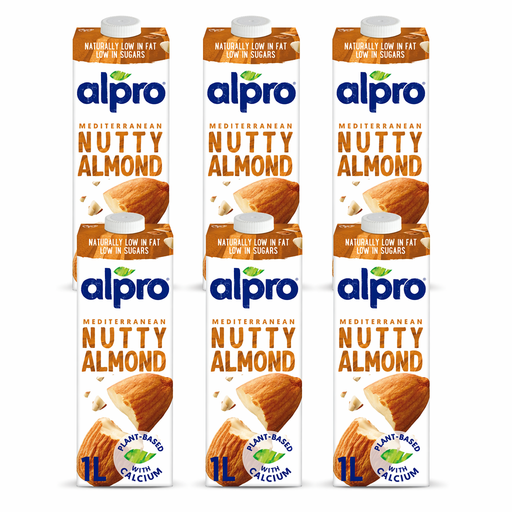
These Alpro multipacks are almond-drink options for a brunch where guests can have almonds. Compare their exact cartons against any other dietary requirements before serving.
 No image available
Consider this almond-drink multipack when serving guests who can have almonds and need the dairy-free and gluten-free claims described in the listing. Check the current pack’s ingredients and precautionary allergen information against each guest’s requirements.
 No image available
This six-carton almond-drink pack is an option for hot or cold brunch drinks when guests can have almonds. If dairy-free or gluten-free wording, sugars per 100 ml or precautionary allergen information is important, confirm those details on the current pack before serving.
No. Almond drinks contain almond. Choose a different type of drink only after checking its exact ingredients and allergen information against that person’s requirements.
No. If a guest needs a gluten-free drink, check the gluten-free wording on the specific carton rather than relying on its dairy-free claim. Neither claim makes an almond drink nut-free.
The Food Standards Agency describes precautionary allergen labelling as a warning that an allergen could be unintentionally present. Check the statement against the guest’s requirements; it is not a declaration that the product is free from that allergen.
Not necessarily. A barista-labelled drink is worth considering when coffee foam matters; for cereal or smoothies, compare standard drinks by their ingredients and your guests’ requirements instead.
The carton you serve is the one whose ingredients and allergen information must meet your guests’ needs. Read its current label rather than relying on a previous purchase.