Hosts serving a dairy-free dinner
Check the needs of everyone at the table before choosing a drink for a recipe, a pourable alternative or an after-dinner hot drink. Almond drinks are not suitable for a guest with an almond allergy.


Choose an almond drink for dinner only after checking that everyone eating it can have almonds and that the exact carton is suitable where other-nut allergies are relevant. If it will regularly replace dairy for a child who cannot consume dairy, Kingston and Richmond NHS Foundation Trust advises choosing a substitute fortified with calcium and iodine; for an occasional recipe or after-dinner drink, check the ingredients and intended use instead of assuming every variant serves the same purpose.
Check the needs of everyone at the table before choosing a drink for a recipe, a pourable alternative or an after-dinner hot drink. Almond drinks are not suitable for a guest with an almond allergy.
If the drink will be used regularly in place of dairy, compare the exact product’s fortification and nutrition information. NHS guidance notes that plant drinks can differ from animal milk in energy, protein and micronutrients.
A short ingredient list or no-added-sugar claim may matter for a particular meal. Check those preferences separately from whether the drink needs to provide calcium and iodine fortification.
Start with guests’ allergies, then decide whether the carton is for regular dairy replacement, a recipe or a hot drink.
| Priority | What to check | Your needs |
|---|---|---|
| Nut allergens | Read the exact carton’s almond declaration and any precautionary statement about other nuts. Check the rest of the recipe too. | I need a dinner everyone can safely eat. An almond drink is not suitable for a guest with an almond allergy. |
| Regular dairy replacement | Look for declared calcium and iodine fortification and compare the nutrition table. Check age-specific suitability statements for children. | If a child cannot consume dairy, I need more than a dairy-free label: Kingston and Richmond NHS Foundation Trust advises a substitute fortified with calcium and iodine. |
| Sweetening and ingredients | Compare the exact variant’s ingredient list and nutrition panel. Do not treat “no sugars”, “no added sugar” and a separately labelled sweetened product as the same claim. | For a shared recipe, I want to know which almond drink I am adding rather than relying on a familiar brand name. |
| Planned use | Check whether the product describes pouring, baking or frothing, and follow its storage instructions. Hot-drink claims belong to the named variant. | Will I use the carton in food at dinner, pour it over cereal, or make coffee afterwards? I can choose for that task without assuming a barista version is needed for every use. |
The Food Standards Agency identifies almonds as tree nuts. Some almond drinks also carry precautionary statements about other nuts.
Ask about milk and nut allergies before planning the meal, then check the exact carton and every ingredient in the recipe. Do not serve almond drink to someone with an almond allergy.
NHS guidance says plant drinks can differ from animal milk in energy, protein and micronutrients; Kingston and Richmond NHS Foundation Trust specifically advises calcium-and-iodine-fortified substitutes when a child cannot consume dairy.
Check the named drink’s fortification, nutrition table and age guidance rather than judging its role by ingredient count alone.
Product pages distinguish Alpro No Sugars, drinks claiming no added sugar, and M&S’s separate sweetened almond drink. The wording on one variant does not describe another.
Read the exact carton’s ingredients and nutrition panel before adding it to a shared dish or dessert.
Alpro and Rude Health position named barista variants for hot drinks, while Rude Health describes its chilled almond drink with calcium for cereal, baking and tea.
Choose by the meal’s intended use, then check that variant’s ingredients, allergens and nutrition information.
These examples show why the variant matters more than the name on the carton; they do not indicate which products a retailer currently has available.
Alpro has separately named No Sugars and Barista almond drinks.
Its almond range includes Pure Almond, a chilled drink with calcium, and Barista Almond.
Sainsbury’s lists a Plenish organic almond drink made with almonds, spring water and salt.
M&S lists separate unsweetened and sweetened almond drinks.
Sainsbury’s lists an own-label Unsweetened Almond Drink alongside branded products.
Tesco Groceries lists own-label and branded almond drinks, including unsweetened and barista variants.
These Alpro almond drinks offer different named variants and pack sizes for a dairy-free family meal. Check the exact carton against your guests’ allergies, intended use and any need for fortification.
 Image unavailable
For a meal where a no-sugars variant is wanted, check this exact carton’s allergen statement. If it will regularly replace dairy for a child, also check its calcium and iodine declarations rather than relying on the variant name.
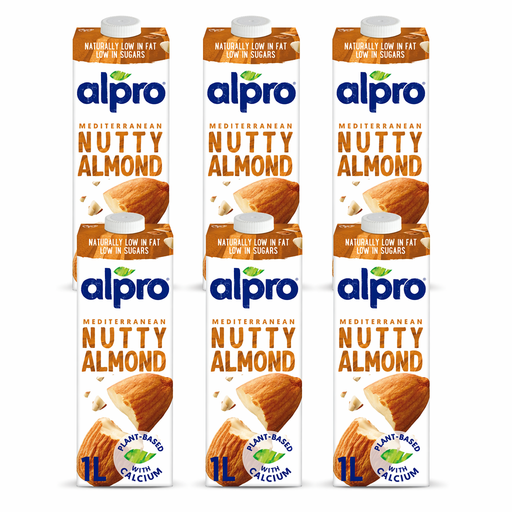 Image unavailable
For pouring or use in a family recipe, check the carton’s intended uses and allergen statement. Compare its ingredients and nutrition panel if sweetness or regular dairy replacement matters; do not assume it has the same claims as the No Sugars variant.
Do not serve it to someone with an almond allergy: the Food Standards Agency identifies almonds as tree nuts. For other relevant nut allergies, check the exact carton’s precautionary statements and every ingredient in the meal; Rude Health, for example, says its No Sugars Almond Drink may contain traces of other nuts.
No. NHS guidance says plant drinks can differ from animal milk in energy, protein and micronutrients. Where a child cannot consume dairy, Kingston and Richmond NHS Foundation Trust advises a substitute fortified with calcium and iodine; check the exact drink’s nutrition information and age guidance.
Do not assume so. Sainsbury’s states that its Unsweetened Almond Drink can be used as part of a balanced diet from age 1 but is not suitable as a main milk alternative for children under 3. North East London NHS Foundation Trust says plant drinks should not replace breast milk or formula as the main milk drink before age 1.
Choose according to when you will use it and the storage directions on the exact pack. Sainsbury’s describes a named Alpro long-life variant as UHT, but that does not tell you how to store every almond drink after opening; follow the carton you buy.