Hosts planning a coffee or dessert course
A roasted or creamy almond drink may suit an after-dinner coffee, cocoa or dessert when its flavour is meant to be noticeable. Check the intended use of the particular drink before using it in a recipe.


For a date-night dessert or hot drink where you want a pronounced roasted note and a creamy texture, consider Rude Health Roasted Almond Drink if everyone can have almonds and oats; those flavour descriptions come from Rude Health. Choose a plain almond drink when you want an almond-led flavour without oats, or a barista version when an espresso-based coffee is the main use. Check the exact carton for allergens, ingredients, fortification and storage instructions before serving.
The intended course and the guests’ ingredient requirements matter more than treating “mature” as a type of almond milk.
A roasted or creamy almond drink may suit an after-dinner coffee, cocoa or dessert when its flavour is meant to be noticeable. Check the intended use of the particular drink before using it in a recipe.
Plain almond drinks, almond-and-oat drinks and fortified formulas have different ingredient lists. Choose according to the dish and what everyone at the table can consume.
Almond is a tree nut, as the Food Standards Agency identifies. Ask guests about relevant allergies and check the exact pack for its ingredients and precautionary statements before serving.
Start with the course you are serving, then compare flavour descriptions, the ingredient list and any nutrition details that matter for the intended use.
Choose when: Rude Health describes its Roasted Almond Drink as creamy and deeply roasted, a combination to consider when that flavour should stand out in a hot drink or dessert.
Bear in mind: Rude Health lists both oats and almonds, so check that both ingredients suit your guests.
Choose when: You want an almond-led ingredient list without oats; Rude Health Pure Almond and Plenish Almond M*lk are two distinct examples.
Bear in mind: Rude Health describes Pure Almond as light-bodied, so do not assume it will give a dish the same texture as its almond-and-oat drink.
Choose when: An espresso-based coffee is the planned finish; Plenish describes its Barista Almond M*lk as foamable for cappuccinos and cortados.
Bear in mind: The foam description is Plenish’s claim for coffee use, not a reason to assume the drink suits every dessert or savoury recipe.
| Priority | What to check | Your needs |
|---|---|---|
| Flavour and texture | Compare the maker’s flavour description with the dish. Rude Health describes its Roasted Almond Drink as deeply roasted and creamy, but Pure Almond as roasted and light-bodied. | I want a noticeable roasted note in the dessert or hot drink, rather than an almond flavour that sits quietly alongside other ingredients. |
| After-dinner coffee | Check whether the drink is intended for espresso-based coffee and whether the maker makes a foam claim for that exact product. | If I am serving cappuccinos or cortados, foam matters more to me than having the shortest ingredient list. |
| Ingredients and nutrition | Read the exact carton for oats, rice, oils, salt and fortification. If comparing nutrition, use the same per-100ml basis for sugar, salt and fat. | For a recipe, I want ingredients that suit the dish. If I use an almond drink regularly in place of dairy, I also want to check whether it is calcium-fortified; the NHS identifies unsweetened calcium-fortified plant alternatives within the dairy-and-alternatives food group. |
| Guest allergies | Check the current pack’s ingredients and precautionary allergen statements, including any additional ingredients relevant to your guests. The Food Standards Agency identifies almonds as tree nuts. | I need to know what my guests must avoid before choosing a drink for a shared meal; a dairy-free label does not settle a nut-allergy question. |
Rude Health lists water and almonds for Pure Almond, but oats as well as almonds for its Roasted Almond Drink. Its Chilled Almond Drink with Calcium also lists rice, sunflower oil and calcium carbonate.
Read the exact ingredient list and choose the formula for the course you are making and the ingredients your guests can have.
A no-added-sugar description does not tell you whether an almond drink is calcium-fortified. The NHS discusses unsweetened calcium-fortified plant alternatives in its dairy-and-alternatives guidance.
For regular use in place of dairy, check the current nutrition panel for calcium and compare any relevant sugar, salt and fat figures per 100ml.
Plenish describes its Barista Almond M*lk in terms of foam and espresso-based drinks; that claim does not establish how it will taste or behave in a savoury dish or cold dessert.
Choose a barista drink for a planned coffee course. For another course, compare the ingredient lists and use descriptions of the drinks you are considering.
Almonds are tree nuts, and an almond drink may contain other ingredients relevant to a guest’s restrictions.
Ask about allergies before shopping, then check the current pack’s ingredients and precautionary statements before serving.
These ranges illustrate different almond-drink formulas and intended uses; a brand name alone does not identify the ingredients of a particular carton.
Its named almond drinks offer a choice between a short plain formula, an almond-and-oat formula and a chilled calcium-fortified formula.
Plenish distinguishes its plain Almond M*lk from a Barista Almond M*lk intended for coffee.
Alpro describes Almond No Sugars as having a gently roasted almond character, which may be relevant to an after-dinner pour.
These Alpro options are for considering an almond drink in an after-dinner hot drink or other serving where its stated flavour suits the plan. Compare the exact pack before choosing one for a recipe or guests with dietary restrictions.
 No image available
The product description presents a gently roasted almond note for tea or coffee. The listing identifies calcium and added vitamins; check the current carton for its full ingredients, allergen statements and storage instructions before serving. Contains almond, so do not serve it to someone with an almond allergy. Its description does not establish how it will work in every dessert or savoury recipe.
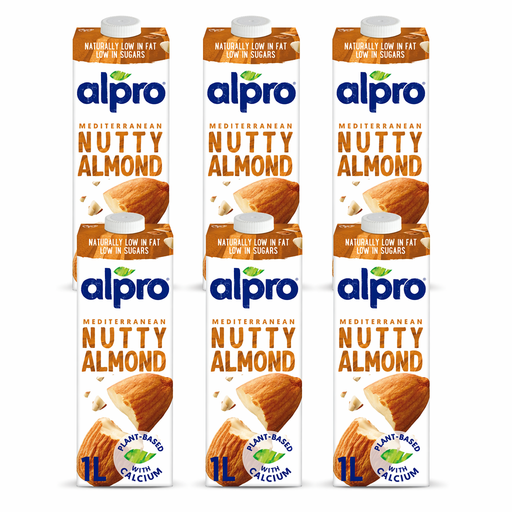 No image available
The product description presents a subtle nutty flavour and hot or cold uses, rather than a specifically roasted profile. Its ingredient list includes sugar, and the listing identifies calcium and vitamins; check the carton’s per-100ml sugar figure if that matters to your choice. The product title suggests a bundle while the quantity description states 1L, so confirm the number of cartons before buying. Contains almond; check the current pack for any further allergen statements.
Here it describes the flavour and intended use, not a defined product category: look for a roasted, nutty or creamy description that fits the course. Rude Health describes its Roasted Almond Drink as deeply roasted and creamy, while calling its Pure Almond roasted but light-bodied.
No: an almond drink contains almond, which the Food Standards Agency identifies as a tree nut. Ask the guest about their restrictions and check the current pack’s ingredients and precautionary statements when choosing what to serve instead.
Check the exact product’s nutrition panel rather than assuming every almond drink is fortified. The NHS identifies unsweetened calcium-fortified plant alternatives as an option within the dairy-and-alternatives food group; for an occasional dinner recipe, flavour and recipe use are separate considerations.
Not on the strength of a coffee-foam claim alone. Plenish describes its Barista Almond M*lk for espresso drinks such as cappuccinos and cortados; for baking, a sauce or a cold dessert, compare the exact drinks’ ingredients and intended uses instead.