What should you check?
Choose for the dinner recipe first, then consider whether the same carton also needs to work for coffee or regular use.
| Priority | What to check | Your needs |
|---|
| Recipe flavour |
Check whether the drink is unsweetened and read its ingredients. Consider whether almond flavour and texture suit the particular dish. |
I want the drink to fit a savoury or subtly flavoured recipe without adding unwanted sweetness. |
| Sugar declaration |
Read the ingredients and sugars value per 100 ml on the exact carton. Alpro UK lists 0 g sugars per 100 ml for Roasted Almond No Sugars, but 2.4 g per 100 ml and sugar as an ingredient for its separate Almond Original drink. |
For a sauce or dessert, I would rather decide how much sweetness to add myself. |
| Declared nutrients |
Compare calcium, iodine, vitamin D and vitamin B12 on the pack. The UK SACN and COT assessment says plant drinks labelled organic in the UK cannot be nutrient-fortified. |
If almond drink regularly replaces dairy milk in my shopping, I want to know which nutrients this particular product declares. |
| Coffee use |
Check whether the product is intended for foaming rather than assuming a cooking drink will perform the same way in coffee. Plenish describes its Barista Almond M*lk as foamable. |
We plan to have foamed coffee after dinner; that matters more to me than a coffee-specific formulation for the meal itself. |
| Guest allergies |
Ask guests about relevant allergies and read the current allergen declaration for the drink and other recipe ingredients. Almond is a tree nut, as identified by the Food Standards Agency. |
I need a non-nut alternative if a guest has an almond or other relevant nut allergy. |
Relevant brand references
These examples illustrate different almond-drink choices; each point applies to the named product, not every drink from its brand.
Alpro
Its Roasted Almond No Sugars and Almond Original drinks offer different sugar declarations.
- Alpro UK lists 0 g sugars, 120 mg calcium and 22.5 µg iodine per 100 ml for Roasted Almond No Sugars.
- That product’s ingredients include stabilisers, flavouring and an emulsifier. The separate Almond Original contains sugar.
Plenish
Its standard Almond M*lk and Barista Almond M*lk address cooking and foamed coffee respectively.
- Plenish describes its standard organic drink as containing almonds, water and salt, with no added sugar, oils or additives.
- The UK SACN and COT assessment says plant drinks labelled organic in the UK cannot be nutrient-fortified. Check the separate Barista carton rather than assuming it has the standard drink’s ingredients.
Rude Health
Pure Almond is an option for shoppers comparing short ingredient lists.
- Rude Health lists water and 5% organic Italian almonds for Pure Almond.
- Its product information says Pure Almond is made in a facility that handles nuts. Check the current allergen label before serving it.
M&S
Unsweetened Almond Drink is a reference point for checking declared fortification alongside allergens.
- Marks & Spencer describes the drink as enriched with calcium, iodine, vitamin D and vitamin B12.
- Marks & Spencer marks it unsuitable for people with nut or peanut allergy and advises shoppers to read the current label.
Almond drinks on Joybuy
These Alpro multipacks are almond-drink options for planning a dairy-free dinner. Compare their exact carton labels for sweetness, ingredients and any nutrients that matter to you.
 No image available
Alpro Almond No Sugars Long Life Drink, 8 x 1L
The No Sugars variant is worth checking when you want to control sweetness in a dinner recipe. This is a pack of eight 1L cartons; read the current carton for its ingredients, allergen declaration and fortification details before serving or using it regularly.
View on Joybuy
 No image available
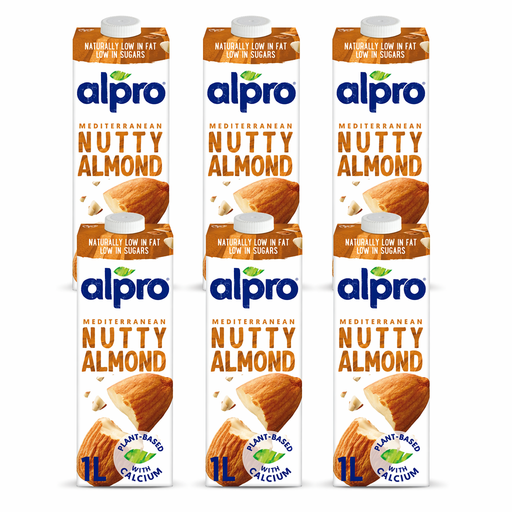
Alpro Almond Drink, 6 x 1L
For dinner cooking, check whether this variant’s flavour and sugar declaration fit your recipe. This is a pack of six 1L cartons; compare its current ingredient, allergen and nutrient labels rather than assuming they match another Alpro almond drink.
View on Joybuy
Common questions
Which almond drink should I use in a savoury dinner?
Start with an unsweetened drink if you do not want the drink to add sweetness. Alpro UK lists 0 g sugars per 100 ml for Roasted Almond No Sugars, while Plenish describes its standard Almond M*lk as having no added sugar. Check the exact carton and taste the drink before relying on its flavour or texture in the recipe.
Does an organic almond drink provide added calcium and iodine?
Do not assume it does: the UK SACN and COT assessment says plant drinks labelled organic in the UK cannot be nutrient-fortified. If you use almond drink regularly instead of dairy milk, check the carton for its calcium, iodine, vitamin D and vitamin B12 declarations.
Can I serve almond drink to someone avoiding dairy?
Check their other allergies first. Almond is a tree nut, and Marks & Spencer marks its Unsweetened Almond Drink as unsuitable for people with nut or peanut allergy. Read the current labels for the drink and the rest of the meal before serving.
Do I need barista almond milk for cooking?
No: a barista formulation is a choice for foamed coffee, not a requirement for dinner recipes. Plenish describes its Barista Almond M*lk as foamable; for cooking, choose according to the dish’s flavour, sugar and ingredient requirements.


