Households topping up an everyday drink
If almond drink goes into cereal, porridge, smoothies or baking, compare the number of cartons with what your household will use. A case and one or two cartons answer different top-up needs.


For a short top-up or a first try of a recipe, an individual 1L carton is the more practical choice; consider a multipack when your household expects to use every carton and knows whether it needs an everyday or coffee-focused drink. If an almond drink will be a child’s main milk alternative from age 1, pack size is not enough to decide: NHS guidance points to unsweetened, fortified alternatives and notes that nut-based drinks can be low in energy and protein.
If almond drink goes into cereal, porridge, smoothies or baking, compare the number of cartons with what your household will use. A case and one or two cartons answer different top-up needs.
If steaming or foaming is the main use, compare a named barista variant with an everyday recipe rather than assuming they will behave alike. Plenish describes its 6 x 1L barista bundle as intended for coffee.
Where a plant drink may be a main milk alternative for a child over 1, NHS guidance makes fortification, energy and protein relevant checks. A larger pack does not establish nutritional suitability.
Start with how many cartons you will use, then compare the exact variant’s recipe, intended use and label information.
| Priority | What to check | Your needs |
|---|---|---|
| Pack size | Check the confirmed carton count and volume, and whether you have room for the full purchase. Plenish lists an 8 x 1L everyday bundle and a 6 x 1L barista bundle; Tesco lists individual 1L drinks. | For a brief top-up, I would rather buy the cartons I expect to use than commit to a case. If several cartons are already part of our routine, a multipack may fit. |
| Intended use | Compare an everyday recipe with a product specifically described for coffee foaming. Check the named variant rather than relying on the brand alone. | Is this mainly for cereal and cooking, or do we need a drink intended for steamed coffee? |
| Ingredients | Read the current ingredient list, including almond content and any other ingredients that matter to you. Rude Health lists different recipes for Pure Almond, Almond Drink and Barista Almond. | I want to know which recipe is in the carton, not assume that every almond drink from one brand tastes or behaves the same way. |
| Child’s main drink | For a child over 1, check whether the exact drink is unsweetened and fortified, and review its energy and protein information. NHS guidance notes that nut-based alternatives can be low in energy and protein. | If this will replace a child’s usual milk drink, I need to assess the actual carton, not choose on pack size alone. |
| Allergens and storage | Read the purchased carton’s allergen statement and after-opening instructions. M&S specifies refrigeration at 0°C to +5°C and use within three days for its unsweetened almond drink; other products may differ. | Our household needs a drink with suitable ingredients, and we need to finish each opened carton within its own labelled period. |
Quantity does not establish nutritional suitability. NHS guidance identifies unsweetened, fortified plant alternatives for use as a main milk drink from age 1 and notes that nut-based drinks can be low in energy and protein.
Check the exact drink’s fortification, energy and protein information. NHS guidance says plant drinks should not be a baby’s main milk drink before age 1; follow clinical advice where a child has an allergy or specific nutrition needs.
Rude Health lists water and 5% almonds for Pure Almond, but its Almond Drink also contains rice and sunflower oil; its barista variant has a different ingredient list again.
Compare the named variant and its current ingredients. Choose a coffee-focused formula when foaming is the intended use, without assuming it has the same recipe as an everyday drink.
An almond drink contains an ingredient that matters to people with a nut allergy. Product-specific warnings also need to be read in full.
Check the ingredients and allergen statement on every carton purchased, rather than relying on a previous pack or a general dairy-free description.
These brand examples illustrate why the exact pack and variant matter; they are not a list of products available in the Joybuy selection below.
Plenish lists an 8 x 1L everyday almond-drink multipack and a separate 6 x 1L barista multipack.
Rude Health has distinct Pure Almond, Almond Drink and Barista Almond recipes.
Tesco’s almond-drink listing includes 1L Alpro No Sugar, Original and Barista variants.
Tesco lists an own-label Unsweetened Almond Drink 1L alongside branded almond drinks.
M&S describes its unsweetened almond drink as enriched with calcium, iodine and vitamins D and B12.
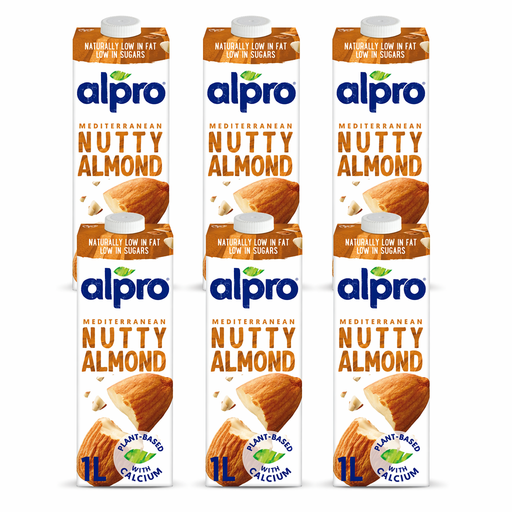
These Alpro options cover an everyday 8 x 1L pack and a 1L almond drink whose outer-pack quantity should be confirmed before ordering.
 No image available
This eight-carton format is worth considering when your household expects to use the full pack; check that the quantity fits your storage and routine.
Almond is an allergen ingredient, so read the current carton if allergies affect your household. If the drink is intended as a child’s main milk alternative, check its full nutrition and fortification information rather than relying on the pack format.
 No image available
The stated carton size suits a 1L top-up, but confirm the quantity being sold before treating the listing as either a single carton or a multipack.
The listed ingredients include sugar, so do not treat this as the No Sugars variant. Check the current carton for allergens and, if relevant, its full nutrition and fortification information.
Choose a multipack when you expect to use all its cartons and its everyday or barista recipe matches your main use. Plenish lists 8 x 1L everyday and 6 x 1L barista bundles; for a smaller top-up, Tesco also lists individual 1L almond drinks.
Follow the instructions on the specific carton. M&S says its unsweetened almond drink should be refrigerated at 0°C to +5°C after opening and consumed within three days; that period should not be applied to every almond drink.
NHS guidance says plant drinks should not be a baby’s main milk drink before age 1. From age 1, it identifies unsweetened, fortified alternatives as relevant, while noting that nut-based drinks can be low in energy and protein; follow clinical advice where allergy or nutrition needs affect the choice.
Do not assume so: an almond drink contains a nut ingredient, and M&S specifically says its unsweetened almond drink is not suitable for people with a nut allergy. Read the ingredients and allergen statement on the exact carton purchased.
Check the current product label as well. M&S says ingredient, nutritional and allergen information can change, making the carton particularly important when comparing variants or checking an allergen.