What matters when choosing?
Decide how the drink will be used for the child, then compare the carton label and pack format against that purpose.
| Priority | What to check | Your needs |
|---|
| Age and role |
Check whether the drink is for food preparation or a main milk drink, and read any age guidance on the product. North East London NHS Foundation Trust advises that plant drinks should not replace breast milk or formula as the main milk drink before age one. |
For a toddler, I’m using almond drink at snack time without assuming it replaces the nutrients supplied by the child’s usual milk and wider diet. |
| Sugars and nutrition |
Read sugars, energy and protein per 100 ml as well as the ingredients. Alpro UK lists 0 g sugars per 100 ml for its Roasted Almond No Sugars 1L, compared with 2.4 g per 100 ml for its Almond Original 1L; these are two specific recipes. |
If I prefer a no-sugars drink for cereal or porridge, I still need to consider what the rest of the snack and the child’s diet provide. |
| Fortification |
Look for declared calcium, iodine and vitamins on the exact carton. The UK SACN and COT summary says nutrient content varies considerably between plant drinks and that UK organic plant-based drinks cannot be fortified. |
I may want the drink to contribute particular added nutrients, or I may prefer an organic recipe with fewer ingredients; those are different choices. |
| Almond allergens |
Read the current ingredients and allergen declaration, and confirm the childcare setting’s rules before sending a snack there. |
Before buying several cartons, I need to know the child can consume almonds and that the snack is permitted wherever it will be eaten. |
| Pack and storage |
Confirm the number and size of cartons, unopened storage instructions and the use-by timeframe after opening. Check the current carton rather than applying another brand’s instructions. |
A multipack makes sense for my household only if we can use the cartons as directed, including each one after it has been opened. |
Brand references
These product lines illustrate different label and pack choices; a brand name alone does not establish toddler suitability.
Alpro
Alpro UK lists added calcium, iodine and vitamins on its Almond Original 1L and Roasted Almond No Sugars 1L product pages.
- For Roasted Almond No Sugars 1L, Alpro UK lists 0 g sugars, 120 mg calcium and 22.5 µg iodine per 100 ml.
- The same product lists 0.5 g protein per 100 ml. Its figures should not be applied to every Alpro recipe or pack.
Plenish
Plenish lists an Almond M*lk Multipack of 8 x 1L cartons made with water, organic almonds and salt.
- The manufacturer describes the recipe as having no added sugar, oils, gums or additives.
- The UK SACN and COT summary says organic plant-based drinks cannot be fortified; check what nutritional role the drink needs to play before choosing this route.
Rude Health
Rude Health offers a standard organic almond drink and a chilled almond drink with calcium.
- The chilled product lists calcium carbonate among its ingredients.
- Rude Health states that both products are suitable as part of a balanced diet for adults and children from five years onwards, rather than for toddlers.
Tesco
Tesco Groceries lists an own-label Unsweetened Almond Drink 1L alongside other almond-drink brands.
- The own-label listing gives shoppers another product to compare by its current carton label.
- Do not assume its ingredients or fortification match a similarly named drink from another brand.
Joybuy almond drinks
These Alpro almond drinks are options to consider for snack-time use by a child aged one or over, subject to the child’s diet, almond-allergy arrangements and the current carton label. Confirm the pack contents before treating either listing as a suitable family pack.
 No image available
Alpro Almond No Sugars Long Life Drink, 8 x 1L
The eight-carton format may suit a household using almond drink regularly with cereal or smoothies; check that almond is appropriate for the child. The Joybuy listing describes a no-sugars drink with added vitamins B2, B12 and D. It instructs shoppers to refrigerate each carton after opening and use it within five days. Check the current carton if particular nutrient amounts matter to your choice.
View on Joybuy
 No image available
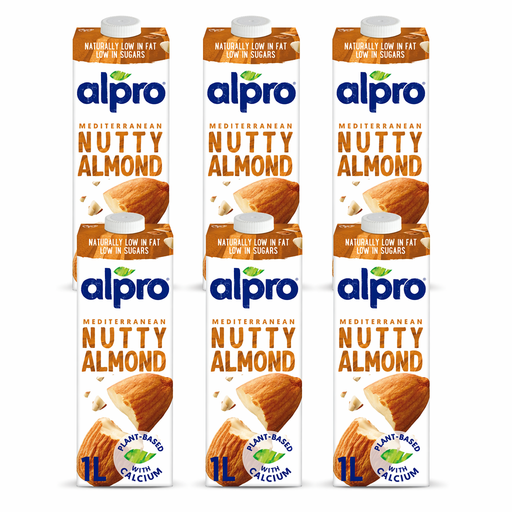
Alpro Almond Drink 1L — listing titled ‘6 Alpro Almond Drink 1L’
The listing describes cereal and smoothie uses, but confirm the pack quantity before buying it as a multipack: its title begins with ‘6’ while its stated net quantity is 1L. Sugar appears in the listed ingredients, so check sugars per 100 ml on the current carton if that affects your choice. The listing says to refrigerate after opening and use within five days, and advises consulting a healthcare professional before introducing it into a child’s diet.
View on Joybuy
Questions about toddler snack time
Can almond drink replace breast milk, formula or a toddler’s usual milk?
It should not replace breast milk or formula as the main milk drink before age one, according to North East London NHS Foundation Trust’s children’s dietetics guidance; that guidance distinguishes use in weaning foods from use as a main drink. For children aged one to five, the UK SACN and COT summary says other foods and drinks need to replace the nutrients cows’ milk provides if it is excluded from their diet.
What should I check on a carton for toddler snack time?
Check the child’s age and almond-allergy arrangements, then read the current ingredients, sugars, energy and protein per 100 ml, any declared fortification and the storage instructions. The UK SACN and COT summary notes that nutrient content varies considerably between plant drinks, so a product name or a single front-of-pack claim is not enough for a nutritional comparison.
Does an organic almond-drink multipack contain added nutrients?
UK organic plant-based drinks cannot be fortified with nutrients, according to the UK SACN and COT summary. Plenish’s 8 x 1L organic multipack may suit a preference for its stated short ingredient list, but choose it with that distinction in mind if added calcium, iodine or vitamins are part of the reason for buying almond drink.
Can I send almond drink to nursery or school?
Ask the individual nursery, childminder or school before sending it. Almond is a nut allergen, and the setting’s current policy and the child’s allergy arrangements determine whether an almond-containing snack is appropriate there.
How should I plan to use a multipack after opening?
Follow the instructions on each current carton and consider how quickly your household uses an opened 1L drink. Storage directions differ between products: for example, a Tesco Groceries listing for Califia Farms Simple & Organic Almond 1L says to refrigerate it after opening and consume it within seven to ten days. Do not apply that timeframe to another brand’s carton.


