Dairy-free picnic planners
If guests need to avoid milk ingredients but can have almonds, check the dairy-free claim and the full allergen information on the carton you take.


For a picnic without reliable cold storage before departure, choose an unopened long-life almond drink rather than one that must be kept chilled; if sweetness matters, compare the sugars value per 100 ml as well as the product name. Almond drinks contain almonds, so dairy-free does not mean suitable for a guest with an almond allergy: check the exact carton for ingredients, other-nut warnings and storage instructions. If the drink will replace dairy in a child’s diet, check its age guidance and whether calcium and iodine are declared.
If guests need to avoid milk ingredients but can have almonds, check the dairy-free claim and the full allergen information on the carton you take.
An unsweetened or no-sugars name may suit your preference, but the sugars value per 100 ml and ingredient list give you a clearer basis for comparing cartons.
Check the product’s age guidance and declared calcium and iodine. Kingston and Richmond NHS Foundation Trust’s guidance for parents distinguishes fortified dairy substitutes from alternatives that do not declare those nutrients.
Start with each guest’s allergens, then choose a carton whose storage instructions fit the journey and time outdoors. Compare formulation and fortification for the way the drink will be used.
| Priority | What to check | Your needs |
|---|---|---|
| Allergens | Read the milk and almond ingredients, any other-nut or peanut statements, and the exact carton’s precautionary wording. The Food Standards Agency identifies almonds as tree nuts and explains that precautionary labels flag possible unintended allergen presence. | I need a drink every guest can have, not just one labelled dairy-free. If someone must avoid almonds, I’ll choose a different category and check that product’s allergens too. |
| Storage | Check whether the unopened carton needs refrigeration and what the label requires after opening. Sainsbury’s says its chilled Unsweetened Almond Drink must be refrigerated and used within three days of opening. | For a picnic without dependable cooling, I’d rather pack an unopened long-life carton that can be stored in a cupboard before opening. I still need a plan for any drink left over. |
| Sugars and ingredients | Compare ‘of which sugars’ per 100 ml and read the full ingredient list. A no-added-sugar statement and a short ingredient list answer different questions. | I might prioritise a no-sugars drink, or I might prefer fewer ingredients. I’ll compare the labels rather than treating those preferences as the same thing. |
| Fortification and age | Look for declared calcium and iodine, their amounts per 100 ml, and any age or main-milk-substitute warning. Kingston and Richmond NHS Foundation Trust advises attention to calcium and iodine fortification when children cannot consume dairy products. | If this will replace dairy in a child’s diet, I need to check the particular drink’s nutrition and age guidance rather than assume every almond drink is interchangeable. |
Almonds are tree nuts. Some almond drinks also carry warnings concerning other nuts or peanuts, so a milk-free claim cannot establish suitability for a guest with a nut allergy.
Ask guests about their allergy requirements before buying, then read the ingredients and precautionary statements on the exact pack. Choose another type of drink when almonds must be avoided.
A chilled drink needs refrigeration as directed on its label. Sainsbury’s specifies refrigeration and use within three days after opening for its Unsweetened Almond Drink; M&S also specifies refrigeration and three days after opening for its product.
If cooling is uncertain, consider an unopened carton labelled for cupboard storage before opening. Follow its separate instructions once it has been opened.
An opened carton may have to be discarded if its storage and use-by-opening instructions cannot be followed.
Plenish describes its Almond M*lk as containing water, organic almonds and salt. That ingredient preference does not establish its calcium or iodine content.
If fortification matters for the intended use, check the nutrition panel for calcium and iodine rather than relying on an organic or minimal-ingredient description.
An almond drink’s suitability as an occasional drink is a different question from using it as a main dairy substitute. Product-specific age guidance and declared nutrients matter.
Read the carton’s age and main-milk-substitute wording. Where a child cannot consume dairy, follow relevant clinical advice as well as checking calcium and iodine fortification.
These examples show why the individual carton matters: storage, ingredients, fortification and allergen wording differ between products.
Sainsbury’s lists Alpro Almond No Sugar Long Life as a dairy-free, no-sugars almond drink.
Its Unsweetened Almond Drink is a chilled own-label option rather than a carton to pack without refrigeration.
M&S describes its Unsweetened Almond Drink as suitable for cool, dry storage before opening.
Plenish describes its Almond M*lk in terms of a short ingredient list: water, organic almonds and salt.
Rude Health offers a No Sugars Organic Almond Drink for shoppers comparing stated ingredients.
Tesco’s almond-drink category includes own-label and other branded options.
These Alpro listings offer almond-drink options for the picnic. One is named as a long-life 8 × 1L pack; check the other listing’s pack quantity and each carton’s current allergen and storage information before ordering.
 No image available
The stated long-life format is worth considering if you want to pack an unopened carton before leaving for the picnic. The name specifies eight 1L cartons; check the current pack’s milk and nut declarations, sugars per 100 ml and storage instructions, particularly for any carton opened outdoors.
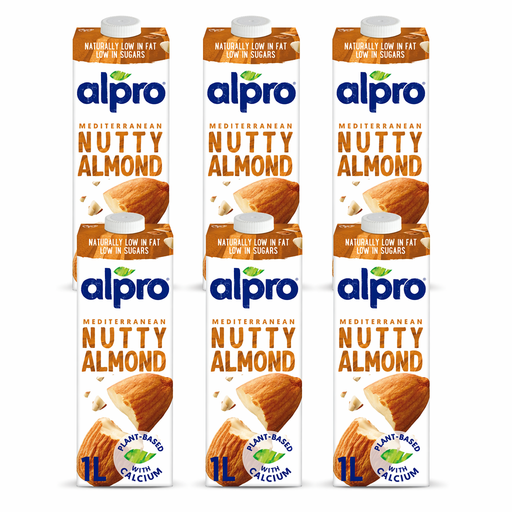 No image available
For a dairy-free picnic, check the current carton’s milk and almond declarations before choosing this drink. Confirm what ‘6’ means for the pack quantity, then compare its sugars per 100 ml and its storage instructions before and after opening.
No: almond drinks contain almonds. If another nut or peanut allergy is involved, do not infer suitability from a dairy-free label; read the exact pack’s ingredients and precautionary statements and choose an appropriate alternative where needed.
No. Dairy-free addresses milk ingredients, while an almond drink still contains almonds. The Food Standards Agency explains that precautionary wording such as ‘may contain’ flags possible unintended allergen presence, so check that wording for each carton.
An unopened carton labelled for cupboard storage avoids the need to refrigerate it before departure. Once opened, follow that product’s instructions; a long-life name does not mean an opened carton can stay unrefrigerated throughout the picnic.
Check the exact product’s age guidance and declared calcium and iodine rather than assuming all almond drinks are nutritionally alike. Kingston and Richmond NHS Foundation Trust’s guidance for parents emphasises fortified dairy substitutes when a child cannot consume dairy; follow clinical advice where relevant.
Compare the ‘of which sugars’ figure per 100 ml, then check the ingredients, fortification and allergen statements. A short ingredient list does not by itself establish the drink’s calcium or iodine content.