What should you compare?
Decide whether the drink is an occasional addition to tea or something used most days, then compare the carton’s nutrition, ingredients and allergen information.
| Priority | What to check | Your needs |
|---|
| Fortification |
Read the calcium amount and look for vitamin D, vitamin B12 and iodine on the exact carton. The UK government’s 2025 assessment notes that plant drinks vary considerably in nutrient content and that UK organic-labelled plant drinks are not nutrient-fortified. |
If I use almond drink most days, I want to know which nutrients that particular carton contributes rather than treating every dairy alternative as equivalent. |
| Sugar and tea use |
Compare the sugar declaration with the ingredients, and check whether the drink is described for use in tea or coffee. A creamier style should not be assumed to meet a no-added-sugar preference. |
For my afternoon cup, I want a taste I enjoy without overlooking sugar in a different formulation. |
| Protein |
Check protein using the unit printed on each pack. Alpro UK lists 0.5 g per 100 ml for Almond Roasted No Sugars; M&S lists 0.5 g per 100 g for its Unsweetened Almond Drink. |
If afternoon tea needs to contribute protein, I would plan a separate suitable food instead of relying on either of those almond drinks. |
| Vegan and allergen information |
Look for the Vegan Society Trademark on the specific carton if third-party vegan certification matters. Check the current allergen statement separately: vegan suitability does not establish suitability for someone with an allergy. |
I may want a certified vegan product, but I also need to know whether the guest can have almonds and whether the pack carries any other relevant allergen warning. |
| Storage |
Check whether cartons are sold chilled or for ambient storage, and follow the individual pack’s instructions after opening. M&S says to consume its Unsweetened Almond Drink within three days of opening. |
In a one-person household, I want to know whether I can use an opened carton within its stated time before choosing a multipack. |
Almond drinks on Joybuy
These Alpro almond-drink options cover a no-sugars long-life multipack and a separate drink to consider for hot tea or coffee. Compare their exact cartons for the nutrients, sugar declaration and allergen information that matter to your household.
 No image available
Alpro Almond No Sugars Long Life Drink, 8 x 1L
A no-sugars almond drink to consider for regular tea or coffee use. The 8 x 1L long-life pack makes post-opening storage worth checking; compare the current carton’s nutrient and allergen information, and plan a separate protein food if afternoon tea needs one.
View on Joybuy
 No image available
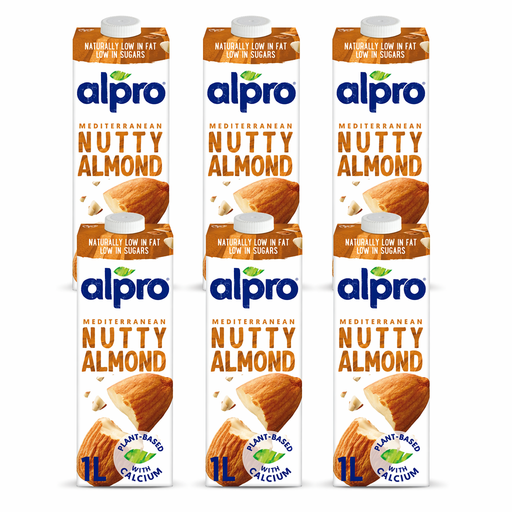
6 Alpro Almond Drink 1L
Consider this separate Alpro listing if a creamier almond drink for hot tea or coffee appeals. Check the current carton’s sugar declaration before choosing it for a no-added-sugar preference, and compare its nutrient and allergen information with your needs.
View on Joybuy
Questions about almond drink
Can almond drink be used regularly instead of dairy milk?
It can be one part of a vegan diet, but do not assume an almond drink supplies the same nutrients as dairy milk or another plant drink. The NHS advises including fortified dairy alternatives in a vegan diet; check the exact carton for calcium, vitamin D, vitamin B12 and iodine, and consider what the wider diet provides.
Does a no-sugars almond drink provide much protein?
The named examples provide little protein: Alpro UK lists 0.5 g per 100 ml for Almond Roasted No Sugars, and M&S lists 0.5 g per 100 g for Unsweetened Almond Drink. If afternoon tea is intended to contribute protein, choose a suitable protein-containing food as well or compare other plant-drink categories.
Is a vegan almond drink suitable for someone with a nut allergy?
Do not use a vegan claim as evidence of allergy suitability. Almond drinks contain almonds, and M&S says its Unsweetened Almond Drink is not suitable for people with a nut allergy. Check the current pack’s allergen information before serving any drink to someone with a relevant allergy.
How can I check third-party vegan certification?
Look for the Vegan Society Trademark on the specific carton. The Vegan Society says it can verify a product under its Trademark, while a vegan-friendly product does not necessarily carry that mark.
How long can almond drink be kept after opening?
Follow the instructions on the individual carton rather than assuming one opened-life applies to every brand. M&S says its Unsweetened Almond Drink should be consumed within three days of opening; check the storage directions on any other drink you choose.


