Hosts serving dairy-free or vegan guests
An almond drink can provide a plant-based choice for guests who consume nuts. Label it as containing almond rather than treating a dairy-free claim as an all-allergen claim.


Choose an almond drink as a clearly identified plant-based option for guests who can consume almonds, not as the buffet’s nut-free drink: the Food Standards Agency classifies almonds as nuts. Establish guests’ allergen requirements before choosing between unsweetened, fortified or short-ingredient products, and use the labels on the cartons served to record ingredients and precautionary statements.
An almond drink can provide a plant-based choice for guests who consume nuts. Label it as containing almond rather than treating a dairy-free claim as an all-allergen claim.
Keep the details of the cartons served available to staff and identify almond in the buffet’s allergen information. The Food Standards Agency classifies almonds as nuts and advises controlling allergen-containing ingredients to protect other foods from cross-contact.
Once guests’ allergen requirements are accounted for, compare no-sugars, fortified and short-ingredient options against the drinks and dishes being served. None of those attributes makes an almond drink nut-free.
Set the allergen plan before comparing recipes or carton formats; a drink that suits one guest may not suit another.
| Priority | What to check | Your needs |
|---|---|---|
| Allergen information | Read each current carton’s ingredients and precautionary statements. Record almond and any other relevant allergens for the exact drinks served. | I need guests and staff to identify the almond drink before anyone pours it, especially when several drinks share a buffet table. |
| Dairy-free choice | Check the specific product’s dairy-free or plant-based statement; do not extend one variant’s claims to another. Keep a separate option for guests who cannot have almonds. | A plant-based drink would help some guests, but it cannot be the nut-free choice. The Food Standards Agency classifies almonds as nuts. |
| Recipe and sweetness | Compare the product names and ingredient lists for no-sugars wording, added ingredients and the particular recipe you want. Check the carton rather than assuming all almond drinks are alike. | For tea, coffee or cereal, I may prefer an unsweetened option; for a simpler recipe, I would compare the actual ingredients. |
| Added nutrients | If fortification matters to the menu, check the exact carton for listed calcium, vitamins or other added nutrients. A short ingredient list and fortification are different selection priorities. | I want to know whether the drink chosen for the buffet has the additions I had in mind, without assuming another variant has them too. |
| Buffet service | Keep the packaging available for ingredient checks. Follow each carton’s storage instructions and use separate serving equipment where cross-contact is a concern. | Guests should be able to recognise the almond drink throughout service, even if cartons are decanted or a substitute product arrives. |
Almond remains a nut allergen even when a drink contains no dairy. The Food Standards Agency identifies almonds within its nuts allergen category.
Identify the almond drink separately and choose a non-almond drink for guests who need to avoid almonds, checking that product’s own label too.
The cartons used on the day are what guests will be served. M&S advises shoppers to check product labels because food information can change.
Build or update the buffet’s allergen information from the cartons delivered, and retain their packaging during service.
Rude Health states that its No Sugars Organic Almond Drink may contain traces of other nuts. That matters when a guest needs information about nuts beyond almond.
Check the exact product statement against the guest’s requirements rather than assuming that a no-sugars or organic label settles allergen suitability.
Alpro describes its Almond Original Drink as dairy-free, gluten-free and plant-based.
Plenish describes its Almond M*lk as made with water, organic almonds and salt.
Rude Health offers a No Sugars Organic Almond Drink.
M&S offers an Unsweetened Almond Drink with product-specific allergen information.
Tesco lists a Tesco Unsweetened Almond Drink 1L in its almond-drinks range.
These Alpro carton packs offer almond-drink options for guests who can consume almonds: one is labelled No Sugars, while the other is an almond drink in a six-carton format. Check the cartons delivered before assigning either a place in the buffet’s allergen plan.
 No image available
The No Sugars variant is a choice to consider for almond-tolerant guests when an unsweetened option is wanted. The pack contains eight 1L cartons. It contains almond, so use the delivered cartons to check other allergen and cross-contact information before service.
 No image available
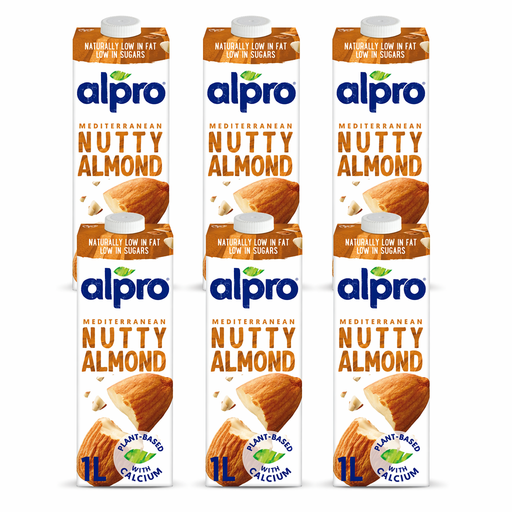
This six-carton almond-drink pack is an option for guests who can consume almonds. Check the delivered cartons for dairy, gluten and other allergen information before describing this particular product as suitable for guests with those requirements. It is not a nut-free drink.
No. The Food Standards Agency classifies almonds as nuts, so an almond drink must not be presented as suitable for guests who need to avoid almonds. Provide a non-almond choice and check its own allergen label.
Where a business supplies the drink as non-prepacked food or drink, the Food Standards Agency says information about regulated allergens present must be made available. The caterer should identify the almond drink in its allergen information using the exact cartons served.
No. Dairy-free describes a different requirement from nut avoidance: almond drinks contain almond. Check each product’s full label and precautionary statements for the allergens relevant to your guests.
Identify it as containing almond, keep its product details available and use separate serving equipment where cross-contact is a concern. Food Standards Agency guidance advises controlling allergen-containing ingredients so they do not contaminate other foods.