Older adults using an everyday dairy-free drink
Almond drink may fit cereal, tea or coffee when it is wanted for taste or dairy avoidance. Compare the exact carton’s added nutrients, energy and protein with its intended role in the wider diet.


For routine dairy-free use, choose an almond drink by checking its fortification alongside the older adult’s wider diet; a multipack alone says little about its nutritional role. If appetite is poor or weight has been lost unintentionally, do not rely on an ordinary almond drink for nutrition support: the British Dietetic Association and East Suffolk and North Essex NHS Foundation Trust emphasise protein, energy and micronutrients in older-adult nutrition. An 8 × 1L carton pack suits a different need from a portion-sized drink, so check what the person can carry, open and use after opening.
Almond drink may fit cereal, tea or coffee when it is wanted for taste or dairy avoidance. Compare the exact carton’s added nutrients, energy and protein with its intended role in the wider diet.
If an older adult is eating less or losing weight unintentionally, the drink’s energy and protein matter more than whether it comes in a multipack. East Suffolk and North Essex NHS Foundation Trust advises an energy-, protein- and micronutrient-focused approach when poor appetite risks weight loss.
An 8 × 1L carton pack can reduce the need to buy individual cartons, but it is not a pack of lunchbox-sized portions. Check lifting, storage and likely use after each carton is opened.
Decide whether the drink is for routine dairy-free use, nutrition support or portable portions, then compare the exact pack against that purpose.
| Priority | What to check | Your needs |
|---|---|---|
| Energy and protein | Compare energy and protein on the same per-100g or per-100ml basis shown on each label. M&S lists 14 kcal and 0.5 g protein per 100 g for its Unsweetened Almond Drink; those figures describe that product, not almond drinks generally. | If I am buying for someone with a poor appetite or unintentional weight loss, I need foods and drinks that make a meaningful contribution to their intake, not just a dairy-free flavour. |
| Added nutrients | Look on the current carton for calcium, iodine, vitamin D and vitamin B12. UK government plant-drink guidance published in 2025 says nutrient content varies considerably between products. | For an everyday dairy-free drink, I want to know which nutrients this particular carton supplies and which must come from elsewhere in the diet. |
| Allergens | Read the current allergen declaration and any product-specific warnings. Almond is a nut; M&S also labels its Unsweetened Almond Drink unsuitable for people with nut or peanut allergy. | Before I buy for someone with an allergy, I need to check the exact product rather than assume another brand or variant has the same warning. |
| Pack and portion size | Check carton or can size, pack count, opening method and instructions for storage after opening. Plenish identifies its multipack as eight 1L cartons, not single-serve pots. | Can the intended user lift and open the container? For a lunchbox, I would also need a portion that is practical to carry and store. |
“Unsweetened” does not tell you how much energy or protein a drink provides. This distinction matters when an older adult has a poor appetite or is losing weight.
Compare the nutrition panel and seek appropriate professional advice if the drink is being considered as part of support for poor intake.
UK government guidance says the nutrient content of plant-based drinks varies considerably. One fortified carton cannot establish what another brand or variant contains.
Check the exact pack for calcium, iodine, vitamin D and vitamin B12 when those nutrients matter to the choice.
Plenish’s 8 × 1L multipack is a bulk-carton format. A full 1L carton may be awkward to carry or handle when a small ready-to-drink portion is needed.
Choose the container size for the place it will be used, and check opening and storage instructions before buying in bulk.
Almond drinks are unsuitable for someone with an almond allergy, and warnings concerning other nuts or peanuts can be product-specific.
Read the current packaging for every product and variant before giving it to the intended person.
These brand examples illustrate different products and formats; check the particular carton rather than applying one product’s details across a range.
M&S Unsweetened Almond Drink is a 1L example for comparing fortification with energy and protein.
Plenish identifies an Almond M*lk Multipack containing eight 1L cartons.
Rude Health has a standard organic Almond Drink and a separate chilled Almond Drink with Calcium.
Tesco lists a 1L UHT Unsweetened Almond Drink with added nutrients.
Tesco lists Alpro Almond Original, No Sugar and Barista as distinct 1L products.
These options include Alpro almond drinks in 1L formats and portion-sized Lulu almond juice cans. A milk-style drink and an almond juice have different intended uses, so compare their labels against the older adult’s needs rather than treating the formats as interchangeable.
 Image unavailable
The stated eight 1L cartons are a bulk format for home use, rather than individual lunchbox portions.
Check the current carton’s added nutrients, energy and protein if it will be used as an everyday dairy-free drink for an older adult. Also check that a 1L carton is manageable to lift, open and store after opening.
 Image unavailable
This 1L almond drink may suit routine use at home; confirm the bundle contents before relying on it as a multipack.
The leading “6” in the listing name does not by itself establish the number of cartons. Check the current nutrition label for added nutrients, energy and protein, particularly if appetite or weight loss is a concern.
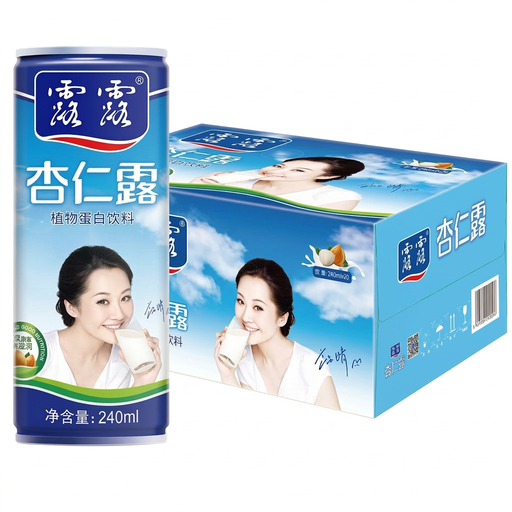 Image unavailable
The 240ml cans provide individual portions, unlike the 1L almond-drink cartons, but this product is described as almond juice rather than a milk-style drink.
Check its ingredients, sugars, protein and added nutrients before considering it for regular use. Make sure the intended user can carry and open a can.
It can be an everyday dairy-free drink, but it is not automatically nutritionally interchangeable with milk. Check the exact product’s added nutrients, energy and protein; if appetite is poor or weight loss is unintentional, seek appropriate professional advice rather than relying on an ordinary almond drink for nutrition support.
For an almond drink intended as a routine dairy-free alternative, check the carton for calcium, iodine, vitamin D and vitamin B12. UK government guidance published in 2025 notes that plant-based drinks vary considerably in nutrient content, so the answer depends on the exact product.
Do not infer fortification from the multipack format or organic label. Plenish identifies its 8 × 1L Almond M*lk pack as certified organic; read its current nutrient declaration if added nutrients are part of your reason for buying.
No, not for someone with an almond allergy. Check each product’s current allergen statement for other relevant warnings too: M&S says its Unsweetened Almond Drink is unsuitable for people with nut or peanut allergy.
Eight 1L cartons are a bulk format, not eight single-serve pots. If a drink must be carried for an outing, check the individual container size, whether it can be opened easily and the product’s storage instructions.